Last Updated on July 29, 2025
Located at the southern tip of the Korean peninsula, Busan is South Korea’s second largest city and is known for its beautiful beaches (the city has seven of them!), famous fish market, and historic culture villages.
Ready to spend 3 days in Busan? This 3 day Busan itinerary includes Busan’s most popular activities, like visiting Jagalchi Market, as well as lesser-known activities, like Choryang Ibagu-gil.
Although this itinerary is packed with things to do, I’ve made sure it isn’t over-planned. With each day, you’ll have some hours free to wander or take down time.
- Know Before You: South Korea Travel Basics
- Where to Stay in Busan
- How to Get Around Busan
- 3 Day Itinerary for Busan, South Korea
- Final Thoughts: Spending 3 Days in Busan
Disclosure: This article includes affiliate links. This means that if you make a purchase through one of those links, I earn a small commission. Affiliate links cost you nothing to use, and keep Pina Travels reader-supported. To learn more, read my Privacy Policy, Terms & Conditions, & Disclaimers.
Know Before You: South Korea Travel Basics
- South Korean currency is called won (KRW). While you can make most purchases using a credit card, I recommend having some cash for small purchases, markets, and public transit
- To stay online while traveling South Korea, I recommend buying an eSIM. You can get online with an easily with a quick-to-install eSIM through Airalo. What I appreciate most about Airalo’s eSIM is its simplicity. You can quickly select and activate an Airalo eSIM for whichever country you are headed to. Selecting, downloading, and activating your eSIM takes less than 5 minutes, and it’s easy to top up your eSIM if you run out of data. You can get started with an Airalo eSIM, right here.
- Be sure to purchase travel insurance for your trip, so you can travel with peace of mind.
Where to Stay in Busan
Before diving into this 3 day Busan itinerary, here are some recommendations for places to stay while in Busan.
High Budget – Signiel Busan, 300-500 CAD per night
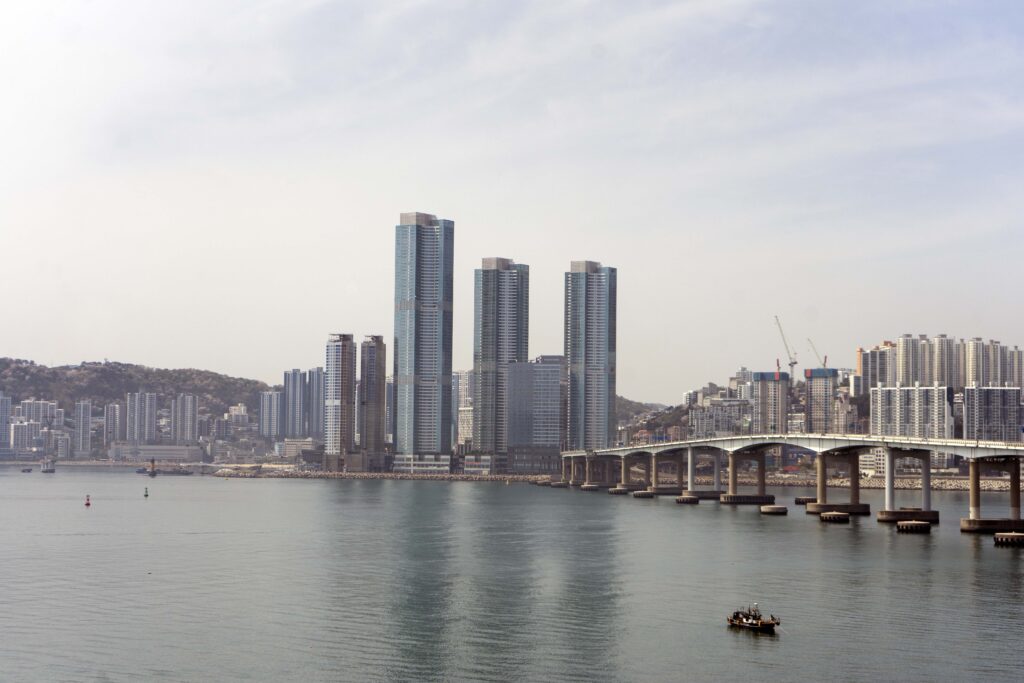
Signiel Busan is a luxury 5-star hotel located in the LCT Tower in the central Jung-dong district of Busan. This hotel is known for its great location (it’s accessible from Jung-dong and Haeundae subway stations), and fantastic views of Haeundae and Gwangandaegyo Bridge.
Some of Signiel Busan’s amenities include an infinity pool, luxury spa, and kids outdoor activity area. The hotel is home to Chao Lan, a Chinese restaurant that serves dim sum and tea during the day and cocktails at night.
If you’re looking to have a luxury stay in a highly-rated Busan hotel, I recommend booking Signiel Busan.
Mid-Range Budget – ASTI Hotel, 100-300 CAD per night
ASTI Hotel is a great choice for a mid-range stay in Busan. This well-rated 4-star hotel is located near Busan Train Station (steps away from the KTX Busan!) and Busan International Port.
ASTI Hotel offers a buffet breakfast, 24 hour reception, and luggage storage. Rooms are spacious and clean, have comfy beds, and there are tons of dining options nearby the hotel.
For a mid-range stay in a great location and transit options a few steps away, book ASTI Hotel.
Low Budget – Toyoko-Inn Busan Jungang Station, 60-100 CAD per night
Have a lower budget for accommodations? No worries! Toyoko-Inn Busan Jungang Station offers simple, good-value rooms in a great location.
Toyoko Inn Busan Jungang Station is just a short walk from Busan Train Station and other transit options. Although the rooms are small, they are clean and comfy, and the hotel staff are friendly. The on-site restaurant serves a free daily breakfast.
For a low-budget stay in a great location and transit options a few steps away, book Toyoko-Inn Busan Jungang Station.
How to Get Around Busan
Busan has a fantastic public transport system that is simple to use, affordable, and fast. Through a mixture of underground trains and buses, you can efficiently get wherever you need to go.
It is possible to buy single-ride tickets at the station for each trip you take on the subway or bus. But, I recommend getting a transport card. They are easy to buy and load, and make it much quicker to hop on and off public transport.
Busan’s buses and trains are operated by several different companies, but you can pay for journeys with all operators with one transport card. There are three to choose from, but I recommend using T-money, because it’s the most widely accepted card.
Using a T-money Card in South Korea
T-money cards can be purchased at any convenience store as well as in transport hubs. You will pay a small fee for the card, which is refunded if you decide to return the card at the end of your trip. You can then load your card with funds either in the convenience stores, or in the transport stations.
T-money cards can be used in taxis, subways, and buses across the country. You can also pay for some store purchases using your T-money card.
Navigating Busan’s Public Transit System
You will need to use a map app to navigate Busan’s public transit system. We found that the best map to use is KakaoMap. It is a South Korean map app that is available in English, and it’s the most reliable app for planning public transit journeys.
The app covers everything you need to know, including the best train car to board based on where you’re disembarking, and which station exit to use.
3 Day Itinerary for Busan, South Korea
This 3 days in Busan itinerary is broken down by each day of your trip. While you can switch the order of these days based on your personal preference, I want to note that the activities are grouped together based on their location.
Busan is a big city, the second most populous in Korea after Seoul, and so distances between places can be very long. This Busan itinerary is designed to minimize time spent on transport. Given this, if you decide to switch activities around, just make sure you account for transport times. Let’s dive in!
Day 1 in Busan: Gamcheon Culture Village, Markets and More
On day one in Busan, you’ll visit Busan’s most famous neighborhood, a lively fish market, and a shopping area. You’ll be doing a lot of walking, so be sure to wear good, comfy shoes. Have an early breakfast in your hotel, and then head to Gamcheon Culture Village. Aim to arrive in Gamcheon by 9:30 AM.
Gamcheon Culture Village
To get to Gamcheon Culture Village, take the subway to Toseong Station . Leave the station via exit 6, walk straight and turn right. You will see a small bus station in front of the Pusan National Hospital Building. From that station, take either bus 1-1, 2, or 2-2 (green bus). There will for sure be other tourists heading to Gamcheon, so follow the crowd.
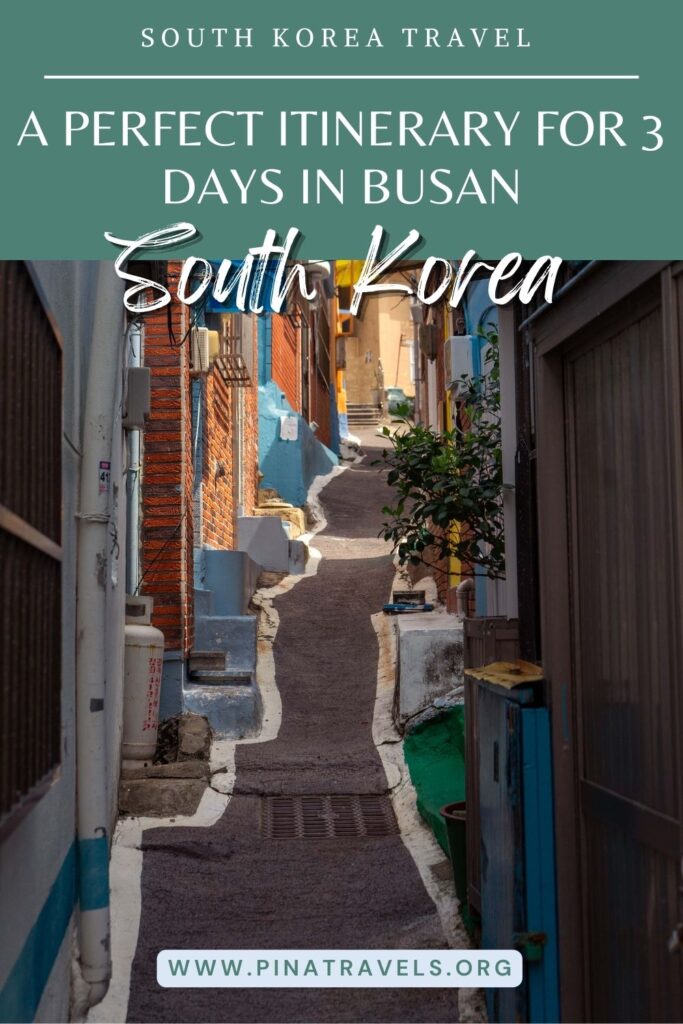
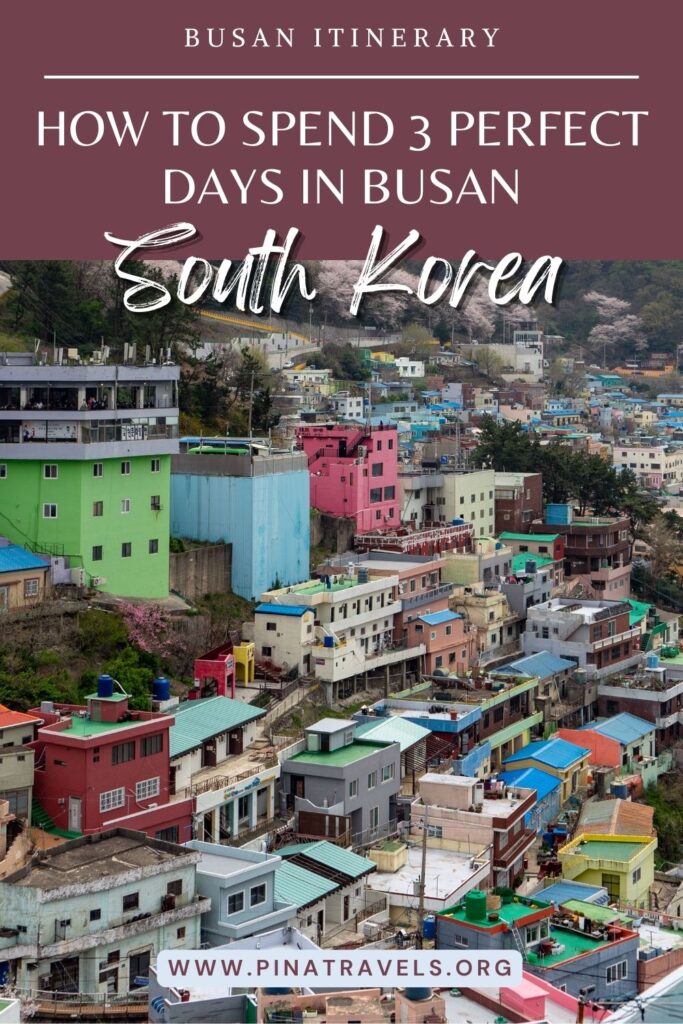
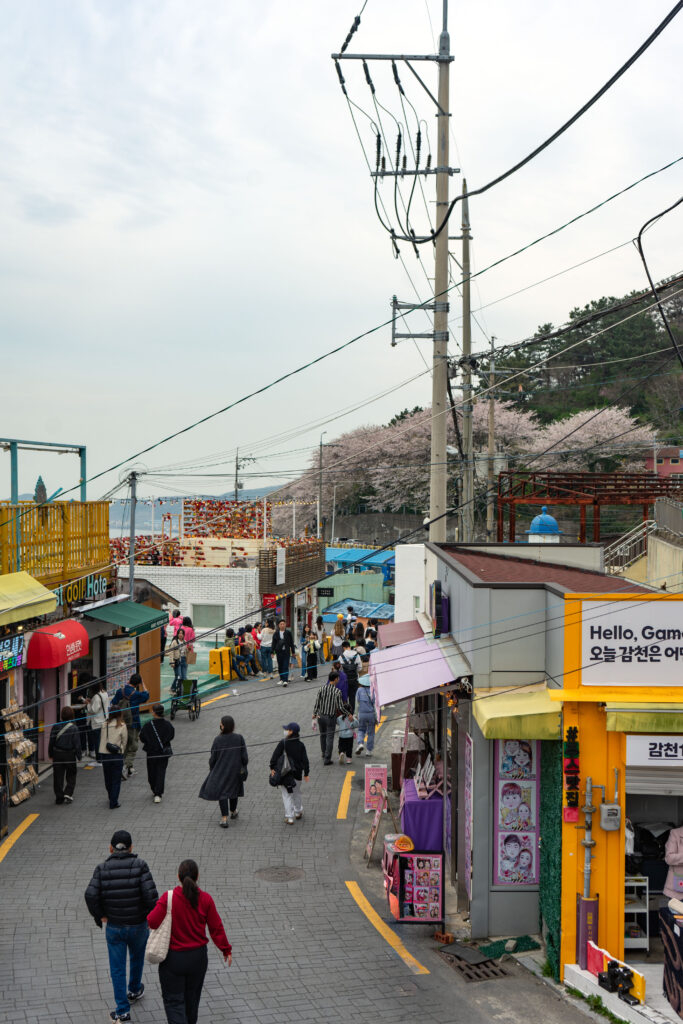
Gamcheon Culture Village is one of the most important and most visited landmarks in Busan. Today, this neighborhood is known for its winding layered streets, alleyways, shopping, and brightly painted houses.
Gamcheon Culture Village has a fascinating history shaped by war and immigration. The history of this village goes back to the 1920s and 1930s, when working-class families were relocated to the area. In the 1950s, when the Korean war broke out, refugees from all over the country left their homes and headed south to Busan, which had not been touched by the conflict.
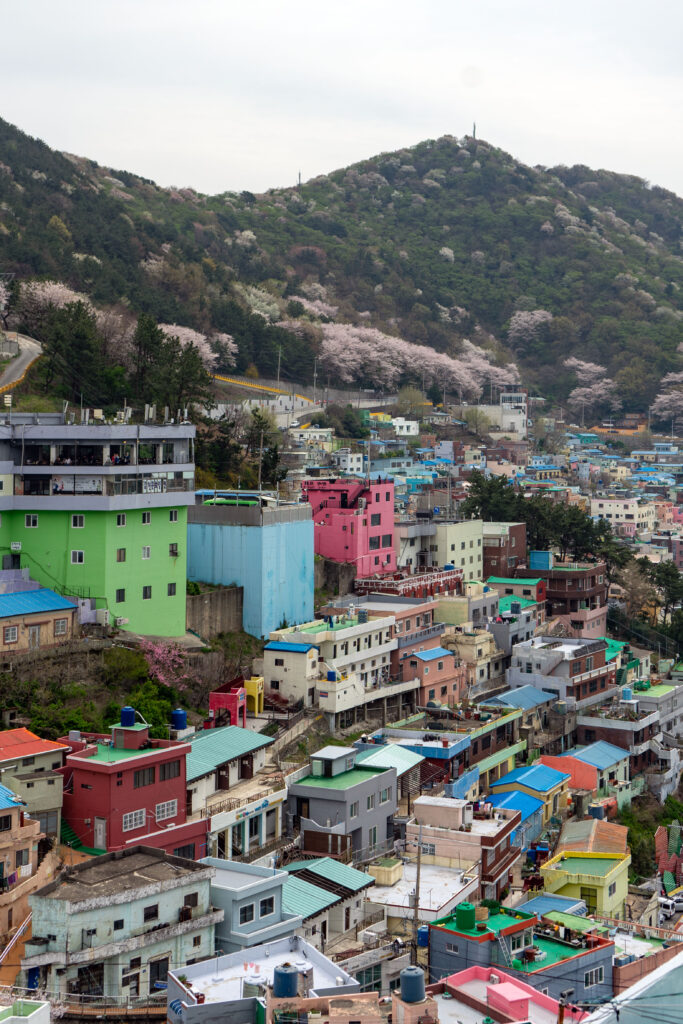
Thousands of refugees arrived in Busan, with nowhere to live, and little money. Small, simple homes were quickly built in Gamcheon Culture Village, creating the dense neighborhood that it is today.
People living in Gamcheon Village have faced persistent poverty, and poor living conditions. In 2009, the Ministry of Culture, Sports and Tourism carried out a public art-themed renovation effort to develop the village into a cultural hub that would attract locals and tourists to visit.
This created opportunities for locals in Gamcheon to start businesses, and tourism has brought a new source of income into the neighborhood.
You will want to spend the whole morning walking around Gamcheon. Throughout the neighborhood, there are large signs that display maps which show several walking routes that you can follow.
I recommend starting your visit at the Gamcheon Culture Village Tourist Information Center. From there, follow the road Gamnae 2-ro into Gamcheon.
A short walk down the road from the information center is the Gamcheon Culture Village Little Museum. This is a free museum dedicated to preserving and displaying the life and culture of the residents of the Gamcheon.
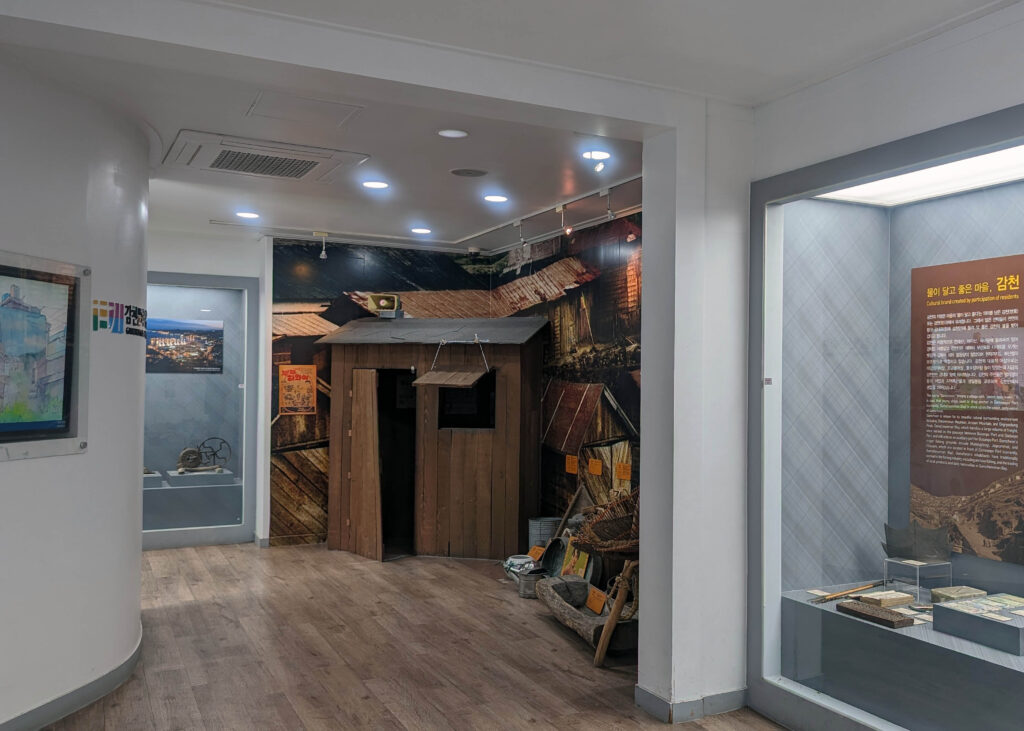
Through images, displays, and signage, the museum shows how Gamcheon has evolved over the decades from a low-income neighborhood to a tourist destination.
Next, walk a few minutes down the road to a small cafe called Voda Vom. Take your coffee up to the cafe’s rooftop terrace, where you can drink it with a beautiful view of Gamcheon’s colorful houses.
After coffee, continue down Gamnae 2-ro. There are many shops along this road selling cute and unique items, from ceramics and artwork to tote bags and clothing.
Although Gamnae 2-ro is an easy route to follow through Gamcheon, I do recommend straying from it. Wander into the neighborhood’s winding alleyways to get a better sense of what life in the area is like, and keep an eye out for street art and murals.
Just be sure to be respectful of people’s homes as you walk through the alleys (don’t go peering into windows!). Follow best practices for being a responsible tourist in Gamcheon village, and the rest of Busan, too.
A fun point of interest (off of the main road) to visit in Gamcheon is the Stairs to See Stars. This is a set of 148 steps in the middle of the village. It gets its name because of its steep staircase that can be challenging to climb.
We also really enjoyed the Gamcheon 2-dong Market. It’s a small market filled with a mixture of traditional food stands and newer, trendy shops. Pop into a shop called YEOHAENGGIL where you can purchase cute patches, and even iron them onto a bag or keychain as a souvenir!

Jagalchi Market
From Gamcheon Culture Village, walk to Toseong Subway Station and take the 1 Line to Jagalchi Station.
After spending the morning in Gamcheon, you’ll head to Jagalchi Market to experience a traditional seafood market, and have lunch.
Jagalchi Market is the largest seafood market in Korea. It’s actually become so famous that every October they host the Jagalchi Cultural Tourism Festival – if you happen to be in Korea at that time of year, it’s worth attending!
Everything sold in Jagalchi Market is super fresh, because most of the seafood is being sold alive. At any time of the day you are able to buy high quality seafood.
The entire first floor of Jagalchi Market is dedicated to selling live seafood. You’ll find king crabs, lobsters, abalone, different types of shellfish, different types of fish, and more. In other sections of the market, you’ll find salted and dried fish items.
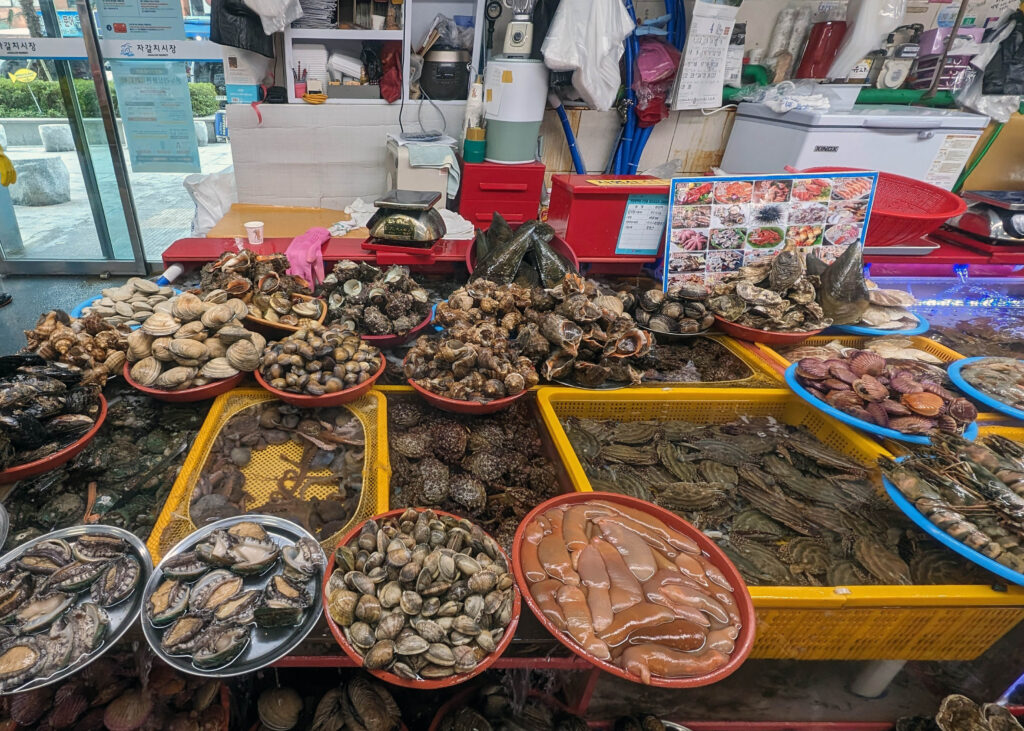
On the upper floors of Jagalchi Market there are various restaurants with lots of seating areas. You can purchase fresh seafood from the market and bring it upstairs to be prepared for you. Or, you can purchase your seafood through the restaurants.
You’ll want to have lunch in one of the upstairs restaurants. Not only is the seafood amazing, but you’ll have great views of the harbor, as well as the water-front area, where there’s often street performers and other people-watching opportunities.
If you’d like to buy seafood in the market, prepare yourself. Know that the seafood sold here is generally expensive because it’s high-quality. Be ready to shop around for prices, and to barter with the vendor. You may be quoted a high price at first – it’s okay to barter a lower price, or walk away.
Have a translation explaining how you’d like your seafood prepared (I use the Google translate app). There may be miscommunications, so be flexible. There’s always a chance your seafood will arrive differently than you expected. But one thing is certain – it will be good!!
We ordered raw sea cucumber in one of the upstairs restaurants at Jagalchi Market. We wanted to try something new, and you don’t come across raw sea cucumber often! I won’t lie – it was a strange taste and texture for us, but it was an interesting experience to give it a try.

Gwangbok-ro Fashion Street
After getting your seafood fix, it’s time to shop! You’ll walk about 15 minutes north of Jagalchi Market (use your Korean map app for walking instructions) to Gwangbok-ro Fashion Street.
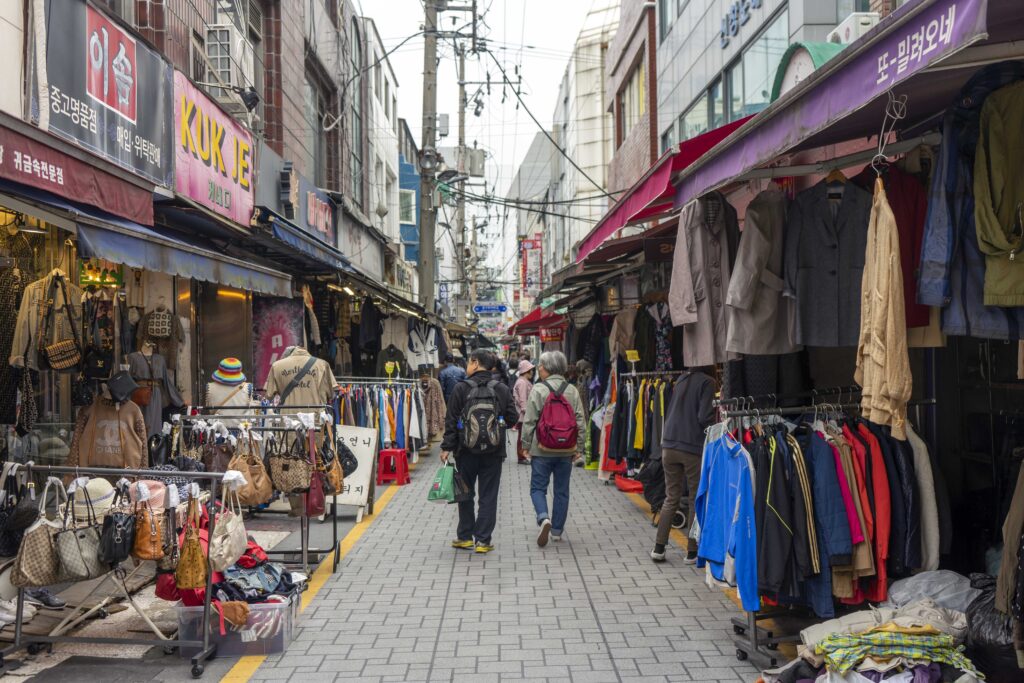
This street is Busan’s largest, and usually busiest shopping street. It’s lined with clothing stores, vintage stores, cafes, cosmetic stores, and street food stands. You’ll find popular international brands, South Korean brands, and smaller, indie shops, too.
I recommend wandering off of the main road, Gwangbok-ro, onto the smaller side streets, too. If you walk west down Gwangbok-ro, you’ll come to Gukje Market, a small side street market that sells home goods, souvenirs, and street food.
If you walk east down Gwangbok-ro, you’ll come to the entrance to Yongdusan Park, where you can enjoy a nature break, and check out Diamond Tower (Busan Tower).
BIFF Square
When evening rolls around, head to BIFF Square. This pedestrianized area is a street food haven that comes alive in the late afternoon. You’ll want to wander the market to check out all the interesting foods, and if you’re ready for dinner, grab something to eat!
You’ll find skewers with all kinds of meat and fish, dumplings for vegetarians, soups, fried fish, juices, and more. A must-try in BIFF Square is ssiat hotteok. This is a Korean sweet pancake stuffed with seeds, which is particularly famous in the market because it originates in Busan.
Day 2: Art, Korean Spa, and a Beach Walk
On day 2 in Busan, you’ll spend most of your time in the eastern end of the city. Have breakfast in your hotel and head out to spend the morning enjoying art. There’s no need to rush – aim to be at your first stop of the day by around 10:00 AM.
I’m sharing three museums to choose from, which are all in a convenient location for day 2 of this Busan itinerary. You’re welcome to visit all three, or visit just one that interests you. To reach these museums, take the subway to BEXCO Station.
Busan Museum of Art (Free!)
*** PLEASE NOTE. The Busan Museum of Art is currently closed for a two-year renovation project, with a re-opening set for 2026. You can skip this stop on your Busan itinerary if you’re visiting before it’s re-opening.
The Busan Museum of Art is a free museum that is home to permanent and seasonal collections that show paintings, modern art, sculptures, and more. Many of the exhibits have a focus on Korean history, giving you the chance to learn as you enjoy art.
The museum also has lots of programming for both adults and children, and a beautiful sculpture garden that you won’t want to miss.
GoEun Museum of Photography (Free!)
The Goeun Museum of Photography was established by the Goeun Foundation, and it’s the first museum to specialize in photography in Busan. This museum is free to visi!
The Goeun Museum is dedicated to building photography archives, creating beautiful exhibitions, and discovering and supporting new photographers. The museum also serves as a cultural art space, providing services like publication, education, and academic seminars.
MUSEUM 1
Museum 1 is a modern art museum that was established in 2019 by an art agency called Kunst 1. It’s a multimedia museum where you can walk through exhibits made up of 80 million LED lights, or admire contemporary art in mediums like painting, sculpture, ceramics, and installations. You’ll find art by Koreans, as well as international artists showcased in Museum 1.
Museum 1 admission is 18,000 won per person.
SPA LAND and Shinsegae Centum City
You simply cannot visit South Korea without going to a jjimjilbang, which is a Korean spa. Spas in Korea are similar to what you might experience at home in Canada or the USA, but they do have some unique aspects.
After your morning spent in museum(s), walk over to SpaLand. The walk to the spa will be 10 – 20 minutes, depending on which museum you walk from.
Spa Land in Busan is co-ed, with bathing areas that are segregated by gender. You do not need a reservation for Spa Land. Just show up, and pay the entry fee – it ranges between 12,000 and 20,000 won depending on time of day and whether it’s a holiday.
Your entry fee is for a four-hour window. This means you can spend up to four hours enjoying the facilities. Extra services like massages, facials, and scrubs, are charged on top of your basic entry fee.
When you enter Spa Land, you’re given a set of shorts and a shirt to wear in the all-gender areas, and you’re assigned a locker. The all-gender areas include saunas, hot rooms, cold rooms, communal napping rooms, and dining areas.

The bathing areas are where you go to soak in different pools, and if you’re brave, you can have a full-body scrub. Scrubs are done by women called ajumma.
After soaking for 30 minutes in the pools, you are brought to a separate area where you lie down on a stone bed to be aggressively scrubbed down, completely naked.
I love getting scrubbed (it’s the ultimate exfoliation experience), but it definitely isn’t for everyone. You need to be comfortable being completely naked in front of others, and the scrub may make your skin feel a bit raw.
Plan to spend 2-4 hours at SpaLand. The spa has several dining options, so if you get hungry, you can have lunch while there.
On the second floor of SpaLand you’ll find a self-serve ramen bar. You can choose from a large selection of instant ramen, heat it up, and add whatever toppings you like from a huge selection!
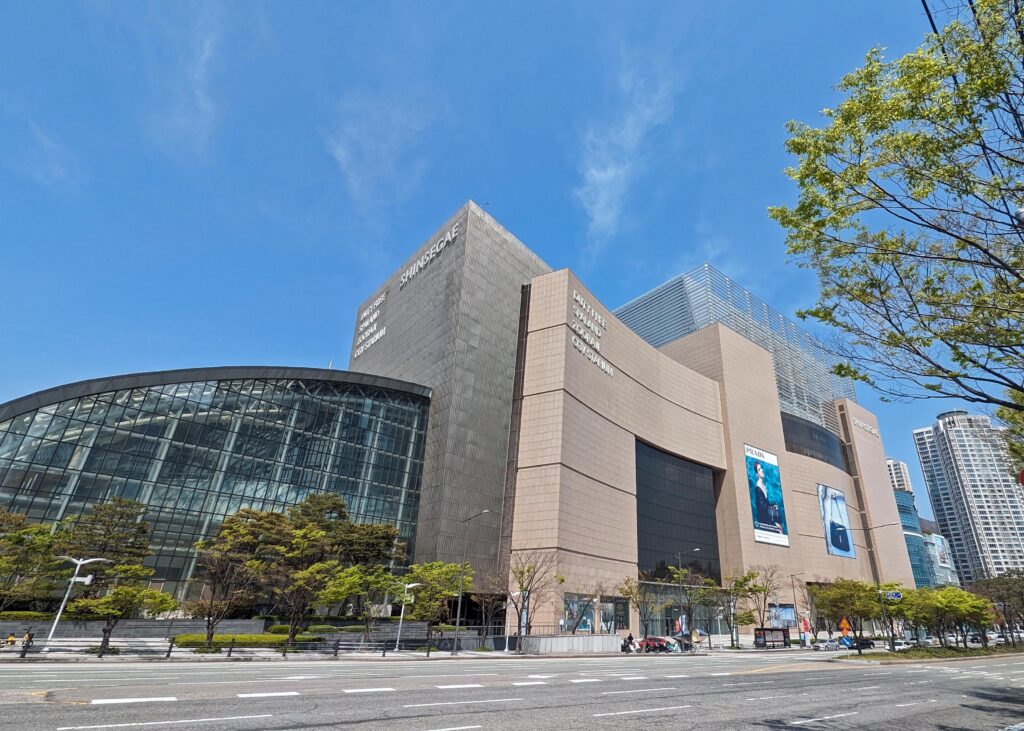
If you want to shop, be sure to budget some time to visit Centum City after SpaLand! The words “Centum City” are synonymous in Busan with shopping, as the neighborhood is home to the world’s largest shopping complex: Shinsegae Department Store.
This department store is attached to the spa, and so you can easily head there after your restful afternoon. Shinsegae Department Store sells literally everything, ranging from luxury to more mid-range stores.
Haeundae Beach
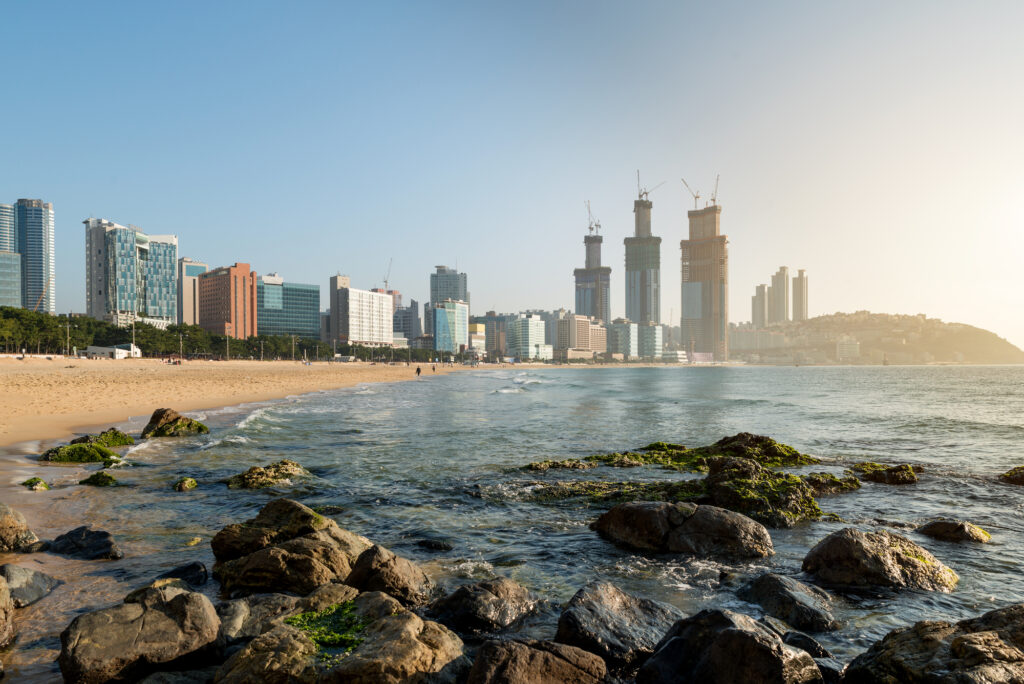
By the time you’ve finished your SpaLand experience (and maybe done some shopping), it will be getting late in the day, which is the perfect time to visit one of Busan’s most famous beaches: Haeundae Beach.
To get to the beach, hop on the subway to Haeundae Station. The trip takes around 15 minutes, and from the station, it’s a 10 minute walk to the beach.
Haeundae Beach is a popular beach in Busan because of its urban location and accessibility. The beach has beautiful views of the ocean and Busan’s cityscape. There’s a boardwalk you can follow all the way to Dongbaek Island if you’d like to visit a park and lighthouse.
In the months of May to June, there’s a sand sculpture festival held on the beach, which means you can admire beautiful sculptures (for free!). In June, July, and August, you can swim. Nightswimming typically isn’t permitted so just be cognizant of this if you arrive late in the evening.
Haeundae Traditional Market
After spending some time enjoying Haeundae Beach, wrap up your day at Haeundae Traditional Market. This market is just a 10 – 15 minute walk from the beach. This market is best visited in the evening, when it comes alive with locals and visitors looking to eat street food.
Haeundae Traditional Market sells everything from fresh fruits and vegetables to souvenirs and housewares. It’s an interesting market to wander around, do some shopping, and when you’re ready, have dinner.
What not to do in South Korea? Skip trying Korean street foods!
There are a lot of traditional Korean foods that you can try at Haeundae Traditional Market. There are tons of seafood options (like eomuk tang, a fishcake soup), as well as dumplings, Korean hot dogs, and tteokbokki.
If you’d like a sit-down meal, there are restaurants inside the market that offer bibimaps. These are warm bowls that come with veggies, barely, kimchi, sometimes meat, and a fried egg. There’s lots of different variations to choose from!

Day 3: A Coastal Culture Village, 168 Steps, and the Sky Train
On day 3 in Busan, you’ll check out two areas of the city that you haven’t yet seen! Have breakfast in your hotel and head out to spend the morning in a culture village that’s on the coast. There’s no need to rush – aim to be at your first stop of the day by around 10:00 AM.
After spending the morning enjoying coastal views, you’ll head to the area around Busan Station to visit a quirky street, and climb stairs to a viewpoint.
Huinnyeoul Culture Village
Huinnyeoul Culture Village, similar to Gamcheon Culture Village, was originally established by refugees during the Korean War.
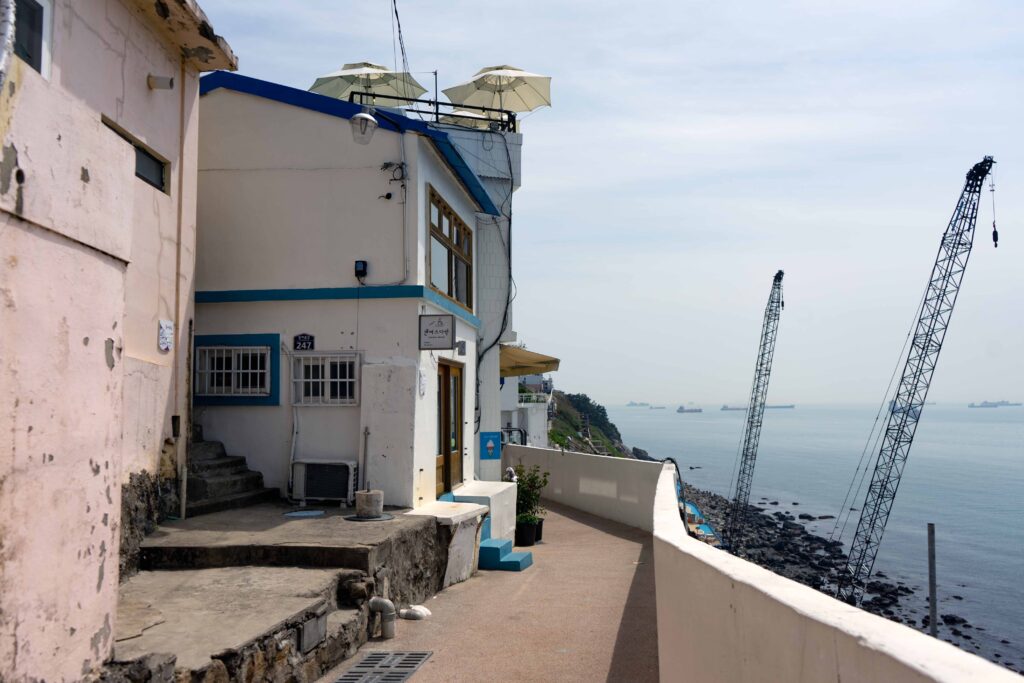
In the year since, however, the area has evolved into a colorful seaside village. You can walk along the coast, popping into small boutiques selling local artwork, cafes, and restaurants. Many of the buildings with historical significance are being preserved, so you can also learn some of the village’s history.
You can’t take the subway all the way to Huinnyeoul Culture Village. The nearest station is Nampo Station. Take exit 6 and then hop on bus #6, 7, or 9. From there it’s a 15-minute ride to Huinnyeoul Culture Village.
Or, if you’re close to Busan Station, you can take bus 82, 85, or 508 all the way to the village.
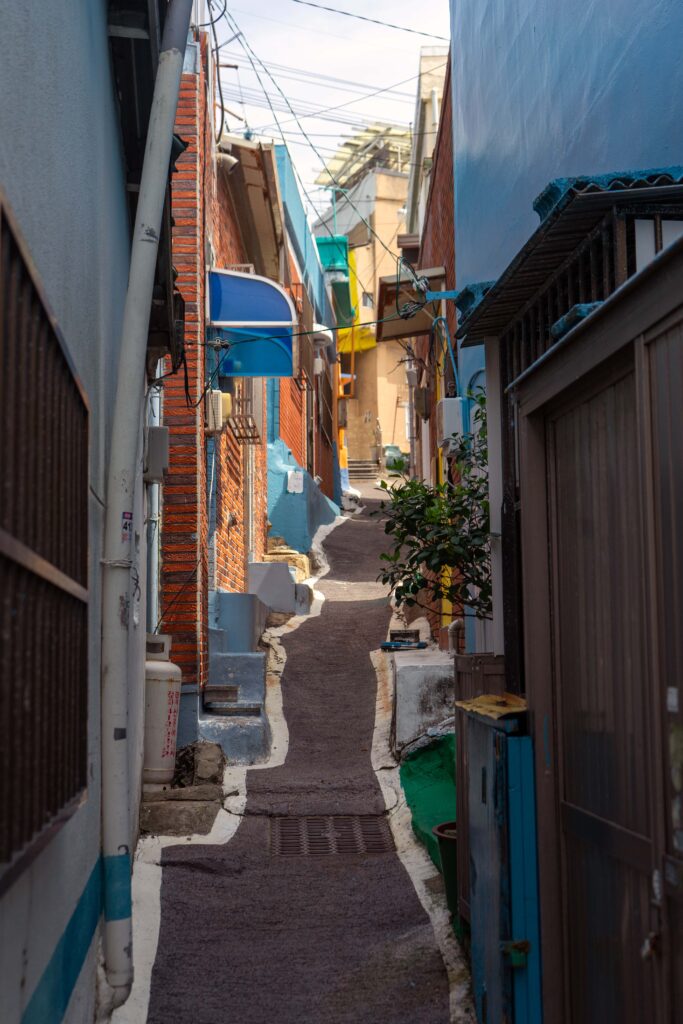
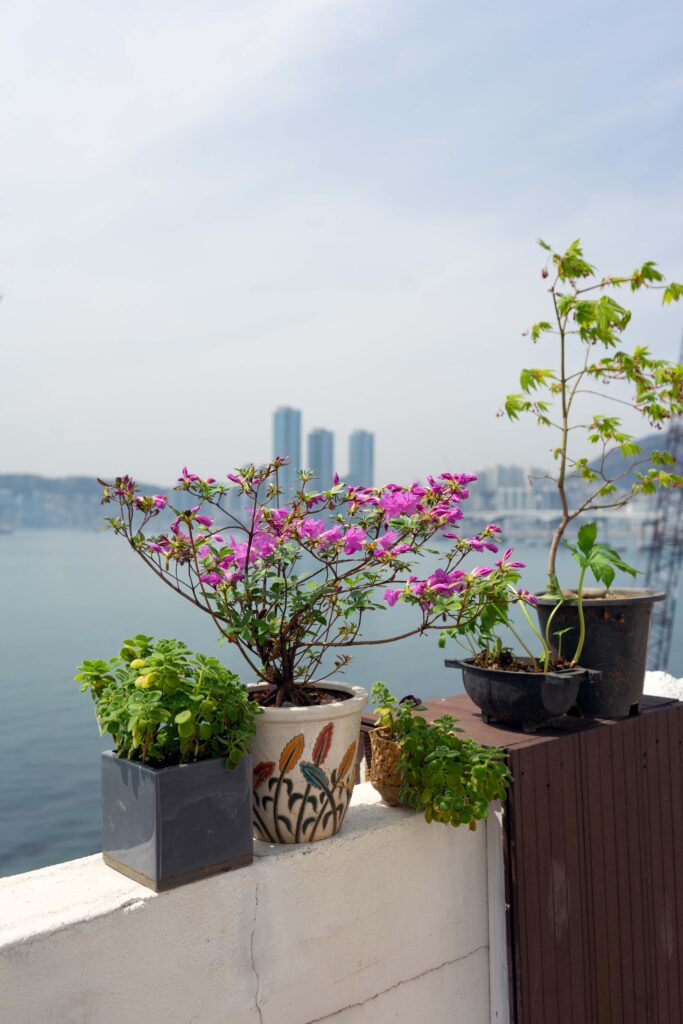
The best way to enjoy Huinnyeoul Culture Village is by walking the Jeoryeong Coastal Walk. This walking route brings you through the village, with beautiful views of the sea, and the cityscape of Busan in the distance.
Along the walk you will pass by colorful houses and murals, with lots of lookout points. Be sure to stop by a little shop called Sosohan Hinyeoul – especially if you’re a cat lover (like me!).
This shop sells all sorts of cat themed trinkets and cute souvenirs. And, they have the most adorable resident cat who is happy to receive some pets.
For a drink, stop by Go Slow cafe. They make delicious iced coffee (but they do tea, too). This cafe is positioned uphill, with lots of seating areas overlooking the sea.
I recommend walking all the way to the Yeongdo Haneul Observation Deck. From this observation deck you’re treated to panoramic views of Busan’s skyline and harbor.
While visiting Huinnyeoul Culture Village, remember that there are residents living in the village. Be respectful of people’s homes, and keep noise to a minimum. Expect to spend 2-4 hours enjoying Huinnyeoul Culture Village.
Choryang Traditional Market
Ready for lunch? Hop on bus 82, 85, or 508 and take it all the way to Busan Station. From the station, walk 10 minutes to Choryang Traditional Market.
This is another of Busan’s traditional markets, where you’ll find fresh fruit and veggies, and lots of little sit-down restaurants where you can enjoy prepared meals.
If you aren’t in the mood for dining in another market, head to Bonjeon Dwaeji Gukbap, which is a short walk from Busan Station. This little spot is known for its pork rice soup. It’s a simple sit-down restaurant with reasonable prices, and tasty food!

Choryang Ibagu-gil
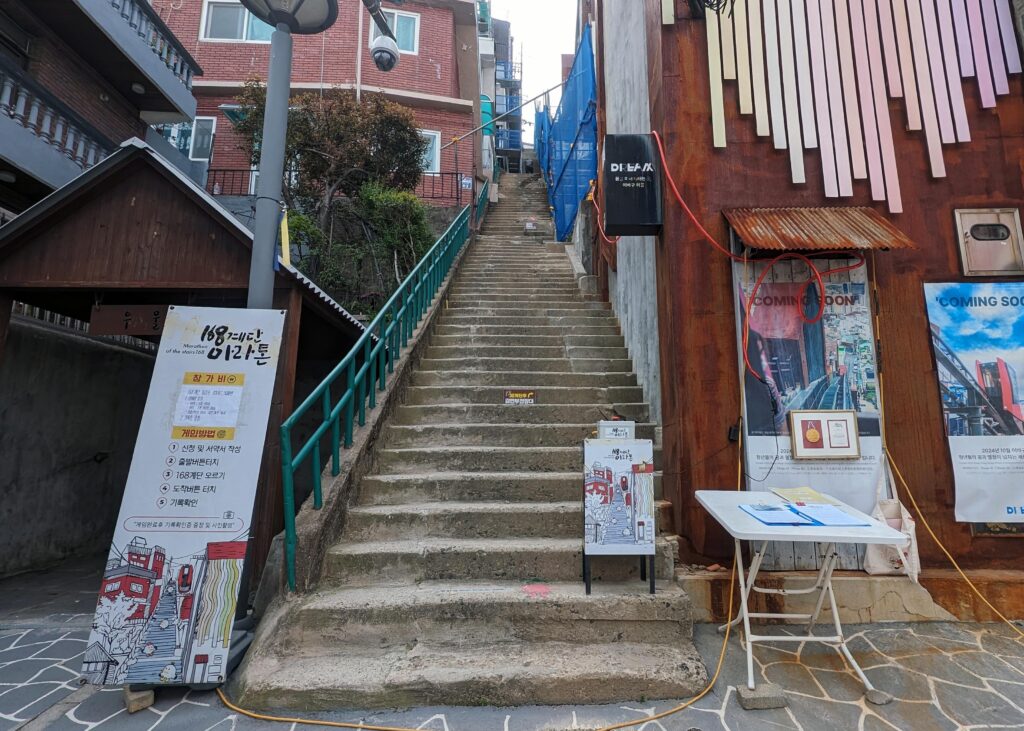
After you’ve filled up on lunch, it’s time for a climb. Choryang Ibagu-gil is a short walk from Busan Station. It’s a set of 168 steep stairs that stretch up the side of a mountain, eventually reaching a nice viewpoint.
This urban staircase has an interesting history. There used to be three wells at the bottom of the stairs. The 168 steps were then created by the residents of the area so that they could carry water from the wells up to their homes on the mountain.
When we visited, we had hoped to go up to the top of the stairs using the monorail that has since been built as a more accessible alternative to climbing the stairs. Unfortunately, the monorail was closed. I’m not sure when it’s meant to re-open.
If you aren’t feeling up for climbing all 168 steps, it’s still worth walking by the bottom of the staircase. The surrounding neighborhood is peaceful, and even if you don’t climb the stairs, you’ll get to see just how steep they are!
Haeundae Blueline Park Sky Train
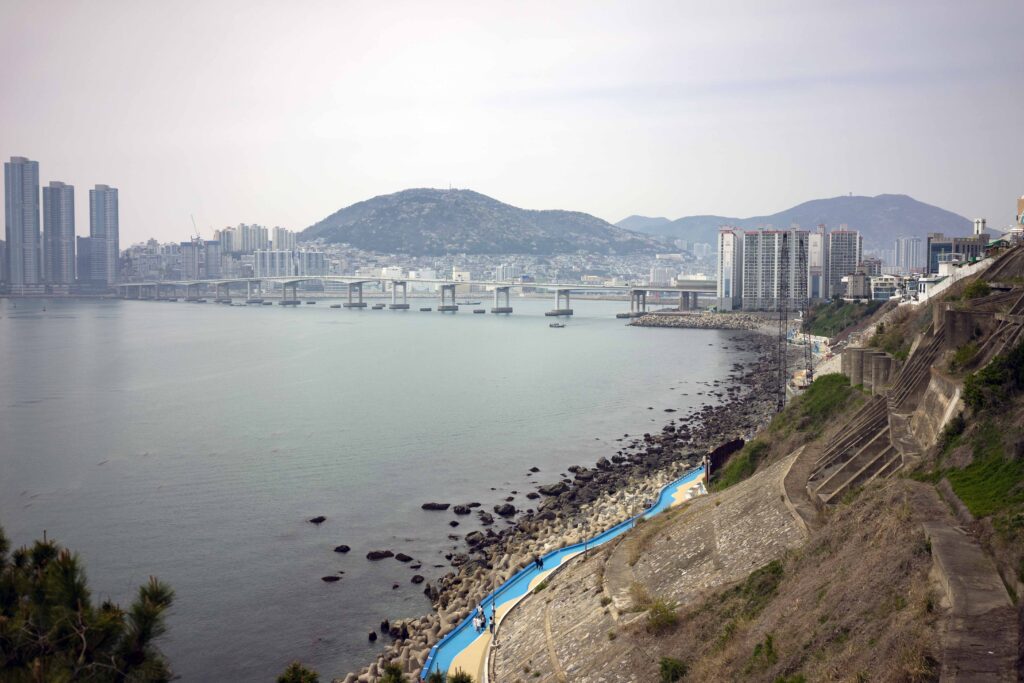
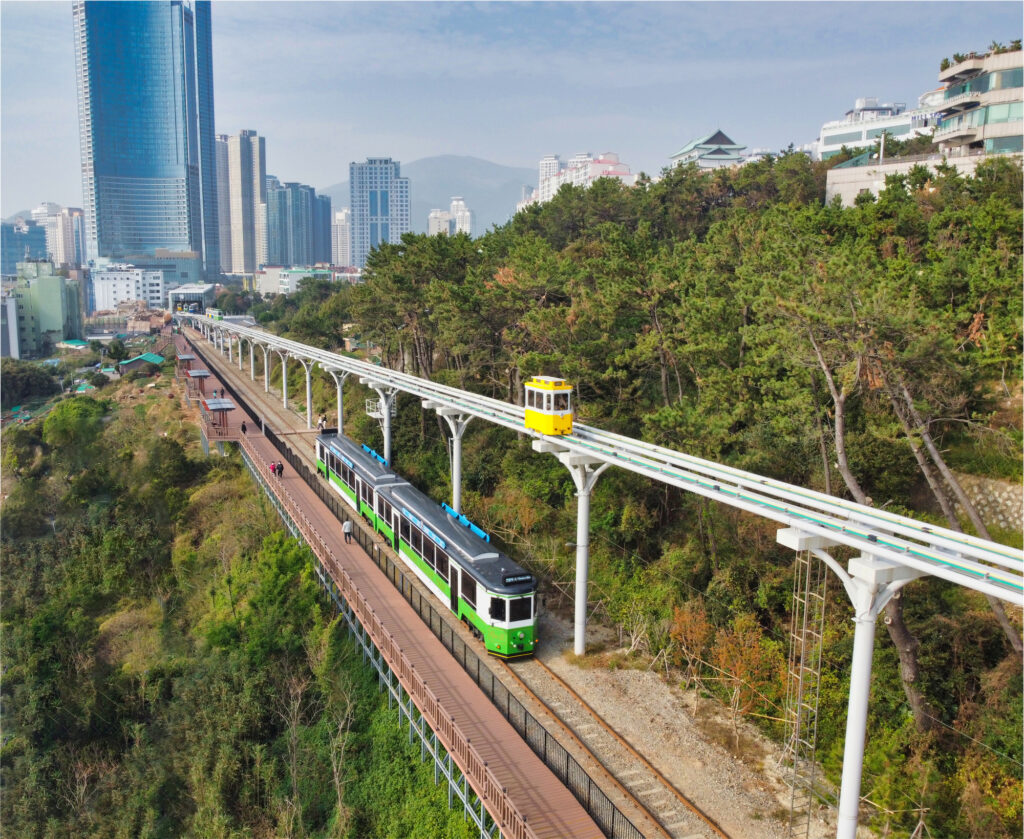
On the last evening of your 3 days in Busan, you’re going for a scenic ride on a sky capsule! The Sky Capsule Train in Haeundae Blueline Park takes you along a track that winds along Busan’s coast. As you ride in your private capsule, you have views of the ocean, city, and surrounding mountains.
The best time to ride the Sky Capsule is late in the day, and even as late as sunset time. When you go at this time, you’re treated to beautiful colors as you ride the train.
The ride in your private capsule is about 30 minutes each direction. You can choose between riding a route that goes more inland, giving you a view of the mountains, or a route that goes alongside the sea.
The one caveat to this activity is that it is a 1 hour to 1.5 hour trip on public transport to get there, and the same amount of time to get back to Busan’s center.
If you’re not up for the transit time involved for this activity, that’s okay! You can skip the Sky Capsule and spend your final evening in Busan doing whatever you feel like.
The Sky Capsule Train can get very busy, so I recommend reserving your tickets and time slot for the train in advance.
Final Thoughts: Spending 3 Days in Busan
Busan is a massive city with endless things to do and see. With 3 days in Busan, you won’t be able to see it all – and that’s okay!
I’ve built this Busan itinerary with the goal of mixing popular attractions with lesser-known ones. I’ve included a few different types of activities, so that you have a diverse experience of this epic city.
With 3 days in Busan, you’ll get a taste of the city, and if you love it (like we did) you’ll have a good reason to come back!
More from Pina Travels on South Korea:
- What Not To Do in South Korea: 18 Important Tips To Know
- Gyeongju Itinerary: How To Spend 2 Days in Gyeongju, South Korea
- 1 Week in Seoul Itinerary: Best Things to Do & See
- 4 Days in Seoul Itinerary: What To Do, See, and Eat
Like this post? Pin it!