
Palermo is Sicily’s capital and one of the most historically layered cities in Italy. With Arab, Norman, and Spanish influences, incredible street food, and lively markets, it’s a fascinating place to explore.
I first visited Palermo completely by accident when I boarded the wrong train while backpacking across Italy. I arrived knowing almost nothing about the city. Years later, after falling in love with a Canadian-Sicilian man and returning many times to visit his family, Palermo has become one of the places I know best in Sicily.
This guide to Palermo covers everything you need to plan a trip, from where to stay, to things to do.
Disclosure: This article includes affiliate links. This means that if you make a purchase through one of those links, I earn a small commission. Affiliate links cost you nothing to use, and keep Pina Travels reader-supported. Thank you!
- Palermo Quick Travel Guide
- Key Historic Takeaways About Palermo
- When is the Best Time to Visit Palermo?
- How Many Days Should You Spend in Palermo?
- Where to Stay in Palermo
- How to Get Around Palermo
- 10 Best Experiences to Have in Palermo
- 3 Day Trips From Palermo Worth Considering
- Take Things Slow When You Visit Palermo


Palermo Quick Travel Guide
Short on time? Here’s a quick low-down of everything to know if you’re planning to visit Palermo.
- Best time to visit: April–June and September–October. Pleasant temperatures, fewer crowds than peak summer, and good weather for walking around the historic center.
- Recommended stay: 2–4 days. This gives you time to see Palermo’s main sights, explore the markets, and fit in a day trip.
- Best neighbourhoods to stay: Old Town or Politeama/Libertà. Both areas are central, walkable, and close to major attractions, restaurants, and transport.
Top things to do
- Ballarò Market – Palermo’s oldest street market, known for its loud vendors, fresh produce, and classic Sicilian street food like arancine and panelle.
- Palermo Cathedral rooftop – Climb to the roof terrace for wide views over the city and the surrounding mountains.
- Capuchin Catacombs – One of Palermo’s most unusual historical sites, where hundreds of preserved bodies reveal a unique burial tradition dating back to the 1500s.
- No Mafia walking tour – A thoughtful way to learn about the history of organized crime in Sicily and the city’s modern anti-Mafia movement.
- Monreale Cathedral day trip – Just outside Palermo, this cathedral is famous for its stunning Byzantine mosaics and sweeping views over the Conca d’Oro valley.

Key Historic Takeaways About Palermo
Palermo has been around for a very long time, and its history can feel a bit overwhelming when you first start reading about it. Empires ruled here, cultures mixed together, and the city developed a reputation shaped by both beauty and conflict.
I know that I, personally, always knew Palermo as the “Mafia city.” Palermo brought to mind Hollywood storylines that had made me think the Mafia was a thing of the past. It wasn’t until I visited Palermo that I learned the Mafia still exists.
You don’t need to know every historical detail before visiting. But knowing the basics can make the city easier to understand as you walk through it. The churches, markets, architecture, and even some of Palermo’s more unusual sites all connect back to these layers of history.
Palermo is ancient. The city was founded in the 8th century BC, which makes it one of the oldest continuously inhabited cities in Europe. Over the centuries it was ruled by many groups, including the Phoenicians, Romans, Arabs, Normans, French, and Spanish. Each left traces in the city’s architecture, food, and culture.
Different cultures shaped the city. Arab and Norman rule had a particularly strong influence on Palermo. You still see this today in the mix of architectural styles across the city, where churches, palaces, and markets reflect layers of different civilizations.

The Mafia became part of Palermo’s modern history. For many years Palermo was known as the center of the Sicilian Mafia. Organized crime had a strong presence in the city through much of the 19th and 20th centuries. Since the early 2000s, however, a visible anti-Mafia movement has taken hold, and you’ll notice reminders of that resistance around the city.
The Capuchin Catacombs reveal another side of Sicilian history. One of Palermo’s most unusual historical sites is the Capuchin Catacombs, which date back to 1599. They began as a burial place for Capuchin friars, but by the 1700s wealthy families could pay to have their loved ones preserved and placed there.
Mummification was once a status symbol. Being buried alongside the friars became a sign of prestige. Families dressed and displayed the preserved bodies of relatives in the catacombs, which is why visitors today can still see hundreds of remarkably preserved figures.
When is the Best Time to Visit Palermo?
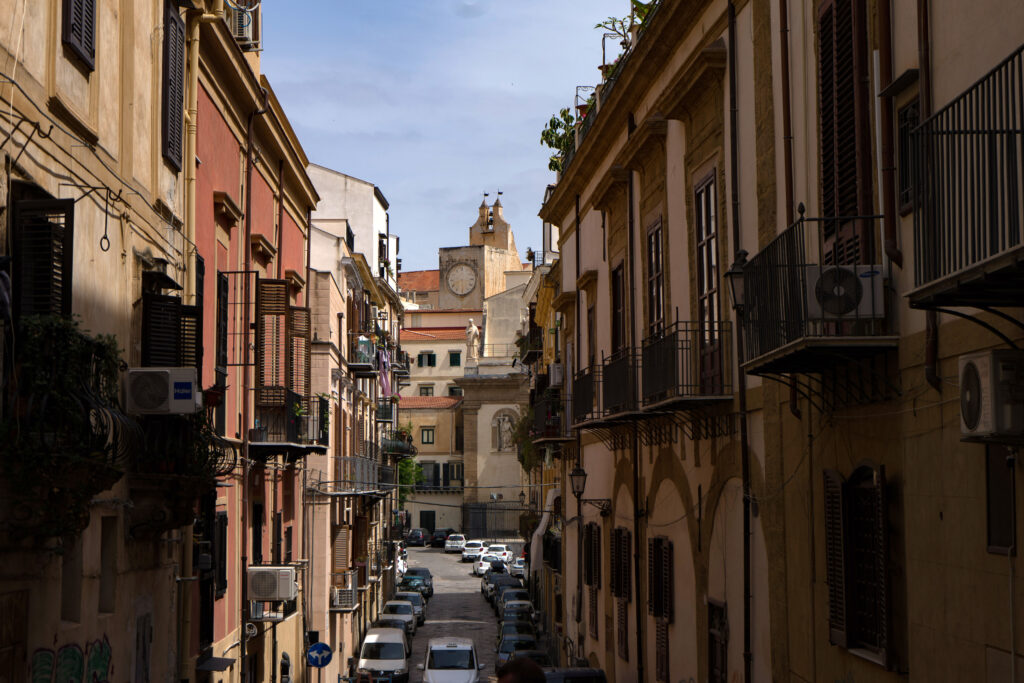
The best time to visit Palermo is usually April to early June and September to October. During these months the weather is warm but comfortable for exploring the city, and tourist crowds are smaller than in peak summer.
That said, seasons around the Mediterranean are becoming less predictable. Summers are getting hotter and heat waves sometimes stretch into spring and fall, so the traditional “shoulder seasons” can shift a bit from year to year. When I visited Palermo in early June of 2024, it was already very hot during the day.
If you enjoy hot weather and beach time, summer is still a fun time to visit Palermo, though it’s busier and more expensive. From late October to March, the city is quieter. Some attractions close earlier, but the weather is mild and you’ll usually find lower prices on hotels and tours.
How Many Days Should You Spend in Palermo?
I recommend spending 3 or 4 days in Palermo. This gives you enough time to see the main sights, explore the historic center, and get a feel for the city’s food and markets without rushing.
If you only have 1 or 2 days in Palermo, you can still visit the highlights. Just expect fairly full days moving between churches, markets, and historic squares.
In my experience, 3 days in Palermo is the sweet spot. That amount of time lets you explore the Old Town at a relaxed pace, visit places like Palermo Cathedral or the markets, and still have time to wander the neighborhoods without feeling rushed.
Where to Stay in Palermo
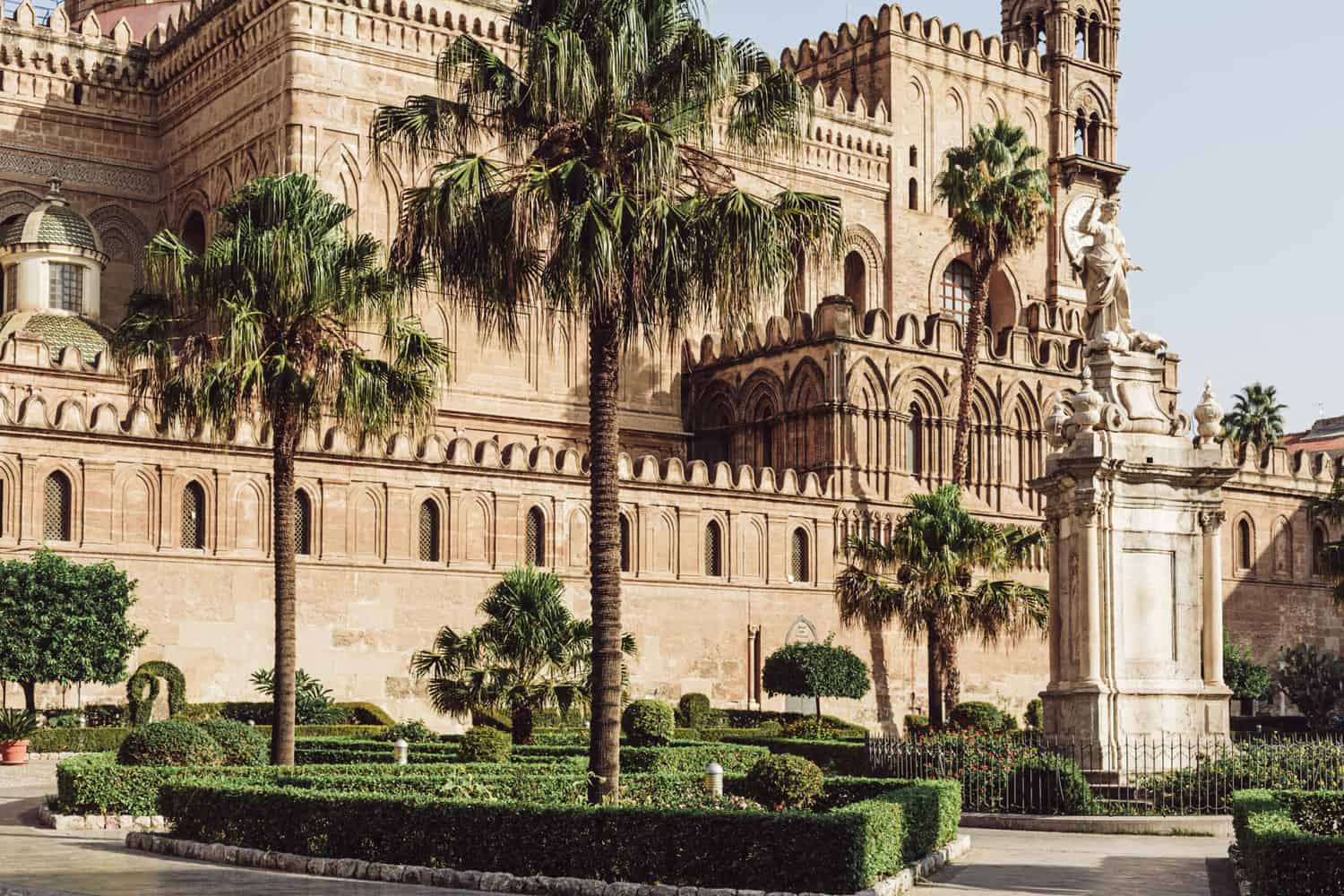
Palermo is a large city with many different neighborhoods, but whenever I go, I stay in or near the historic center.
Staying here puts you within walking distance of Palermo’s markets, churches, piazzas, and major sights, which makes it much easier to explore the city without relying heavily on taxis or public transport.
Here are three solid hotel options across different budgets.
Mid-Range: Hotel Porta Felice
Hotel Porta Felice is a very well-located mid-range option in La Kalsa, one of Palermo’s historic districts near the waterfront. From here, you can easily walk to Palermo Cathedral, the Ballarò and Vucciria markets, and several museums.
Hotel Porta Felice blends historic architecture with modern rooms that are clean and comfortable. One highlight is the rooftop terrace, where breakfast is served with views over the city. There’s also a small spa and wellness area, which is a nice perk after a long day of walking around Palermo.
Budget: Hotel Columbia
If you’re looking for something simple and affordable, Hotel Columbia is a solid budget option right in the historic center. The location is excellent, just a short walk from Quattro Canti, Palermo Cathedral, and several of the city’s main markets.
Hotel Columbia is small and family-run, with basic but clean rooms and friendly service. It doesn’t have many luxury amenities, but it does include breakfast and gives you easy access to the city on foot. And if you’re prioritizing location over extras, it’s a practical and well-priced place to stay.
Higher Budget: Grand Hotel Wagner
Grand Hotel Wagner is one of Palermo’s classic luxury hotels. Located between the Politeama district and the historic center, it’s within walking distance of Teatro Massimo, Via Roma, and many restaurants and shops.
The hotel is a historic 19th-century building and feels elegant without being overly formal. The rooms at Grand Hotel Wagner are spacious and traditionally styled, and many have balconies overlooking the city.
Amenities include a fitness center, bar lounge, and a generous breakfast buffet. If you have a bigger budget, and want comfort, a central location, and a bit of old Palermo atmosphere, this is a great choice.


How to Get Around Palermo
Something I love about Palermo is that you really don’t need a car to get around. In fact, driving in the city can be more stressful than helpful because traffic is busy and parking can be difficult to find. And, Palermo has solid public transport options.
On most of my trips to Palermo, I’ve relied on walking, the free shuttle, and busses to get everywhere I need to go.
Walking and the free shuttle:
Palermo’s historic center is very walkable, and most of the main sights are close enough to reach on foot. If your feet need a break, there’s also a free shuttle bus called the Free Centro Storico. It runs daily between 6:30 AM and 9:00 PM and stops at many of the key spots in the historic center, making it a convenient way to move between major landmarks.
Buses and trams:
Palermo also has a wider network of buses and trams operated by AMAT, which connect the historic center with other neighborhoods around the city. This is especially helpful if you want to visit places outside the old town, like Mondello or the Capuchin Catacombs.
Tickets are inexpensive, costing about €1.40 per ride. While you can sometimes buy tickets on board, it’s usually easier to purchase them ahead of time at a tabaccheria. These small convenience stores are easy to spot because they have a large “T” sign outside.
Public transport in Palermo is straightforward to use, and apps like Google Maps are very helpful for planning routes and seeing which bus to take. For most visitors, a mix of walking and occasional bus rides is more than enough to explore the city.


Palermo, Sicily
10 Best Experiences to Have in Palermo
One thing I’ve learned from visiting Palermo several times is that this is a city that rewards wandering. Some of my favorite moments here have been completely unplanned. I’ve stumbled across quiet piazzas and beautiful churches just by walking through the Old Town, Libertà and the Kalsa district with no real plan.
At the same time, Palermo has a lot of places that are genuinely worth seeking out. I’ve ended up repeating many of these experiences on multiple trips. I’ve visited the Capuchin Catacombs three different times, for example, because the history behind them is so unusual that it’s worth revisiting.
If you’re planning your first trip, these are some of the experiences that give a good sense of Palermo’s history, food, and everyday life in the city.
1. The Capuchin Catacombs
The Capuchin Catacombs are one of Palermo’s most unusual historical sites. Walking through them is a strange experience. The corridors are quiet and a little eerie, and along the walls you’ll see hundreds of preserved bodies, many still dressed in the clothes they were buried in. Some date back hundreds of years.
The catacombs began in the late 1500s as a burial place for Capuchin friars. Over time, wealthy families began paying to have their relatives preserved and placed here as well. Being buried alongside the friars became a symbol of status, which is why the catacombs contain such a wide range of people from Palermo’s past.
It’s a fascinating place to visit, but it’s also important to remember that this is still a burial site. Every time I’ve visited, I’ve noticed people taking sneaky photos. This is frustrating to see, because there are signs posted all over the catacombs clearly asking visitors not to photograph or film.
If you go, please respect the rules and the space. The Capuchin Catacombs are a place where real people were laid to rest, and the expectation is that visitors treat it that way.
Visiting hours: 9:00 AM – 12:30 PM and 3:00 PM – 5:30 PM, Monday – Saturday
Entry fee: €5 (as of June 2024)
The catacombs aren’t in the city center. A fun way to visit them is to go by this Guided Bike Tour to the Capuchin Catacombs. This bike tour departs from the city center and includes a visit to the catacombs, Porta Nuova, the Palermo Cathedral and Quattro Canti.
You can also get to the Palermo Capuchin Catacombs by taxi or driving, or by public transport. You can take bus N5 from Palermo Centrale. The trip is 30 minutes by bus and costs 1,40 euro each way.
2. Quattro Canti
Quattro Canti is one of the most recognizable spots in Palermo’s historic center. Officially called Piazza Vigliena, the square was built in the early 1600s during Spanish rule as part of a major redesign of the city’s street layout.
It sits at the intersection of Palermo’s two main historic streets, Via Maqueda and Corso Vittorio Emanuele, right in the heart of the Old Town.
The name Quattro Canti means “four corners,” which makes sense when you see the square. Each corner is made up of a curved Baroque façade decorated with statues, columns, and small fountains.
The architecture is carefully designed in tiers. The lower level represents the four seasons, the middle level features statues of Spanish kings who ruled Sicily, and the upper niches hold statues of Palermo’s four patron saints.
One of the most interesting things about Quattro Canti is how the light moves across the square throughout the day. Because the façades face different directions, the sunlight gradually shifts from one corner to another. As the day goes on, a different façade is illuminated while the others fall into shadow.
If you want to experience the square with fewer crowds, visit early in the morning before tour groups arrive and the streets fully fill with people.
But my favourite time to walk through Quattro Canti is in the evening. The lighting in the evening makes the streets glow, and there’s often street performers in the square, and lots of happy people wandering around. The energy of this place in the evening is really lovely!

3. Fontana Pretoria
Just a short walk from Quattro Canti you’ll find Fontana Pretoria, one of the most striking squares in Palermo. The fountain was originally built in Florence in the 1500s, but it was later dismantled, shipped to Sicily, and reassembled in Palermo in 1574.
The massive fountain is filled with marble statues of mythological figures, animals, and gods arranged across several tiers. When it first arrived in Palermo, the statues caused quite a stir because many of them are nude. Locals began jokingly calling it “La Fontana della Vergogna,” or the Fountain of Shame, seeing it as a symbol of the city’s corrupt leadership at the time.
Today, the fountain sits in a beautiful piazza surrounded by historic buildings and is one of the most photographed spots in the city.
While you’re here, don’t skip getting a cannoli from I Segreti del Chiostro, which is across from Fontana Pretoria. This bakery is hidden just behind the square at Santa Caterina Monastery.
The nuns of the monastery run a pastry counter where you can buy freshly made cannoli and other Sicilian desserts. The cannoli here are famous in Palermo, and grabbing one after visiting the fountain is a local tradition, and something I never skip when I’m in Palermo.

4. Tour the Roof of Palermo Cathedral
Palermo Cathedral, known as Cattedrale di Palermo, is one of the city’s most important landmarks. The original church dates back to 1185, but like much of Palermo, the building reflects centuries of change. Over time it has been expanded, renovated, and rebuilt, which is why the cathedral blends Norman, Gothic, Baroque, and Neoclassical architecture all in one place.
The cathedral is right in the heart of the historic center, and it’s worth stepping inside to see the interior and royal tombs. But the real highlight, at least for me, is the rooftop terrace.
For a small fee (around €7, as of 2024), you can climb up narrow staircases and walk along the cathedral’s roof. From the top you’ll get wide views over Palermo’s rooftops, the surrounding mountains, and the golden stone of the cathedral’s domes and towers.
If you can, visit late in the afternoon or early evening, when the warm light hits the cathedral’s stone and the views over the city are especially beautiful.

5. See an Opera at Teatro Massimo
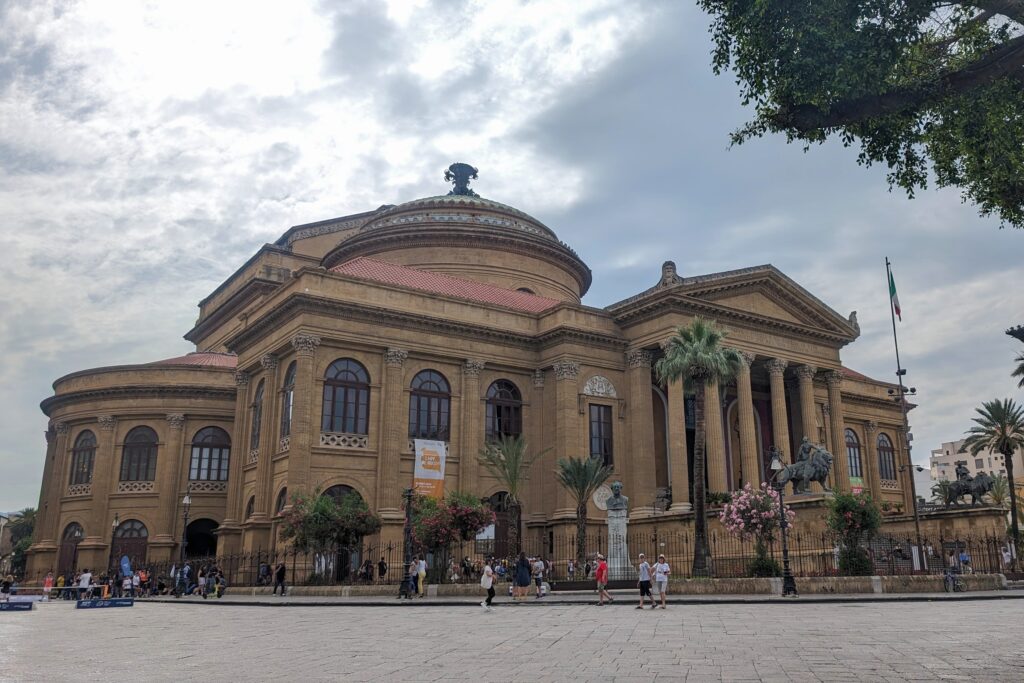
Teatro Massimo is one of the most important cultural landmarks in Palermo. Opened in 1897, it is the largest opera house in Italy and one of the biggest in Europe. The building dominates Piazza Verdi with its grand staircase, massive columns, and neoclassical design. Even if you’re not planning to attend a performance, it’s worth stopping by just to see the exterior.
The theatre is famous not only for its size, but also for its acoustics and ornate interior. Inside you’ll find a beautifully decorated auditorium with red velvet seats, gold detailing, and a large domed ceiling that helps carry sound throughout the space. Opera, ballet, and classical music performances are regularly held here.
There are two ways to experience Teatro Massimo. The first is by taking a guided tour, which gives you access to the auditorium, royal box, and backstage areas while explaining the history of the theatre. Tours run throughout the day and are a good option if you’re visiting Palermo on a tight schedule.
The second option, and arguably the best experience, is to attend a performance. Watching an opera or concert here gives you the chance to see the theatre as it was intended to be experienced. Even if you’re not an opera expert, the setting alone makes it memorable.
Movie fans may also recognize the theatre. Teatro Massimo appears in the final scenes of The Godfather Part III, which were filmed on the grand staircase outside the opera house.
6. Visit the No Mafia Memorial
This small but powerful museum focuses on the human impact of the Sicilian mafia. Inside, you’ll find exhibits that explain how the mafia shaped everyday life in Sicily, particularly during the late 20th century when violence and intimidation were widespread.
The No Mafia memorial highlights the stories of journalists, judges, police officers, and ordinary citizens who were killed because they opposed the mafia.
One thing I appreciated about the museum is that it centers the victims rather than sensationalizing the mafia itself. Photos, documents, and personal stories help explain what people in Palermo experienced during the height of mafia violence, and how civil resistance eventually began to push back against it.
A visit here is a great way to start building context for the rest of your time in Palermo. Later in your trip, you’ll likely notice signs of the anti-mafia movement around the city, including stickers in shop windows showing support for businesses that refuse to pay the mafia protection tax.
The No Mafia Memorial is at 353 Via Vittorio Emanuele. It is open daily from 11:00 AM to 6:00 PM (as of June 2024). Entry to the museum is free, but please leave a small donation if you can to support the memorial.
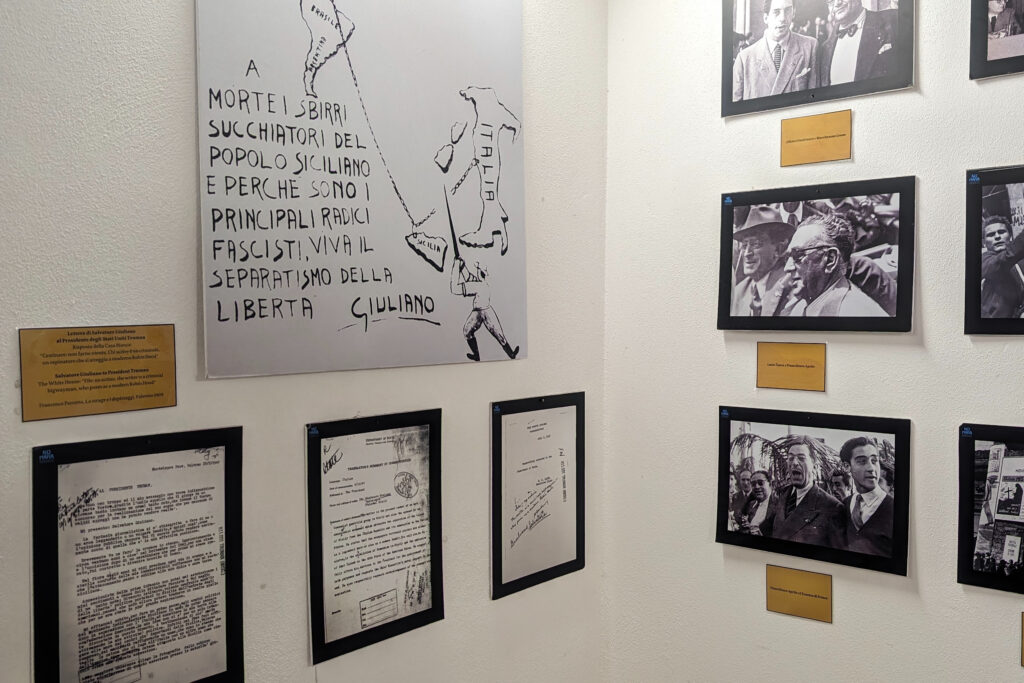
7. Go on the No Mafia Walking Tour
The No Mafia walking tour is an absolute must while in Palermo. This unique tour teaches the history of the Mafia in Palermo, as well as the civil anti-mafia movement that has reshaped the city over the last few decades.
While walking through Palermo’s historic center, you learn how the Mafia impacted everyday life in the city. The guide explains how businesses were pressured to pay a protection tax to the Mafia, and how that system operated for years.
You also learn about the turning point in the early 2000s, when local activists began organizing resistance and encouraging businesses to refuse to pay.

One part of the tour that really stuck with me was when our guide, Laura, handed around a small green booklet (the one in the photo above). Inside were lists of businesses that had publicly committed to refusing the protection tax. These lists were originally circulated so that locals could choose to support shops and restaurants that were standing up to the Mafia.
Holding that booklet in my hands made the story feel much more real. It wasn’t just history being explained on a walking tour. It was a reminder that real people in the city made a conscious decision to push back against a system that had shaped Palermo for decades.
The No Mafia walking tour runs twice a day, once in the morning and once in the late afternoon, and lasts about three hours.
I recommend booking it in advance because it often fills up, especially in the busy travel months. When you go, wear comfortable walking shoes and bring sunscreen since most of the tour takes place outside while walking through the city.
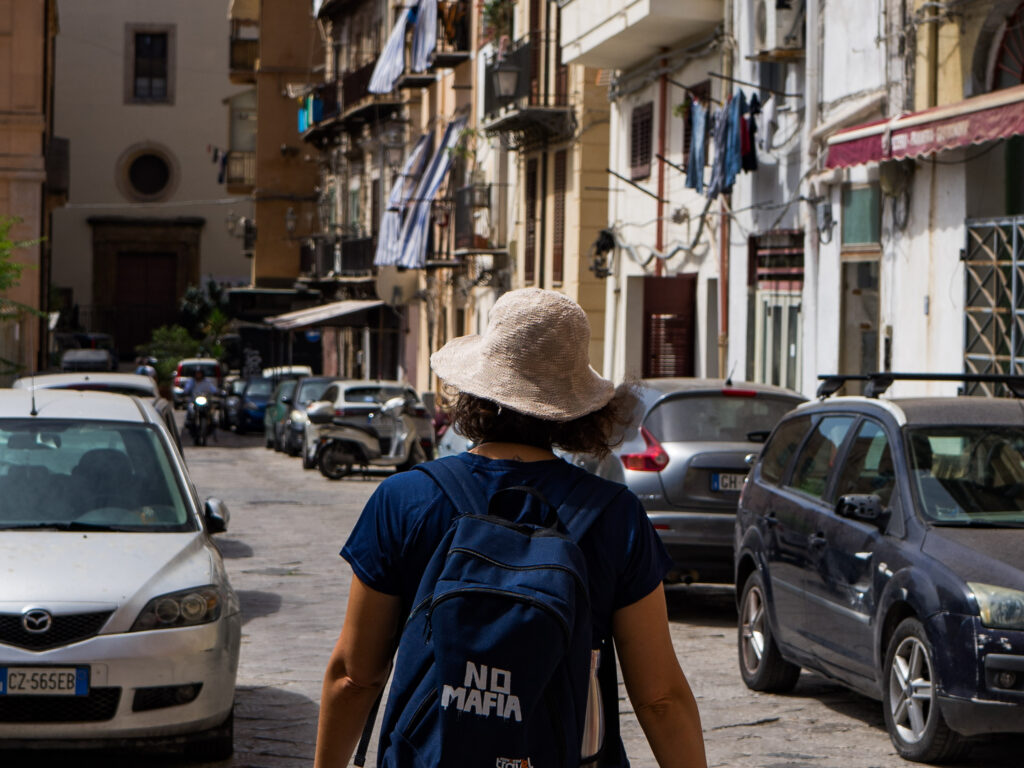
8. Visit Palermo’s Street Markets
Palermo’s street markets have been part of the city’s daily life for centuries, and they’re still places where locals shop for produce, seafood, and quick street food.
The three markets visitors usually hear about are Ballarò, Vucciria, and Capo. Each one has a slightly different feel, and they’re worth visiting for different reasons.
Ballarò Market is generally considered the most traditional of the three. It’s loud, busy, and a bit chaotic in the best way. Vendors call out prices, scooters weave through the narrow streets, and stalls sell everything from fresh vegetables to fish and spices.
This is the market that still feels most like a working neighborhood market where locals actually shop. If you want to experience the atmosphere of Palermo’s historic street markets, Ballarò is the place to go. Be sure to go in the morning!
Capo Market is another good one to visit, especially if you’re interested in trying street food. The market runs through narrow streets packed with food stalls, small butcher shops, and seafood vendors. It’s a great place to try Sicilian street foods like arancine, panelle, or sfincione while wandering around.
Vucciria Market used to be Palermo’s most famous market, but today it’s much quieter during the day. Many of the traditional food stalls have disappeared, and the area has shifted more toward bars and nightlife in the evenings. It’s still interesting to walk through, but it’s very different from what it once was.
One thing to know is that these markets have become pretty geared toward tourists, especially in the central areas where visitors tend to wander. You’ll see plenty of street food stands catering to travelers. That said, the markets still offer a glimpse into how food and daily life function in Palermo.
Timing also makes a big difference. The best time to visit the markets is in the morning, ideally before noon. That’s when vendors are actively selling fresh produce, seafood, and meats, and the markets feel busiest and most authentic. By the afternoon, many stalls start closing down.
If you go early, grab a snack from one of the street vendors and just wander for a bit. The markets are one of the easiest ways to experience Palermo beyond its churches and historic sites. I also personally love going to these markets for lunch, I usually head to Ballarò Market.

My favourite of the three is Ballarò Market
9. Enjoy a Sicilian Puppet Show
Puppet Opera (Opera dei Pupi) is a unique Sicilian tradition which dates back to the 19th century. At that time, puppet shows became wildly popular with Sicily’s working classes.
Puppeteers told stories based on medieval literature and Italian poems of the Renaissance, as well as tales saints and notorious bandits. Dialogues in performances were often improvised by the performers. Theatres were often family-run business, and attending shows was a very social event.
Catching a puppet opera is a fantastic thing to do in Palermo because it is more than just entertainment: it represents Sicilian tradition and history. The oldest existing theatre is Cuticchio Theater.
10. Take a Sicilian Cooking Class
If you love Sicilian food (who doesn’t), one of the best things you can do in Palermo is take a Sicilian cooking class. Sicilian cuisine is a big part of daily life here, and learning how a few of the classic dishes are made gives you a much deeper appreciation for what you’re eating around the city.
I always find cooking classes to be one of the most memorable travel experiences because they slow things down. Instead of rushing between sights, you spend a few hours learning, cooking, and eating together. It’s also a great way to understand how local ingredients like eggplant, tomatoes, pistachios, seafood, and citrus show up again and again in Sicilian cooking.
One great option in Palermo is this Palermo Cooking Class and Market Tour.
The experience usually starts with a visit to one of Palermo’s historic street markets, where you walk through the stalls with your host and learn about the ingredients used in traditional Sicilian dishes. Markets like Ballarò or Capo are full of fresh produce, seafood, and local specialties, so it’s a fun introduction to Palermo’s food culture.
After the market visit, you head to the kitchen where the cooking class takes place. During the class you’ll learn how to prepare a full Sicilian meal, typically including a fresh pasta dish, a traditional main course, and dessert. Once everything is ready, the group sits down together to enjoy the meal you’ve just made.
Classes usually last around 3 to 4 hours, and they include the market visit, cooking instruction, and the full meal. It’s a relaxed, social experience and a nice break from sightseeing. Plus, you’ll leave Palermo knowing how to recreate at least one Sicilian dish at home.

3 Day Trips From Palermo Worth Considering
There a several day trips from Palermo that are worth doing if you have the time to fit them in. Day trips from Palermo are easiest done if you have rented a car, but most of these spots can also be accessed by bus or train.
Go to the coastal city Cefalù
Cefalù (pronounced shef-a-loo) is a coastal beach city just under an hour driving from Palermo. Cefalù is the perfect day trip from Palermo because you can make the trip by train as well as by car. The city is small and has a beautiful beach if you’re in need of some relaxation.
Cefalù is also known for its Norman cathedral, a 12th-century building with elaborate Byzantine mosaics and twin towers. Nearby, the Mandralisca Museum is home to archaeological exhibits. And, be sure to swing by Piazza Duomo, the perfect place for a coffee or aperol spritz.
If you are feeling up to a climb, head up La Rocca: a craggy mountain that once had a Norman castle at its summit. The 284m climb will include a visit to the ruins of Tempio di Diana, as well as incredible views of Cefalù’s Old Town and the sparkling blue sea. After climbing La Rocca, reward yourself with a plate of pasta from Pasta & Pasti.
Visit the ancient temples of Segesta
The Temples of Segesta are Doric temples that were built by the Elymians, and Indigenous population of Sicily, and they date back to around 430 BC. Perched on a hill, the temples look very Greek, and are impressively preserved.
There are three specific sites to visit: The Doric Temple, the Segesta Theatre, and the Sanctuary of Mango. The temples make for a great day trip from Palermo because they are only a 1 hour drive from the city!

Visit the Cathedral of Monreale
Monreale is a town and commune just 7km’s away from the centre of Palermo. But, because it is up on a hill, it can take some time to reach the town.
Monreale is home to one of the greatest existing examples of Norman architecture: a cathedral, built beginning in 1174 by William II of Sicily. The cathedral’s detailed mosaics are super impressive, making a trip to the hill-side town of Monreale an essential day trip while in Palermo. After exploring the cathedral, there are plenty of cute lunch spots in the town’s main piazza.
The best way to visit Monreale is by bus. You can go by car, but parking can be tricky especially if you go in the summer when it is busy.
There are two busses that will take you there: Bus number 389 which departs from Piazza Indipendenza or another bus run by Azienda Siciliana Transporti (AST) which leaves from the train station. The trip is about 1 hour each direction because of traffic. Be sure to bring change with you to pay the fare, which is 1,40 euro each way.

Take Things Slow When You Visit Palermo
Palermo is a city that takes a little time to appreciate. It’s not a city where every street feels polished or perfectly organized. Instead, it’s a city with layers. You see it in the architecture, the markets, the food, and the mix of cultures that have shaped the island for centuries.
This is why I always love returning to Palermo. Every visit gives me a chance to notice something new, try a different restaurant, or revisit a place that stuck with me the last time.
And it’s definitely a city that rewards curiosity and a bit of wandering, so be sure to weave some “just wander” time into your visit to Palermo.
Want to have a more thoughtful trip? Here are some of my responsible travel tips to get you started.
- Learn the main tips for being a responsible tourist.
- Use sustainable tourism tips to travel eco-consciously.
- Choose responsible wildlife tourism experiences.
- Travel to places that aren’t facing overtourism to reduce your impact.
- Be aware of cultural appropriation and avoid it.
- Use second city tourism when you do want to visit more popular places.
- Be thoughtful in how you shop for souvenirs.
- Take and share photos and videos respectfully.
- Avoid tourism leakage by supporting local businesses.
- Consider your travel privileges.
