
Is Morocco worth visiting in winter? I think so! If you’re planning a trip to Morocco between December and February, there are some good reasons to consider travelling during these cooler months.
I’ve travelled around Morocco, and one thing I think is important to understand when planning a trip is how much the weather varies across the country.
Winter in Marrakech is very different from winter in the Atlas Mountains. You can spend an afternoon walking around a city in comfortable temperatures, then find yourself reaching for a heavy jacket once the sun goes down.
There are some advantages to visiting Morocco in winter. January and February tend to be quieter months for tourism in many parts of the country, and the cooler weather makes visiting historic cities more comfortable. It’s also a great season for surfing along the Atlantic coast.
Of course, there are some trade-offs. Evenings can be surprisingly cold, and winter brings rain to parts of Morocco.
Here are 10 reasons to visit Morocco in winter, followed by everything you should know about the weather and planning your trip.
- 1. Morocco Is Often Less Crowded in Winter
- 2. You May Have More Accommodation Options
- 3. A Winter Trip to Morocco Can Be More Affordable
- 4. You Can Visit Popular Attractions With Shorter Waits
- 5. The Cooler Weather Is Better for Sightseeing and Desert Trips
- 6. Winter Is a Great Season for Surfing in Morocco
- 7. Travelling During Quieter Periods Can Help Spread Tourism Spending Throughout the Year
- 8. You Can See Almond Blossoms in the Anti-Atlas Mountains
- 9. You Can Learn About Amazigh New Year in January
- 10. You Can See Snow in the Atlas Mountains
- Morocco in Winter: Know Before You go
- Why I Think Morocco Is Worth Visiting in Winter


1. Morocco Is Often Less Crowded in Winter
One of the biggest advantages of visiting Morocco in winter is that January and February are generally quieter months for tourism.
If you’ve been to Marrakech or Fes, you’ll know how busy the medinas can get. Between the people shopping, visitors taking photographs, and groups moving through narrow streets, certain areas can become very congested.
Travelling outside the busiest tourism periods can make a difference.
For example, you may find that visiting popular attractions in Marrakech, like Bahia Palace, is a little easier during January or February than during the busy spring and autumn seasons.
There is also a responsible tourism consideration here.
I’ve written before about the problems caused by overtourism. When visitor numbers become difficult for a community to manage, the effects can include congestion and additional pressure on local infrastructure.
Choosing quieter travel periods is one way we can be mindful of that pressure.
Something to know: Morocco isn’t quiet everywhere throughout winter. Christmas and New Year’s are popular travel periods, particularly in Marrakech. Some coastal towns also attract plenty of visitors during the winter surfing season.

2. You May Have More Accommodation Options
If you’re hoping to stay in a traditional Moroccan riad, travelling during a quieter period can give you more choice.
Riads are traditional Moroccan houses built around an interior courtyard or garden. Many have been converted into guesthouses, particularly in the medinas of Marrakech and Fes.
Some are small properties with only a handful of rooms, so the ones you’re interested in can book up quickly during popular travel periods.
In January and February, you may find more availability and greater flexibility with your dates. I would still recommend booking ahead if you have a particular property in mind, especially if you’re travelling around the holidays.
One thing I’d pay attention to when booking a riad in winter is heating.
Traditional buildings can get cold at night, particularly when they have tiled floors and interior courtyards. Check whether your room has heating, and read recent guest reviews.
I’d also encourage you to look into who owns and operates the accommodation you’re considering.
Staying somewhere locally owned can be a way to direct more of your spending toward Moroccan businesses, although ownership alone doesn’t tell you everything about how a business operates.


Chefchaouen, Morocco
3. A Winter Trip to Morocco Can Be More Affordable
Another potential advantage of travelling to Morocco in winter is the cost.
Accommodation prices often fluctuate with demand, and January and February can offer better value than the busiest tourism periods. This can be especially helpful if you’re planning a longer trip and moving between several cities.
That said, I wouldn’t assume everything in Morocco will be less expensive in winter.
Restaurants generally don’t change their menu prices just because it’s January, and the cost of private tours depends on the operator. Flights also vary considerably depending on where you’re travelling from.
There are exceptions to winter’s lower accommodation prices, too. Christmas and New Year’s can be expensive in Marrakech, and popular surf towns have their own seasonal demand.
My suggestion is to compare the total cost of your trip across a few different dates. If your schedule is flexible, you may find that travelling after the New Year’s holiday offers better value.

4. You Can Visit Popular Attractions With Shorter Waits
Morocco has so many interesting historical sites and museums, and I think it’s worth leaving plenty of time for them in your itinerary.
In Marrakech, two popular attractions are Bahia Palace and Jardin Majorelle.
Bahia Palace is a 19th-century palace known for its courtyards, decorative tilework, and carved wood and plaster details. Jardin Majorelle is a botanical garden associated with French painter Jacques Majorelle and later Yves Saint Laurent and Pierre Bergé.
Both attract significant numbers of visitors.
During quieter winter periods, you may encounter smaller crowds at some attractions. This can make it easier to take your time, particularly in places where people tend to gather around the same rooms or viewpoints.
However, reduced crowds aren’t guaranteed. Popular attractions can still be busy, and timed-entry tickets may be required.
I’d recommend checking official booking information before visiting Jardin Majorelle rather than assuming you can simply turn up.
You can also read my guide to choosing between Fes and Marrakech if you’re deciding which city to include in your trip.

5. The Cooler Weather Is Better for Sightseeing and Desert Trips
For me, this is one of the strongest arguments for visiting Morocco in winter.
Marrakech and Fes are cities where you’ll probably spend a lot of time walking. Whether you’re navigating the medina or visiting historical sites, you can easily be outside for hours.
During summer, inland Moroccan cities can get extremely hot.
Winter temperatures are generally more comfortable for walking, especially in Marrakech, where daytime highs in January are often around 18°C to 19°C.
Of course, comfortable weather is subjective. If you’re coming from a Canadian winter, an afternoon at 18°C might feel wonderful!
Just remember that Morocco’s winter weather changes significantly after sunset. In Marrakech, January nights can drop to around 6°C. Fes can be chilly, and northern cities may experience more rain.
I’d pack clothing that can be layered, including a warm jacket for evenings.
Winter can also be a good time to visit the Sahara Desert in Morocco, particularly if you’re planning an overnight desert camp near Merzouga or M’Hamid.
During summer, temperatures in the desert can become extremely hot, making outdoor activities uncomfortable. Winter brings cooler daytime temperatures, which can make walking through the dunes more manageable.
Just be prepared for very cold nights, when temperatures can approach freezing. If you’re planning a desert excursion, I’d recommend booking with a locally operated guide or camp and checking what heating and bedding are provided.

6. Winter Is a Great Season for Surfing in Morocco
Did you know that Morocco has a well-established surfing scene?
The country’s Atlantic coast attracts surfers throughout the year, but winter is an especially important season because North Atlantic storms generate more consistent swells.
The main swell season generally runs from October through April, with some of the biggest waves arriving during the winter months. Popular surfing areas include Taghazout, Tamraght, and Imsouane, all along the Atlantic coast.
Taghazout, near Agadir, is particularly well known for its point breaks. Some spots attract experienced surfers looking for larger waves, while other nearby beaches can be suitable for lessons when conditions allow.
If you’re a beginner, I would recommend booking with a local surf school that can choose a beach based on your experience and the day’s conditions.
Winter waves can be powerful, and some of Morocco’s well-known surf breaks are unsuitable for beginners.
You’ll also want a wetsuit. The Atlantic Ocean is cool in winter, with water temperatures around 17°C to 19°C along parts of the southern coast. If you book a class, they’ll likely provide a wetsuit, and otherwise, it’s possible to rent them.
If you’re spending time in Essaouira, you can look into surfing lessons there as well. Just remember that wind and wave conditions will determine whether a lesson can go ahead.

7. Travelling During Quieter Periods Can Help Spread Tourism Spending Throughout the Year
I think it’s worth considering when we travel, along with where we spend our money.
In communities that depend heavily on tourism, demand can change significantly throughout the year. Hotels, guides, restaurants, and other tourism businesses may experience quieter periods when fewer visitors are travelling.
Visiting during those periods can help support business activity outside the busiest months.
But there’s an important distinction here: travelling in the off-season doesn’t automatically mean your spending benefits the wider community. I think we still need to pay attention to the businesses we’re supporting.
When I’m travelling, I try to make informed decisions about accommodation and tour operators. I also think it’s important to learn about local customs and the history of the places I’m visiting.
There’s always nuance to responsible tourism, and I don’t think any single travel choice guarantees a positive impact. If you’re interested in this topic, I’ve written more about what it means to be a responsible tourist.

8. You Can See Almond Blossoms in the Anti-Atlas Mountains
If you’re travelling to southern Morocco toward the end of winter, you may have the opportunity to see almond trees in bloom. The area around Tafraoute, in Morocco’s Anti-Atlas Mountains, is particularly associated with almond cultivation.
Depending on the weather and elevation, almond trees can begin flowering during the late winter months. The blossoms are generally white or pale pink.
Tafraoute also hosts the Almond Blossom Festival, known as the Festival des Amandiers.
The festival celebrates almond production and the region’s cultural traditions. Past editions have included Amazigh music and dance performances, alongside markets featuring regional agricultural products.
The timing is important to check.
Although the festival is often described as a February event, its dates can change. The 2025 edition, for example, took place from April 10 to 13.
If attending the festival is important to you, check the confirmed dates for the year you’re travelling before booking anything.
Even if your visit doesn’t coincide with the festival, the surrounding region can be worth including in a longer southern Morocco itinerary.

9. You Can Learn About Amazigh New Year in January
One of the cultural events that takes place during Morocco’s winter is Amazigh New Year, also known as Yennayer.
The Amazigh are Indigenous peoples of North Africa, with communities across Morocco and several neighbouring countries.
Yennayer marks the beginning of the Amazigh agricultural calendar and has long been observed through family gatherings and regional traditions.
In 2023, Morocco officially recognized Amazigh New Year as a national holiday. It is observed on January 14.
Celebrations vary by region and community. Traditional meals are an important part of many observances, and some places host public cultural events.
If you’re visiting Morocco around this time, you may come across celebrations or opportunities to learn about Amazigh culture.
I think it’s important to approach cultural events with some awareness that they’re meaningful occasions for the people celebrating them.
If you attend a public event, follow local guidance and ask permission before photographing people, especially during community gatherings.
You can also learn about Amazigh history throughout the year by visiting museums and supporting Amazigh-led cultural experiences.

10. You Can See Snow in the Atlas Mountains
When people think about Morocco, snowy mountains probably aren’t the first thing that comes to mind.
But Morocco’s mountain ranges can receive significant snowfall during winter, particularly at higher elevations.
The High Atlas Mountains are home to Jebel Toubkal, Morocco’s highest peak, which rises to 4,167 metres.
There’s also Oukaïmeden, a mountain area roughly 80 kilometres from Marrakech that has historically been used for skiing and other winter activities.
The drive from Marrakech takes you into a very different landscape, and during snowy periods, Oukaïmeden attracts visitors from the city.
However, I want to flag something important if you’re planning a ski trip.
Snowfall and ski-lift operations at Oukaïmeden are unreliable. The area hasn’t experienced great snow seasons, and ski infrastructure has faced interruptions and redevelopment plans.
I wouldn’t plan an entire trip around skiing there without confirming current snow conditions, road access, and whether any lifts are operating.
For a winter visit to the mountains, it’s also worth considering the road conditions. Snow and ice can make mountain routes difficult, and conditions can change quickly.
If you’re heading into higher elevations, consider travelling with an experienced local guide who knows the area and current conditions.

Morocco in Winter: Know Before You go
Now that we’ve covered the reasons to visit, here’s some practical information to help you plan.
When Is Winter in Morocco?
Winter in Morocco generally runs from December through February, although cold conditions can continue into March, especially in the mountains.
The weather depends heavily on which part of the country you’re visiting. Coastal cities generally have milder winters, while inland cities can experience much colder nights. At higher elevations, temperatures can drop below freezing and snowfall is possible.
What Is the Weather Like in Morocco in Winter?
Winter weather in Morocco varies quite a bit depending on where you’re visiting. January is typically the coldest month, but even then, some parts of the country have relatively mild daytime temperatures.
In Marrakech, average daytime highs in January are around 18–19°C, although temperatures can drop significantly at night.
Fes tends to be a little cooler, with daytime highs around 15–16°C and occasional rain.
Along the Atlantic coast, Casablanca typically sees daytime temperatures around 17–18°C, while Agadir, further south, is generally warmer, with highs around 20–21°C.
If you’re heading into the Atlas Mountains, expect much colder weather. Temperatures vary considerably depending on elevation, and higher areas can experience freezing conditions and snowfall.
These are average temperatures, so actual conditions can vary. If you’re travelling around Morocco in winter, I’d recommend checking the forecast for each place you’re visiting and packing layers to accommodate the changing temperatures.
What Is the Coldest Month in Morocco?
January is generally the coldest month in Morocco. In Marrakech, daytime temperatures can still be pleasant, but the temperature drops significantly overnight.
Fes and northern Morocco can feel colder, particularly during wet weather. In the mountains, freezing temperatures and snowfall are possible. If you’re travelling in January, make sure your packing list reflects the different places you’re visiting.
Does It Snow in Morocco?
Yes, it snows in Morocco! Snowfall is most common in the Atlas Mountains and other high-elevation areas, including parts of the Middle Atlas. Places such as Ifrane can experience snowy winters.
You generally won’t see snow in lower-elevation cities like Marrakech, Agadir, or Casablanca. However, even places without snow can experience cold winter nights.
What Should You Pack for Morocco in Winter?
I recommend packing layers, because winter temperatures can change considerably throughout the day. For a trip that includes Marrakech or Fes, I’d bring comfortable walking shoes and a warm jacket for evenings. A sweater or fleece is useful, too.
If you’re visiting northern Morocco, bring a rain jacket. For mountain trips, you’ll need clothing appropriate for freezing temperatures and potentially snowy conditions.
I’d also recommend checking whether your accommodation has heating. It’s something that’s easy to overlook when planning a trip to Morocco.
Is December, January, or February Best for Visiting Morocco?
It depends on what you want to do.
December: A good option for cooler sightseeing weather, although Christmas and New Year’s can bring higher prices and more visitors.
January: Often one of the quieter months for tourism. It’s generally the coldest month, so pack accordingly.
February: Another good option for city visits, with the possibility of almond blossoms appearing in southern Morocco toward the end of winter.
For a trip focused on Marrakech and Fes, I’d personally lean toward January or February if avoiding the busiest tourism periods is a priority.
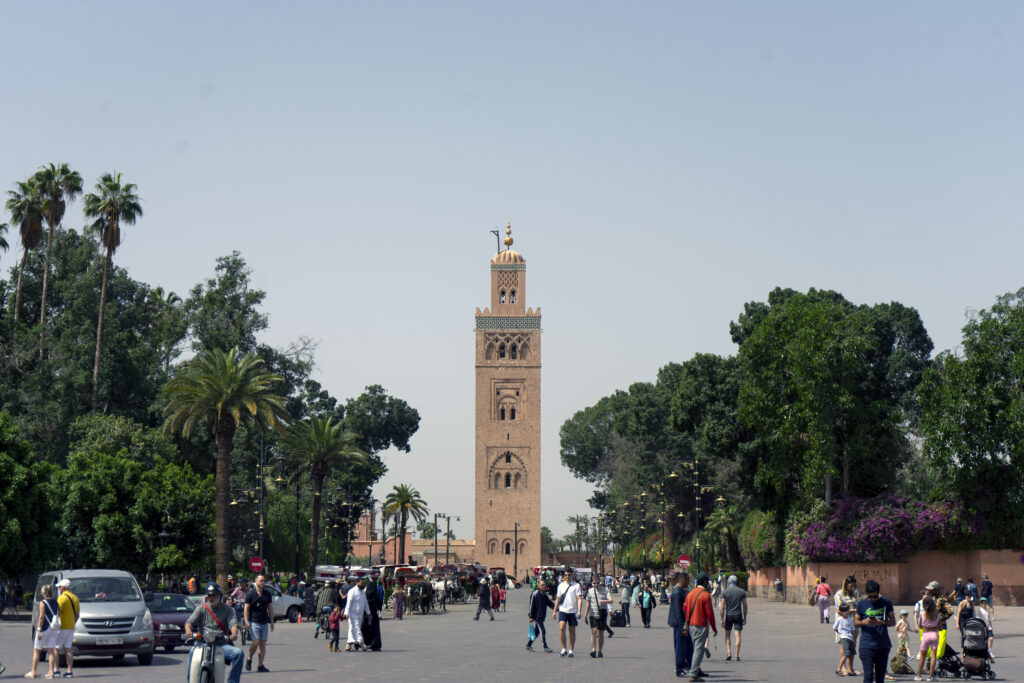
Why I Think Morocco Is Worth Visiting in Winter
I think winter is an underrated time to visit Morocco, especially if you enjoy spending your days walking around cities and visiting historical sites.
The cooler weather can make a big difference in places like Marrakech, and travelling in January or February may give you more flexibility when booking accommodation.
Just keep in mind how varied Morocco’s climate is. A winter itinerary that includes Marrakech, the Atlantic coast, and the Atlas Mountains will require some different clothing and planning.
If you’re putting together your Morocco itinerary, here are a few more guides that can help:
Ready to plan your visit to Morocco in winter? Here’s more from Pina Travels:

