
The first time I arrived in Palermo (which was back in 2009!), I remember stepping out of the train station and into the city, and immediately knowing that this city was going to feel different from the Italy I had experienced up north.
Palermo is Italy’s fifth largest city, and it sits on the island of Sicily at the southern edge of the country. Sicily has its own rhythm and identity, shaped by centuries of different cultures passing through the island. You notice it quickly once you start walking around.
In Palermo, the food is distinctly Sicilian, the symbols and traditions are different from mainland Italy, and you’ll often hear people speaking Sicilian rather than standard Italian.
If you’re heading to Palermo, it helps to arrive with a bit of context. Knowing what not to do in Palermo can make your visit smoother and help you understand the city a little better.
In this guide, I’ll walk you through what to avoid in Palermo, along with practical travel tips, cultural customs to be aware of, and a few things that will help you experience the city respectfully.
- 1. Don’t Ignore Palermo’s Mafia History
- 2. Don’t Skip The No Mafia Walking Tour
- 3. Don’t Assume That Palermo is Dangerous
- 4. Don’t Only Spend One Day in Palermo
- 5. Don’t Overlook Cultural Norms and Traditions
- 6. Don’t Expect Restaurants to Be Open All Day
- 7. Don’t Skip Palermo’s Street Markets
- 8. Don’t Expect Perfect Infrastructure Everywhere
- 9. Don’t Bother Bringing Lots of Cash
- 10. Don’t Shy Away From Using Public Transport
- 11. Don’t Only Visit Palermo’s City Center
- 12. Don’t Forget to Try Local Sicilian Cuisine
- 12. Don’t Takes Photos or Videos People Without Consent
- 13. Don’t Disrespect Religious Sites
- 14. Don’t Forget To Check Italy’s Entry Requirements
- 15. Don’t Forget Your Travel Insurance
- Know Before You Go: Palermo FAQs
- Travel Thoughtfully in Palermo
Disclosure: This article includes affiliate links. This means that if you make a purchase through one of those links, I earn a small commission. Affiliate links cost you nothing to use, and keep Pina Travels reader-supported. To learn more, read my Privacy Policy, Terms & Conditions, & Disclaimers.
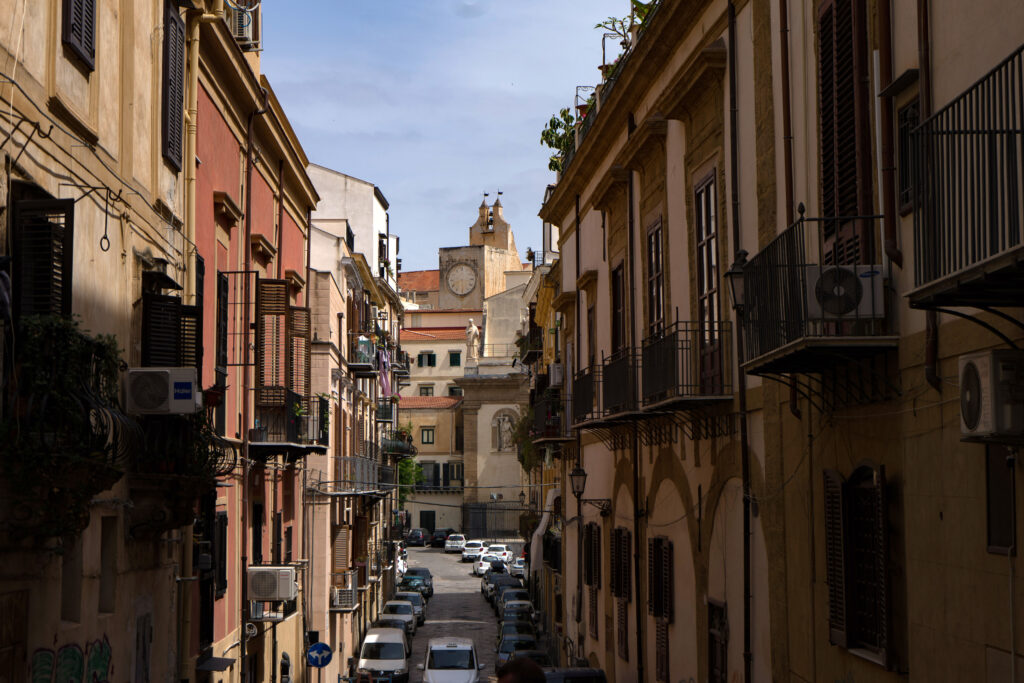
1. Don’t Ignore Palermo’s Mafia History
When you visit Palermo today, it’s easy to focus on the food markets, churches, and lively streets. But one thing you shouldn’t overlook is the city’s long and complicated history with the Sicilian mafia.
I remember the first time I visited Palermo with my partner Luke. As we walked through the historic center, I noticed small stickers in shop windows that said Addiopizzo. I didn’t know what they meant at first.
Later, Luke and I learned on the No Mafia walking tour (more details about this tour are coming later in this guide!) that those businesses had chosen not to pay the mafia’s protection tax. Seeing those signs made me realize that the mafia isn’t just something from movies. It’s part of Palermo’s ongoing history.
The mafia most people think of comes from Sicily and is known as Cosa Nostra. While “mafia” is often used as a general term for organized crime, in Sicily it refers specifically to this network, which has been active in Palermo since the early 1800s.
For more than a century the organization held significant power in the city. A common practice was forcing business owners to pay a protection tax, known locally as the pizzo. Refusing could lead to threats or damage to the business.
The situation became especially tense during the 1980s and early 1990s, when violent conflicts between mafia groups created fear for many residents.
Things began to shift in the early 2000s. In 2003, activists launched a movement encouraging businesses to refuse to pay the protection tax. At the time, around 80% of Palermo’s businesses were still paying it. Lists circulated naming shops and restaurants that had chosen not to comply so people could support them.
You can still see the impact of that movement today. Many businesses in Palermo’s historic center display signs showing they are part of the anti-mafia network.
Palermo today is a safe city, and mafia influence is far lower than it once was. But knowing this history helps you understand the signs, conversations, and community movements you’ll notice around the city.
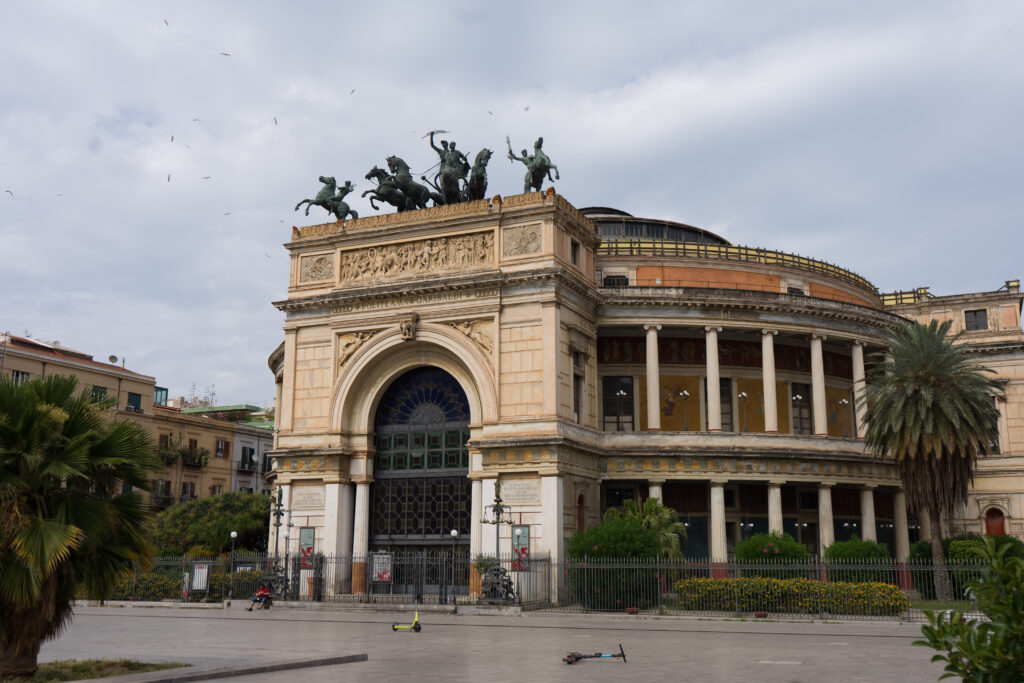
2. Don’t Skip The No Mafia Walking Tour
The No Mafia walking tour is am absolute must while in Palermo. This unique tour teaches the history of the Mafia in Palermo, as well as the civil anti-mafia movement that has reshaped the city over the last few decades.
While walking through Palermo’s historic center, you learn how the Mafia impacted everyday life in the city. The guide explains how businesses were pressured to pay a protection tax to the Mafia, and how that system operated for years. You also learn about the turning point in the early 2000s, when local activists began organizing resistance and encouraging businesses to refuse to pay.

One part of the tour that really stuck with me was when our guide, Laura, handed around a small green booklet (the one in the photo above). Inside were lists of businesses that had publicly committed to refusing the protection tax. These lists were originally circulated so that locals could choose to support shops and restaurants that were standing up to the Mafia.
Holding that booklet in my hands made the story feel much more real. It wasn’t just history being explained on a walking tour. It was a reminder that real people in the city made a conscious decision to push back against a system that had shaped Palermo for decades.
The No Mafia walking tour runs twice a day, once in the morning and once in the late afternoon, and lasts about three hours.
I recommend booking it in advance because it often fills up, especially in the busy travel months. When you go, wear comfortable walking shoes and bring sunscreen since most of the tour takes place outside while walking through the city.
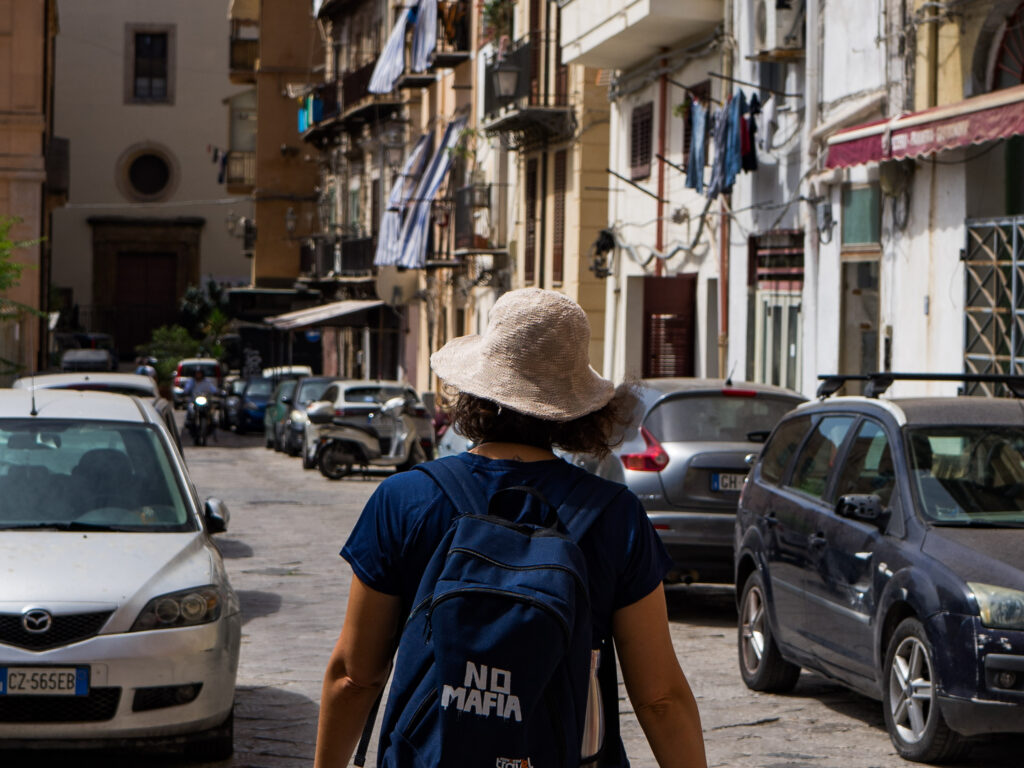
3. Don’t Assume That Palermo is Dangerous
Something I’ve noticed is that sometimes people assume Palermo is dangerous because of its history with the Mafia. Movies and TV have made that association pretty strong, so it’s not unusual to hear people ask if the city feels unsafe.
In reality, Palermo today is not a place you need to be particularly concerned about as a visitor.
That said, safety can be subjective. Our perceptions of safety can be shaped by our travel privileges and our identities. What feels comfortable to one person might feel different to someone else depending on their travel experience, the time of day, or the neighborhood they’re in.
In my experience, as a white woman visiting Palermo with friends and my partner, I have felt safe.
Of course, like anywhere, it’s still important to use normal city awareness. Petty theft like pickpocketing can happen, especially in busy tourist areas. I always keep my phone and wallet in front pockets or a zipped bag, and I keep very aware of what’s happening around me.
At night, some locals recommend avoiding the streets directly around the central train station and parts of Ballarò if you’re walking alone. Outside of that, walking around Palermo’s historic center in the evening generally feels lively and comfortable, with people out for dinner, drinks, and evening strolls.

4. Don’t Only Spend One Day in Palermo
Palermo is Italy’s fifth largest city, so it really deserves more than a quick stop. While you can see a few highlights if you only have a day or two, the city makes much more sense when you give yourself a little more time.
I’ve visited Palermo 5 times (I go often because my partner has family in Sicily) and I still feel like I haven’t seen the whole city.
With just one day, you’ll likely have to rush between a few major sights and move on. But Palermo isn’t really a place that rewards rushing. Part of what makes the city interesting is wandering its streets, spending time in markets, and noticing how different neighborhoods feel from each other.
I recommend dedicating at least 3 days in Palermo. You’ll have time to visit the city’s most famous historic sites like Palermo Cathedral, Quattro Canti, and the Capuchin Catacombs without feeling like you’re in a rush.
You’ll also have time to learn about the city’s anti-mafia movement, whether through the No Mafia walking tour or by visiting places connected to that history. Spending a bit of time understanding that side of Palermo adds important context to the city.
Three days also gives you space to wander. Palermo’s markets like Ballarò and Vucciria are some of the best places to experience everyday life in the city. You can try street foods like arancine, panelle, and sfincione while walking through the stalls.
And if you have a third day, you can easily fit in a day trip from Palermo. Popular nearby spots include Monreale for its famous cathedral mosaics, the seaside town of Cefalù, or Cinisi, where you can learn more about the anti-mafia activist Peppino Impastato.
Palermo has a lot of layers, and giving yourself a few extra days makes it much easier to experience the city beyond just its main landmarks.

5. Don’t Overlook Cultural Norms and Traditions
Depending on where you’re traveling to Palermo from, you might find that the culture and traditions are different from what you’re used to at home.
Take the time to learn about Sicily’s customs and traditions, and then be respectful of them. For example, in Sicily, people tend to greet each other with a kiss on the cheek, rather than a hug or a handshake (which is common where I’m from, Canada).
Another important custom in Palermo is tipping etiquette. When you dine out in Sicily, tipping is neither mandatory nor expected. Most restaurants include a service fee, which you will find on your bill at the end of the meal.
If you are paying cash, it’s a nice gesture to round up. For example, if a bill is €5,75, you can hand the server €6,00 without accepting change.

6. Don’t Expect Restaurants to Be Open All Day
And on the note of cultural differences, there’s one specific norm you need to know before going to Palermo. In Palermo (and other parts of Italy, too), restaurants don’t stay open all day.
Many places close for a few hours in the afternoon for riposo, which is the traditional midday break. This usually happens sometime between about 2:30 PM and 6:30 PM, although exact hours vary depending on the restaurant. During that time, kitchens shut down and staff head home or take a break before the evening dinner service.
At first this can feel inconvenient if you’re used to restaurants being open continuously. But once you adjust your schedule a bit, it actually makes a lot of sense.
My partner and I have grown to really appreciate the afternoon riposo when we’re in Sicily. Palermo gets extremely hot in the middle of the day, especially in summer.
Knowing that many places close gives you a natural reason to slow down for a few hours. We’ll usually head back to the apartment, sit in the shade with a cold drink, or just rest for a bit before heading back out in the evening.
Dinner in Palermo also happens later than many visitors expect. Restaurants often don’t open for dinner until around 7:30 or 8 PM, and locals commonly eat closer to 9 PM.
So if you find yourself wandering around at 4 PM wondering why every restaurant door is closed, don’t worry. The city is just taking a break before the evening comes alive again.


In front of the Palermo Cathedral, in the late evening before heading to dinner.
7. Don’t Skip Palermo’s Street Markets
Palermo’s street markets have been part of the city’s daily life for centuries, and they’re still places where locals shop for produce, seafood, and quick street food.
The three markets visitors usually hear about are Ballarò, Vucciria, and Capo. Each one has a slightly different feel, and they’re worth visiting for different reasons.
Ballarò Market is generally considered the most traditional of the three. It’s loud, busy, and a bit chaotic in the best way. Vendors call out prices, scooters weave through the narrow streets, and stalls sell everything from fresh vegetables to fish and spices.
This is the market that still feels most like a working neighborhood market where locals actually shop. If you want to experience the atmosphere of Palermo’s historic street markets, Ballarò is the place to go. Be sure to go in the morning!
Capo Market is another good one to visit, especially if you’re interested in trying street food. The market runs through narrow streets packed with food stalls, small butcher shops, and seafood vendors. It’s a great place to try Sicilian street foods like arancine, panelle, or sfincione while wandering around.
Vucciria Market used to be Palermo’s most famous market, but today it’s much quieter during the day. Many of the traditional food stalls have disappeared, and the area has shifted more toward bars and nightlife in the evenings. It’s still interesting to walk through, but it’s very different from what it once was.
One thing to know is that these markets have become pretty geared toward tourists, especially in the central areas where visitors tend to wander. You’ll see plenty of street food stands catering to travelers. That said, the markets still offer a glimpse into how food and daily life function in Palermo.
Timing also makes a big difference. The best time to visit the markets is in the morning, ideally before noon. That’s when vendors are actively selling fresh produce, seafood, and meats, and the markets feel busiest and most authentic. By the afternoon, many stalls start closing down.
If you go early, grab a snack from one of the street vendors and just wander for a bit. The markets are one of the easiest ways to experience Palermo beyond its churches and historic sites. I also personally love going to these markets for lunch, I usually head to Ballarò Market.


Wandering Ballarò Market
8. Don’t Expect Perfect Infrastructure Everywhere
One thing that can surprise visitors to Palermo is that the city doesn’t always feel as polished or orderly as some places in northern Italy.
Southern Italy, including Sicily, has historically been less wealthy than the north. That difference shows up in things like infrastructure, public services, and how quickly buildings or roads get repaired. In Palermo you’ll sometimes see cracked sidewalks, uneven streets, older buildings that look a bit worn, or traffic that feels chaotic.
Driving can be particularly intense. Scooters zip through narrow streets, cars park in places that don’t seem like parking spots, and traffic rules sometimes feel more flexible than strict. Crossing the street can take a little confidence.
But once you spend some time in the city, you realize that this is just how Palermo works! The streets can be busy and loud, but they’re also full of everyday life. People are running errands, chatting with neighbors, and stopping at markets on their way home.
Coming in with flexible expectations helps a lot. Palermo may not feel perfectly organized, but that lived-in, slightly messy energy is also part of what makes the city feel real and interesting.


9. Don’t Bother Bringing Lots of Cash
Most businesses in Palermo accept debit and credit cards, and paying by card is very common in restaurants, cafés, and shops. The currency used in Italy is the euro (€), since the country is part of the Eurozone.
When I last visited Palermo in June 2024, we were able to pay by card almost everywhere and didn’t need to rely on cash very much.
That said, it’s still a good idea to take out a small amount of euros when you arrive. Some small purchases are easier to pay for with cash, especially in markets or at quick street food stands.
For example, we used cash to buy a few bananas at Ballarò Market and to grab a quick espresso at a neighborhood café.
Having a little cash on hand also helps if you’re buying something inexpensive, like a pastry, a coffee, or produce from a street vendor. You likely won’t need a lot, but carrying €20–€50 in small bills or coins can make things easier throughout the day.

10. Don’t Shy Away From Using Public Transport
You don’t need a car to get around Palermo. In fact, driving in the city can be more stressful than helpful because traffic is busy and parking can be difficult to find. Luckily, Palermo has solid public transport options that make it fairly easy to get around.
Walking and the free shuttle:
Palermo’s historic center is very walkable, and most of the main sights are close enough to reach on foot. If your feet need a break, there’s also a free shuttle bus called the Free Centro Storico. It runs daily between 6:30 AM and 9:00 PM and stops at many of the key spots in the historic center, making it a convenient way to move between major landmarks.
Buses and trams:
Palermo also has a wider network of buses and trams operated by AMAT, which connect the historic center with other neighborhoods around the city. This is especially helpful if you want to visit places outside the old town, like Mondello or the Capuchin Catacombs.
Tickets are inexpensive, costing about €1.40 per ride. While you can sometimes buy tickets on board, it’s usually easier to purchase them ahead of time at a tabaccheria. These small convenience stores are easy to spot because they have a large “T” sign outside.
Public transport in Palermo is straightforward to use, and apps like Google Maps are very helpful for planning routes and seeing which bus to take. For most visitors, a mix of walking and occasional bus rides is more than enough to explore the city.


11. Don’t Only Visit Palermo’s City Center
Most visitors spend the majority of their time in Palermo’s historic center. That’s where you’ll find major sights like Palermo Cathedral, Quattro Canti, and the city’s famous markets. It’s a great area to base yourself, but Palermo is much bigger than just the old town.
If you have a few days in the city, it’s worth going beyond the historic center to see different areas of Palermo.
One nearby area that’s easy to explore is Kalsa, one of the oldest neighborhoods in the city. It sits along the waterfront and has a slightly quieter feel than the busiest parts of the center.
Here you’ll find small piazzas, local cafés, and historic sites like Palazzo Abatellis and the Foro Italico waterfront park, where locals often go for evening walks.
Another place worth visiting is Mondello, Palermo’s beach neighborhood about 20 minutes from the city center. Mondello used to be a small fishing village and today it’s where many locals go to escape the summer heat.
The beach here is wide and sandy, with clear water and views of the surrounding mountains. You can reach Mondello easily by bus from Palermo’s center, just take bus 101 to Via della Libertà, and change to bus 806 to Mondello.
It’s also worth heading a little outside the center to visit the Capuchin Catacombs, one of Palermo’s most unusual historical sites. The catacombs hold thousands of preserved bodies dating back centuries and offer a unique glimpse into burial traditions in Sicily.
To get there by public transport, you can take bus N5 from Palermo Centrale, which takes about 30 minutes.
Going beyond the historic center helps you see how Palermo functions as a real city, not just a collection of historic landmarks. Different neighborhoods have their own pace, character, and everyday rhythms, and visiting a few of them adds a lot more context to your time in Palermo.

12. Don’t Forget to Try Local Sicilian Cuisine
Sicily is known for its distinctive food culture. While you’ll certainly find Italian staples like pizza and pasta, Palermo is the place to try dishes that are specific to Sicily.
Many of the foods you’ll come across here have roots in the island’s long history of cultural influences, including Arab, Spanish, and Norman traditions. Because of that, the food in Palermo can feel quite different from what you might expect in other parts of Italy.
If you want to experience the city through its food, here are some Sicilian dishes you should try while in Palermo:
Pasta con le sarde
If you enjoy fish, this dish is for you! Pasta con le sarde is pasta served with olive oil, onions, sardines and anchovies. Sometimes wild fennel, saffron, pine nuts, or raisins are added to flavor the dish, and it’s often topped with toasted breadcrumbs.
Arancini
Arancini are a Sicilian food staple: rice balls which are typically coated with bread crumbs and then deep fried. They are always stuffed with something delicious like mozzarella, ham, or peas.
Most cafes and bakeries in Palermo will sell arancini.
I love to have arancini is first thing in the morning – they are nice and fresh, and will give you the perfect boost to kick start your day of sightseeing!

Granita
Another dessert that originates in Sicily, granita is semi-frozen and made of ice and sugar. It’s typically flavored with local ingredients, like fresh lemons. The way granita is served varies from city to city in Sicily, but it’s often had with coffee or brioche.
When deciding what to eat in Palermo, of course go for some traditional dishes. But, I can guarantee every meal will be fantastic regardless of what you eat. Some of my best meals in Palermo have come from street food stands in busy markets!
Cannoli
Cannoli are a decadent staple: tube-shaped shells of pastry dough, with a creamy ricotta filling. Small candied fruits, chocolate chips, or pistachios are sometimes mixed into the cheese mixture.
Cannoli originates from Palermo specifically, where it was prepared during Carnevale season as a symbol of fertility. Pop into a bakery to grab a cannoli – Spinnato’s is a good one in Palermo. Or, go to I Segreti del Chiostro, which is across from Fontana Pretoria. They are known for making the best cannoli in the city.

12. Don’t Takes Photos or Videos People Without Consent
One important thing to be mindful of in Palermo, and really anywhere you travel, is how you take photos and videos.
It can be tempting to capture everything you see while exploring a new place. But it’s important to be intentional and respectful when photographing people and everyday life.
If you want to take a photo of someone in Palermo, always ask for permission first. And if you plan to share that photo online, whether on social media or a blog, it’s important that the person understands and agrees to that.
The same goes for children. If you see kids playing in a square or helping at a family stall in the market, it’s best not to photograph them unless a parent has clearly given permission. Children can’t meaningfully consent to having their image shared online, so it’s better to err on the side of caution.
Even when you’re photographing streets, markets, or scenery, it’s worth paying attention to who might end up in the frame. Sometimes it just means waiting a moment for people to pass before taking the photo.
It’s also helpful to think about what a photo communicates. Images that focus on poverty or difficult living conditions can sometimes end up turning real people’s lives into a backdrop for someone else’s story. Being thoughtful about what you photograph, and why, is an important part of traveling responsibly.
If you’d like to think more about this topic, I wrote a more detailed guide about responsible travel photos and videos and how to approach photography while traveling.

13. Don’t Disrespect Religious Sites
While visiting Palermo, you’ll likely visit several historic religious sites such as Palermo Cathedral, Monreale Cathedral, and the Church of Santa Maria dell’Ammiraglio.
These places are incredible to see, but it’s important to remember that they are not just historic attractions. They are still active religious spaces where people come to pray and worship. Being mindful of how you behave and dress goes a long way in showing respect for the people who use these spaces for religious practice.
When visiting churches, it’s expected that you wear clothing that covers your shoulders and knees, and that you keep your shoes on. This applies to both men and women. In some churches, staff may stop visitors at the entrance if they are wearing clothing that is considered too revealing.
Because Palermo can get extremely hot, especially during the summer months, many visitors spend the day in tank tops, shorts, or dresses. If that’s the case, it’s helpful to carry a light scarf or sarong in your bag. You can quickly throw it over your shoulders or wrap it around your waist if you decide to step into a church while exploring the city.
It’s also worth remembering that these buildings often have quiet corners where locals are praying or attending services. Speaking softly, avoiding flash photography, and being mindful of where you stand can help keep the space respectful for everyone.
The same mindset applies to visiting the Capuchin Catacombs. The catacombs are the resting place of thousands of people whose bodies were preserved centuries ago.
Photography is not allowed inside, and it’s important to follow that rule. The catacombs are not meant to be treated like a spectacle or photo opportunity, but as a place where real people were laid to rest.

14. Don’t Forget To Check Italy’s Entry Requirements
Before heading to Italy, it’s worth taking a minute to check the entry requirements for your nationality. I know this sounds obvious, but it’s something people do forget!
Visa rules depend on which passport you’re traveling with. Since I’m Canadian, the process is pretty simple. Canadians don’t need a visa to visit Italy because the country is part of the Schengen Area. That means I can enter visa-free and stay for up to 90 days within a 180-day period.
That said, the rules aren’t the same for everyone. Some travelers do need a visa or travel authorization before arriving in Italy. It’s always a good idea to double check the requirements for your passport well before your trip so there aren’t any surprises when you land in Palermo.

15. Don’t Forget Your Travel Insurance
Travel insurance is something I recommend for every trip, including when visiting Palermo. It’s easy to overlook when everything is going smoothly, but it can make a huge difference if something unexpected happens while you’re abroad.
Travel insurance policies vary, but most provide coverage for situations like lost luggage, medical emergencies, trip cancellations, or needing to return home early because of a family emergency. Even something as simple as a minor injury or a missed flight connection can become very expensive without coverage.
Having travel insurance acts as a financial safety net while you’re away from home. It can help cover medical costs, protect the value of your belongings, and give you support if your plans suddenly change. Before traveling to Palermo, it’s worth taking a few minutes to make sure you have a policy that covers your trip.


Know Before You Go: Palermo FAQs
Is Palermo safe for tourists?
Yes, Palermo is generally safe for visitors. Most travelers spend their time in the historic center and nearby neighborhoods, which feel lively and busy throughout the day and evening. Like any large city, petty theft like pickpocketing can happen, especially in crowded areas. It’s best to keep your valuables secure, stay aware of your surroundings, and follow the same common-sense precautions you would in any major European city.
How many days should you spend in Palermo?
I recommend spending at least two to three days in Palermo. That gives you enough time to explore the historic center, visit places like Palermo Cathedral and the markets, and try plenty of Sicilian street food. If you stay three days, you can also fit in a nearby day trip to places like Monreale, Cefalù, or Cinisi, which adds even more context to your time in the region.
Is tap water safe to drink in Palermo?
Yes, tap water in Palermo is safe to drink. Many visitors still buy bottled water, but you don’t have to. Bringing a refillable water bottle is an easy way to reduce plastic waste while traveling. You’ll also find public fountains around the city where you can refill your bottle, which is especially helpful during the hot summer months when you’ll be drinking a lot of water.
Is Palermo worth visiting?
Yes, Palermo is absolutely worth visiting. It’s one of Italy’s most historically layered cities, shaped by Arab, Norman, Spanish, and Italian influences over centuries. The architecture, street markets, and food culture make it a fascinating place to explore. It’s also a city where you can spend time wandering neighborhoods, learning about local history, and experiencing everyday Sicilian life.
What should you wear when visiting churches in Palermo?
When visiting churches in Palermo, it’s expected that your shoulders and knees are covered. This applies to both men and women. Because the weather in Sicily can be very hot, it’s helpful to carry a light scarf or sarong in your bag. That way you can easily cover up if you decide to step into a church while exploring the city.

Travel Thoughtfully in Palermo
Tourism in Sicily has been growing quickly in recent years, and Palermo is becoming an increasingly popular place for travelers to visit. As more people discover the city, understanding how to move through it respectfully becomes even more important.
That’s one of the reasons I wanted to put this guide together. Palermo is an incredible place to visit, but like any city shaped by complex history and everyday local life, it helps to arrive with a bit of context.
Being an informed traveler doesn’t mean doing everything perfectly. It just means paying attention to the place you’re visiting, learning a little about how the city works, and approaching your trip with curiosity and respect. If you’d like to think more about that idea, you can also read my guide on how to be a responsible tourist.
I hope these tips for what not to do in Palermo help you feel more prepared and confident as you visit this awesome city!
Want to have a more thoughtful trip? Here are some of my responsible travel tips to get you started.
- Learn the main tips for being a responsible tourist.
- Use sustainable tourism tips to travel eco-consciously.
- Choose responsible wildlife tourism experiences.
- Travel to places that aren’t facing overtourism to reduce your impact.
- Be aware of cultural appropriation and avoid it.
- Use second city tourism when you do want to visit more popular places.
- Be thoughtful in how you shop for souvenirs.
- Take and share photos and videos respectfully.
- Avoid tourism leakage by supporting local businesses.
- Consider your travel privileges.
More from Pina Travels on Sicily;

