
My partner and I arrived in Seoul after a long 15-hour flight from Toronto, completely exhausted, and so we headed straight to our hotel. After a long nap in our hotel in Cheongnyangni, a neighborhood outside of the centre of Seoul, we decided to go out wandering.
Leaving the hotel, we were surrounded by skyscrapers, busy streets, and shops, which is exactly what we had pictured when we had daydreamed about visiting Seoul. As we walked, we looked at Google Maps, and noticed a market was nearby. We figured we would check it out, so we turned off the main road, and down a side street, into Gyeongdong Market.
The vibe completely changed! It suddenly felt like we were no longer in a mega-city. The streets narrowed, and instead of tall, modern buildings, there were stalls selling produce, dried goods, and traditional ingredients. It was busy, but in a local, everyday way.
That first walk we took in Seoul set the tone for our whole time in the city. Within the same walk, we’d gone from glass towers and traffic to a traditional market, and it made it clear that this city isn’t built in layers you visit separately, they all exist at once.
Seoul is the capital of South Korea and one of the largest cities in the world. It’s known for its skyscrapers and public transportation system, but also for its palaces, Buddhist temples, traditional villages, city parks, street markets, and a serious coffee culture.
I built this Seoul itinerary to give you a realistic, well-rounded experience of the city over a full week. It mixes major landmarks with lesser-known spots and leaves space for wandering, eating, and slowing down when you need to. Seoul is a lot to take in, and this itinerary is designed to help you settle into the city rather than rush through it. Let’s get into it!
- Where to Stay in Seoul
- How to Get Around Seoul
- How to Spend 7 Days in Seoul, South Korea
- Day 1: Gyeongbokgung Palace, Jogyesa Temple, and Insadong
- Day 2: Bukchon Hanok Village and City Wall Walk
- Day 3: Namsan Park, N Seoul Tower, and Gwangjang Market
- Day 4: Shopping and Yeongcheon Market
- Day 5: Gangnam, Bongeunsa Temple, and Han River Walk
- Day 6: Demilitarized Zone Tour and Dongdaemun Night Market
- Day 7: Noryangjin Fish Market and Jjimjilbang Spa
- The Go City Pass For Seoul, Korea
- Seeing Seoul Beyond the Highlights
Disclosure: This article includes affiliate links. This means that if you make a purchase through one of those links, I earn a small commission. Affiliate links cost you nothing to use, and keep Pina Travels reader-supported. To learn more, read my Privacy Policy, Terms & Conditions, & Disclaimers.

Where to Stay in Seoul
Before diving into this 1 week Seoul itinerary, here are some recommendations for places to stay while in Seoul.
On our trip to Seoul, we stayed in Cheongnyangni, a neighbourhood in the north-eastern part of the city, just outside of Seoul’s main tourist areas. We stayed there mainly because accommodations in the area were more affordably priced.
But in our week there we realized it was a great choice because the neighbourhood was noticeably less touristy (giving us a chance to observe daily life), and it never felt inconvenient. Seoul’s public transportation is extremely efficient and easy to use, so getting into other parts of the city was simple and predictable.
If you have the budget to stay in one of the more high-demand neighbourhoods of Seoul, like Myeongdong, go for it! Just know that staying outside of the popular neighbourhoods won’t take away from your experience.
Where to Stay in Seoul – High Budget
If you have a high budget, I recommend staying at Lotte Hotel Seoul. This highly-rated hotel is part of Korea’s most luxurious hotel chain. It’s known for its beautiful, spacious, clean rooms, and exceptional service.
Lotte Hotel Seoul is conveniently located in Myeongdong, Seoul. It’s a central location that is within walking distance of one of the city’s most well-known and popular neighborhoods, Myeongdong.
When you stay at Lotte Hotel Seoul, you’ll have access to the hotel’s beautiful indoor pool and jacuzzi, dining, and more. The hotel is home to Peninsula Lounge & Bar which serves drinks, desserts, and an afternoon tea set.
Although this is a luxury hotel, you may be able to snag a good deal depending on what time of year you are visiting Seoul. I’ve seen rates drop to $250 CAD per night!
You can book Lotte Hotel Seoul here.
Where to Stay in Seoul – Mid-Range Budget
For the perfect balance of budget and comfort, book into Royal Hotel Seoul. This four-star hotel is mid-range in price, and in a great location.
The rooms at Royal Hotel Seoul are compact, but this is pretty typical in South Korean cities. Many reviews note that the beautiful views make up for the small rooms.The hotel offers a buffet breakfast, toiletries, and good service.
You can book Royal Hotel Seoul here.
Where to Stay in Seoul – Low Budget
If you are on a lower budget, you’ll want to stay outside of central Seoul. With public transport being so good in Seoul, staying outside the center isn’t an issue at all.
We stayed in Cheongnyangni-dong, which is about 30 minutes east of central Seoul, by metro. The neighborhood is well connected to the rest of Seoul, and it’s a fun neighborhood to walk around because it has many large markets you can wander through, like Gyeongdong Market and Cheongnyangni Fish Market.
For a mid to low budget hotel in Cheongnyangni, stay at Hotel The Designers Cheongnyangni. This is a simple but clean hotel that is just steps from a metro station. It has basic amenities, and is at a good price. There is a direct bus from Incheon Airport (bus #6002) that stops just 50 meters from Hotel The Designers Cheongnyangni, so it’s easy to get to.
You can book Hotel The Designers Cheongnyangni here.
How to Get Around Seoul
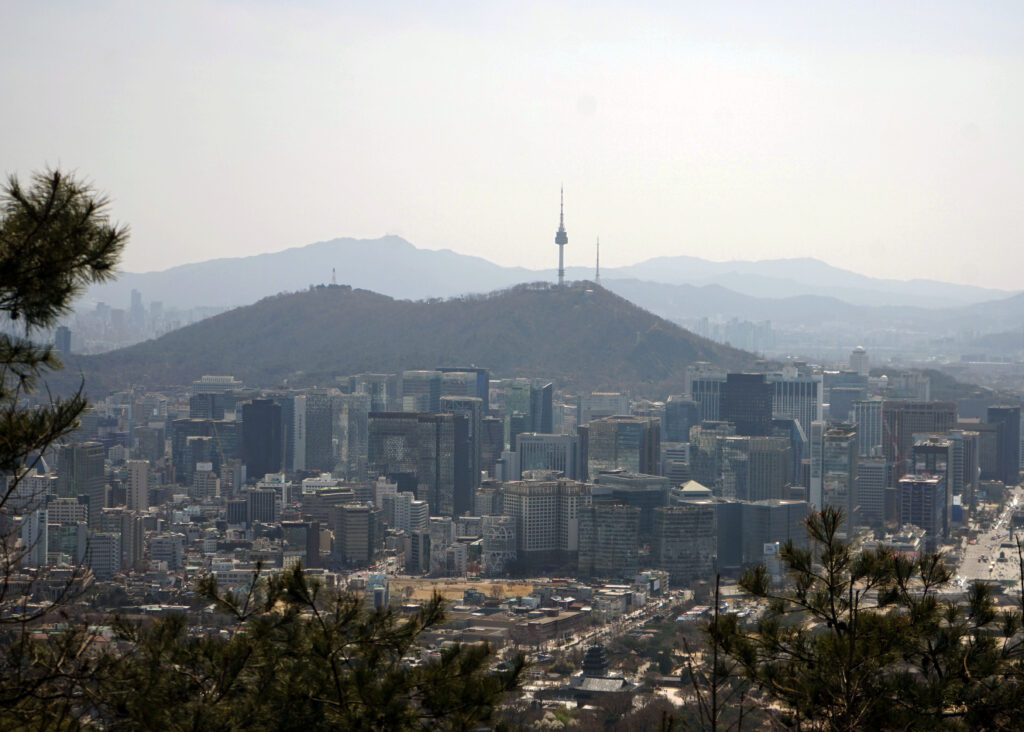
Seoul covers an area of 605 square kilometers (234 square miles) and has a population of over 9 million people. As you can probably guess, when visiting a city this size, you need a way to get around.
Luckily, Seoul has a fantastic public transport system that is simple to use, affordable, and fast. Through a mixture of underground trains and buses, you can efficiently get wherever you need to go.
It is possible to buy single-ride tickets at the station for each trip you take on the subway or bus. But, I recommend getting a transport card. They are easy to buy and load, and make it much quicker to hop on and off public transport.
Seoul’s buses and trains are operated by several different companies, but you can pay for journeys with all operators with one transport card. There are three to choose from, but I recommend using T-money, because it’s the most widely accepted card.
Quick tip: On our first day in Seoul, we tried to board a bus and were politely stopped by the driver, who told us we couldn’t board. Because of the language barrier (and our jet-lagged brains!), it took us a couple minutes to figure out why… We had coffees in our hands! We’d completely forgotten that food and drinks aren’t allowed on public transit in South Korea. It was a small but memorable reminder to finish your drink before hopping on a bus or train.

Using a T-money Card in South Korea
What not do to in South Korea? Don’t forget to buy a T-money card.
T-money cards can be purchased at any convenience store as well as in transport hubs. You will pay a small fee for the card, which is refunded if you decide to return the card at the end of your trip. You can then load your card with funds either in the convenience stores, or in the transport stations.
T-money cards can be used in taxis, subways, and buses across the country. You can also pay for some store purchases using your T-money card.

Navigating Seoul’s Public Transit System
You will need to use a map app and mobile data (I recommend getting an e-sim while in South Korea) to navigate Seoul’s public transit system.
We found that the best maps to use are NAVER map and KakaoMap. These map apps are available in English, and are the most reliable apps for planning public transit journeys.
These apps cover everything you need to know, including the best train car to board based on where you’re disembarking, and which station exit to use.
You can get online with an easily with a quick-to-install eSIM through Airalo. What I appreciate most about Airalo’s eSIM is its simplicity. You can quickly select and activate an Airalo eSIM for whichever country you are headed to. Selecting, downloading, and activating your eSIM takes less than 5 minutes, and it’s easy to top up your eSIM if you run out of data.
You can get started with an Airalo eSIM, right here.

How to Spend 7 Days in Seoul, South Korea
This 1 week in Seoul itinerary is broken down by each day of your trip. While you can switch the order of these days based on your personal preference, I want to note that the activities are grouped together based on their location.
Seoul is a massive city, and so distances between places can be very long. This Seoul itinerary is designed to minimize time spent on transport. Given this, if you decide to switch activities around, just make sure you account for transport times. Let’s dive in!
Day 1: Gyeongbokgung Palace, Jogyesa Temple, and Insadong
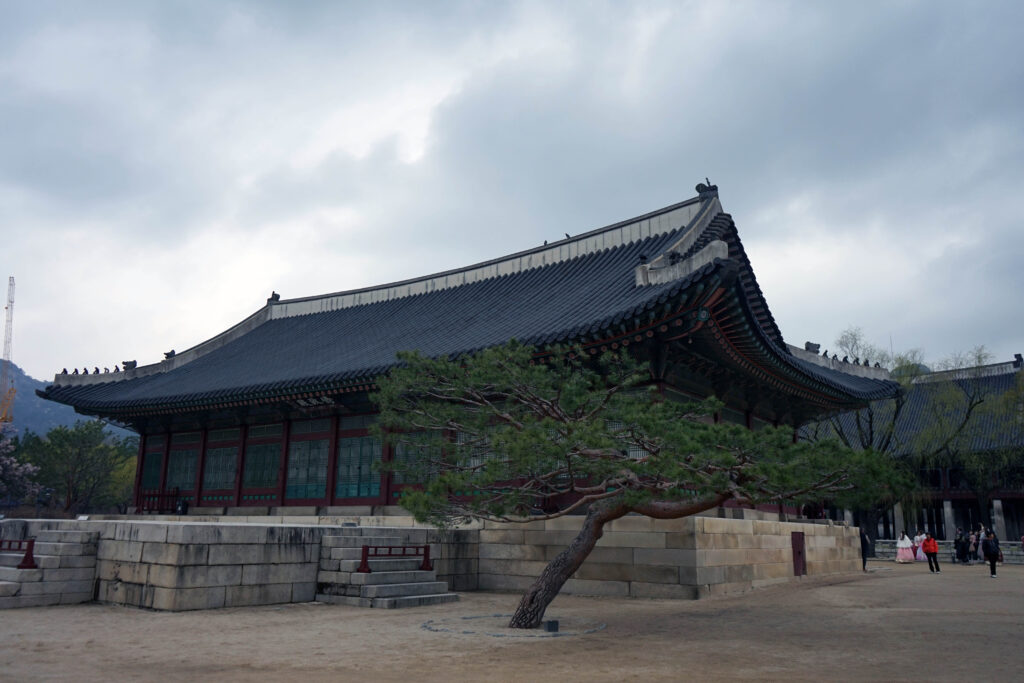
On day one in Seoul, you’ll visit Seoul’s most famous palace, a beautiful temple, and a lively neighborhood. Have an early breakfast in your hotel, and then head to Gyeongbokgung Palace, which is located in northern Seoul.
Gyeongbokgung Palace
Gyeongbokgung Palace was the main royal palace of the Joseon dynasty. Built in 1395, it is one of the largest of the Five Grand Palaces built by the Joseon dynasty. Gyeongbokgung served as the home of the royal family and the seat of government.
Sadly, the original palace has mostly been destroyed. It was lost first to a fire that started during the Imjin War in the 1500s, and in the early 20th century, much of the palace was systematically destroyed by Imperial Japan during its occupation of Korea.
However, on January 21, 1963, Gyeongbokgung Palace was designated as a cultural property. Since the 1990s, the walled palace complex has been gradually restored to its original form.
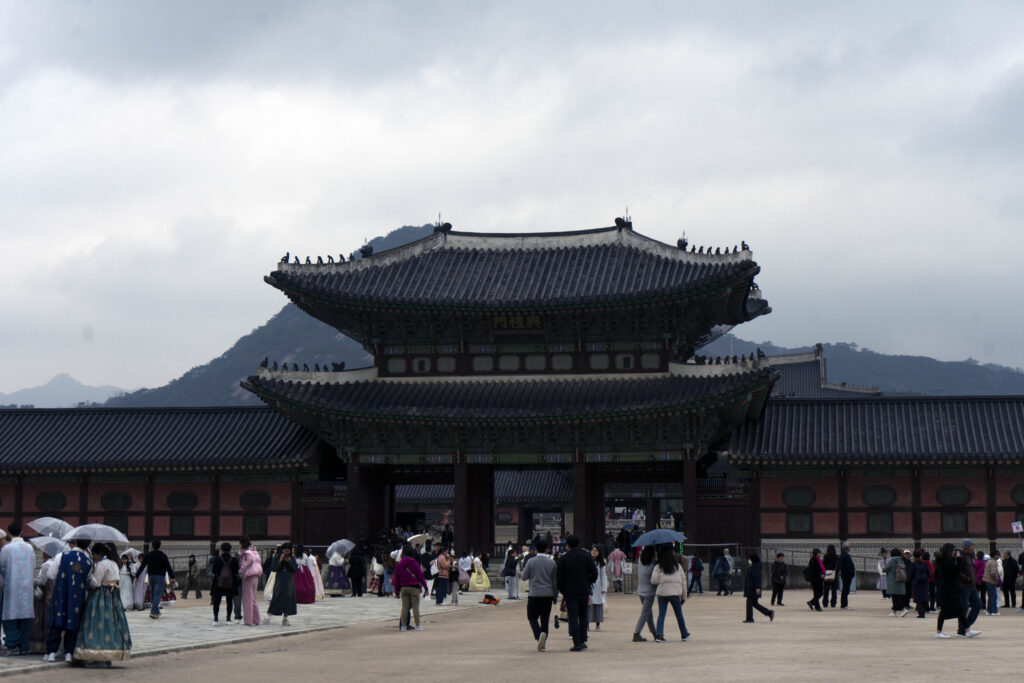
To avoid the peak crowds, visit Gyeongbokgung Palace first thing in the morning. You should plan to spend 1.5 to 2 hours at the palace. You can pay the small entrance fee on arrival.
You’ll want to visit the National Palace Museum of Korea, which is on site, where you can see a collection of royal seals used by kings throughout Korean history, handcrafted furniture, and calligraphy. After the museum, be sure to stop by Geunjeongjeon Hall, Gyeonghoeru Pavilion, and Hyangwonjeong Pavilion.
If the timing is right, watch the changing of the guard at Gyeongbokgung Palace. The changing of the guard happens at 11am and 2pm every day, and lasts about 30 minutes. It’s free to watch!
While there is no enforced dress code for visitors at Gyeongbokgung Palace, it is recommended to dress modestly and respectfully, considering the palace’s historical and cultural significance. As with traveling anywhere in the world, practice responsible tourism.
It’s very popular to rent a hanbok (traditional Korean clothing) in Seoul, because when wearing this traditional clothing, you’re granted free entrance to sites, including Gyeongbokgung Palace.
If you’d like to rent a hanbok, there are several rental shops nearby the palace, like Seohwa Hanbok, and a rental isn’t expensive. We didn’t opt to rent hanbok because it didn’t interest us, and entrance fees to the palace and other sites are low enough that you don’t necessarily save money by wearing hanbok.
After a few hours at the palace, you might be starting to get hungry. If you’re ready for lunch, head to Gmanim, a small, vegan cafe that’s very near the palace. Get the bibimbap!

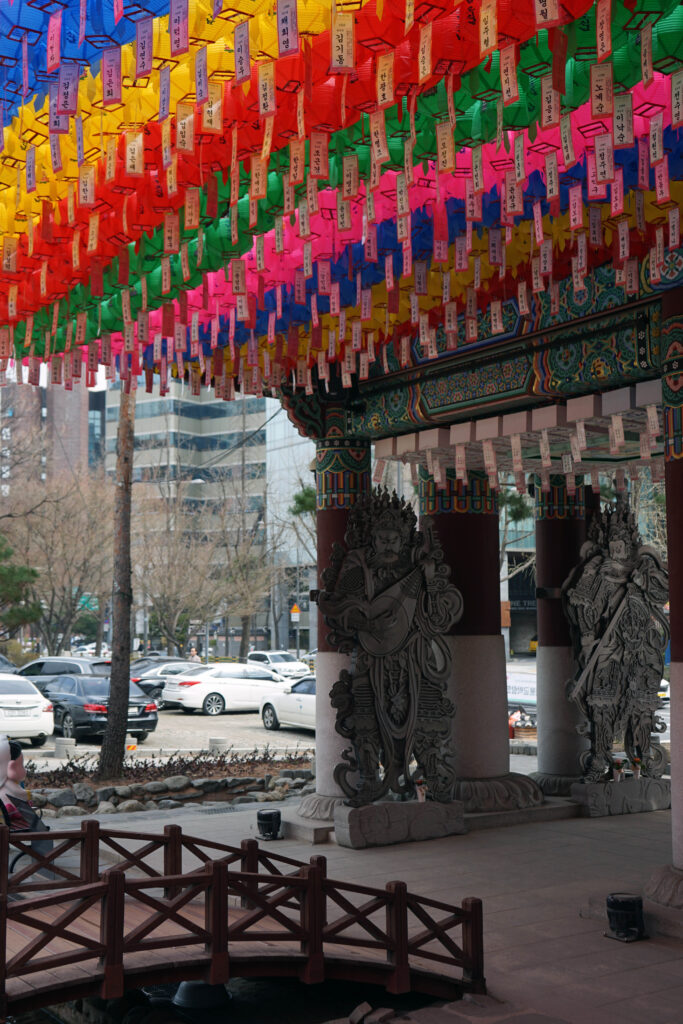
Jogyesa Temple
From Gyeongbokgung Palace, you’ll head next to Jogyesa Temple. To get to the temple, go to Gyeongbokgung Station and ride the 1020 two stops to Anguk-dong. The journey should take around 15 minutes total.
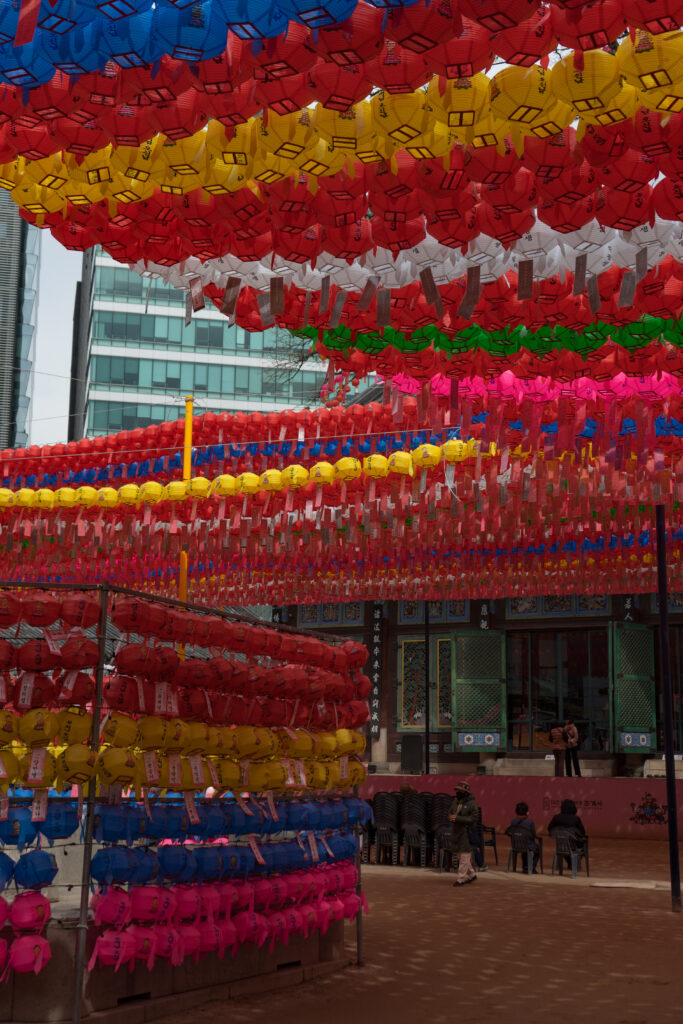
Jogyesa is the chief temple of the Jogye Order of Korean Buddhism. The temple building dates back to the 14th century, and became the order’s chief temple in 1936. Today, it plays an important role in the current state of Seon Buddhism in South Korea.
We loved the Jogyesa temple grounds, because they were very quiet, a nice escape from the busy city. Be sure to wander all through the grounds, and keep an eye out for the temple’s rare 500 year-old Baeksong lacebark pine tree, and the 450 year-old Chinese scholar tree.
When visiting temples in South Korea, be respectful. Dress modestly, be quiet, and follow posted rules.
Insadong
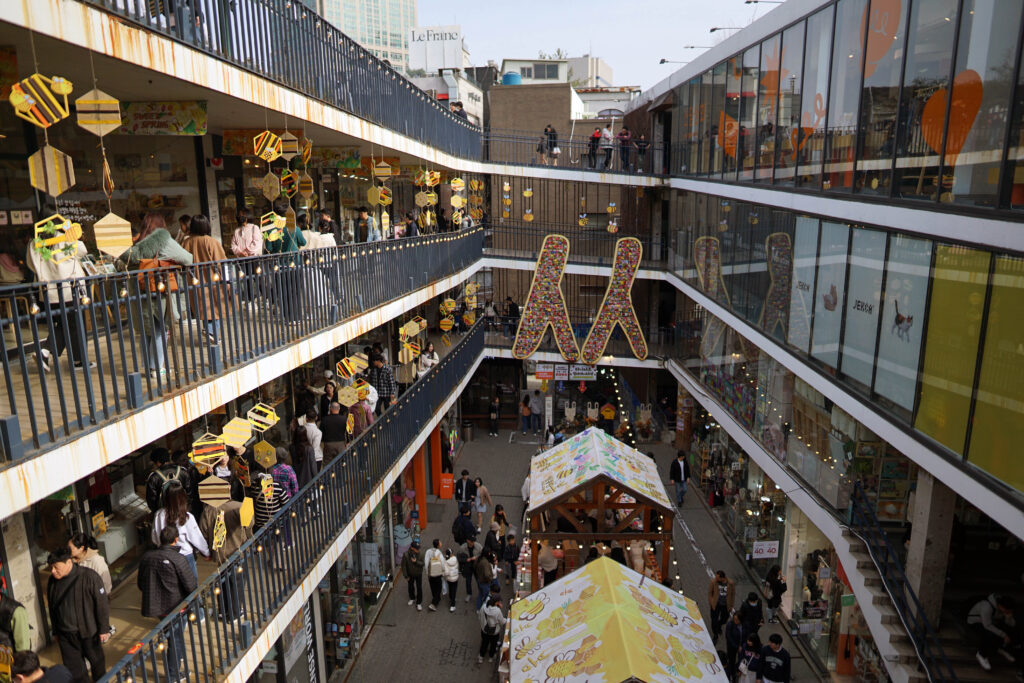
After spending some time soaking in the calm of Jogyesa, head to Insadong. This is an old shopping district with cafes, ice cream, coffee stores, art galleries and shops, and it’s just a short walk from the temple.
With the rest of your day, wander Insadong’s main streets and alleys. Be sure to pop into the various antique stores and stationary stores that you’ll be sure to come across. Tucked away off of the main street of Insadong is Ssamziegil. It’s an outdoor mall where you’ll find many vendors selling unique things.
While in Insadong, I recommend going to Sinyet Chatjip, which is a traditional Shin Tea House. Have a seat in their beautiful garden and order from their menu of delicious teas and sweets. The presentation of our tea and sweets was so gorgeous and the setting in the garden was so relaxing!
If you want to have dinner in the area, head to Doma Insadong. They have various sets to choose from, including a vegetarian set.

Day 2: Bukchon Hanok Village and City Wall Walk
On day 2 of your week in Seoul, you’ll definitely want to get an early start. After breakfast in your hotel, you’ll be visiting the very busy hanok village of Bukchong, and then spending a few hours enjoying a hike along Seoul’s city walls.
Bukchon Hanok Village
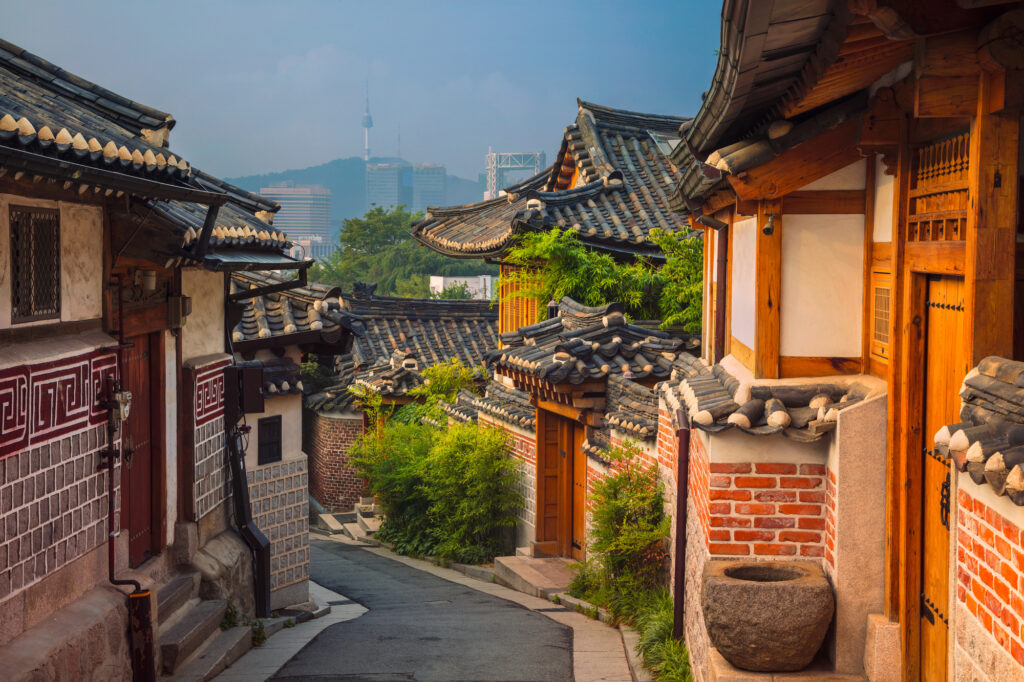
Bukchon is a residential neighborhood in the Jongno District of Seoul. It’s famous for its traditional Korean houses, known as hanoks.
The area was traditionally the residential quarter of high-ranking government officials and nobility during the Joseon period. Many of the homes in this neighborhood have been restored, making it a really beautiful area to wander and take photos.
Bukchon Hanok Village is a popular spot for tourists, but it’s still residential. It’s important to be cognizant that many local people actively live in the area. Be mindful when taking photos (try not to capture people’s faces by accident), and be quiet so as to not disturb local life.
On the outskirts of Bukchon Hanok Village is a shop called Seoul Seoul Seoul. It’s small and unassuming – easy to miss! But don’t skip it. This small shop sells unique, hand-made gifts and souvenirs.
When you’re finished wandering Bukchon Hanok Village, walk to Cafe Onion Anguk. This aesthetic cafe serves delicious drinks and a selection of baked goods. If you’re still hungry, swing by a nearby 7-Eleven or another convenience store to grab a sandwich, before heading out to start your city wall walk.
Seoul City Wall Walk: Changuimun Gate to Hyehwamun Gate
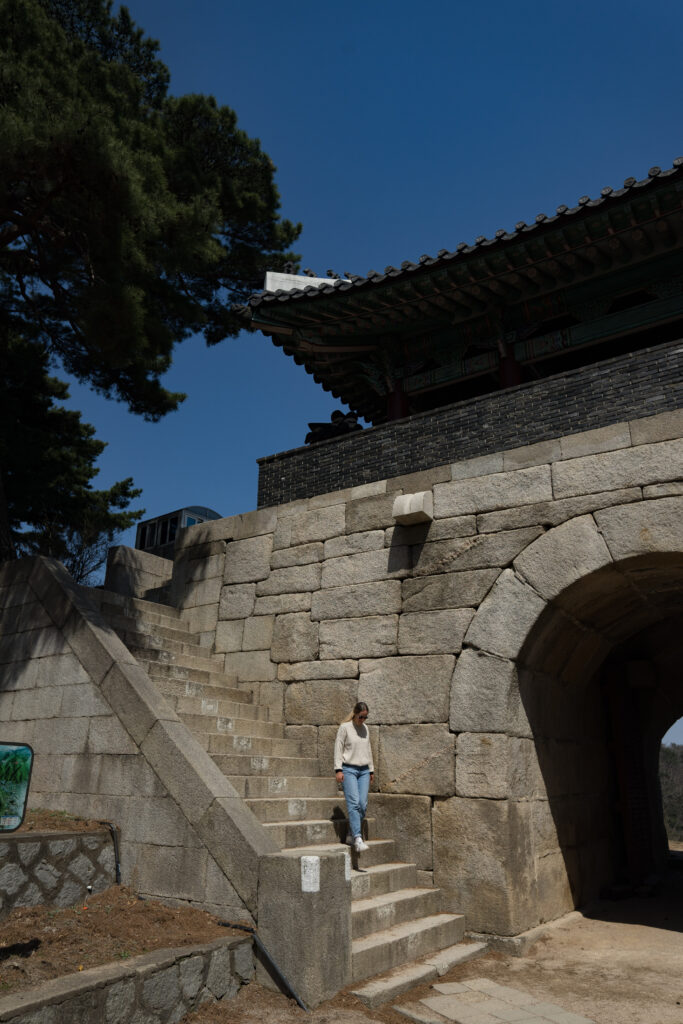
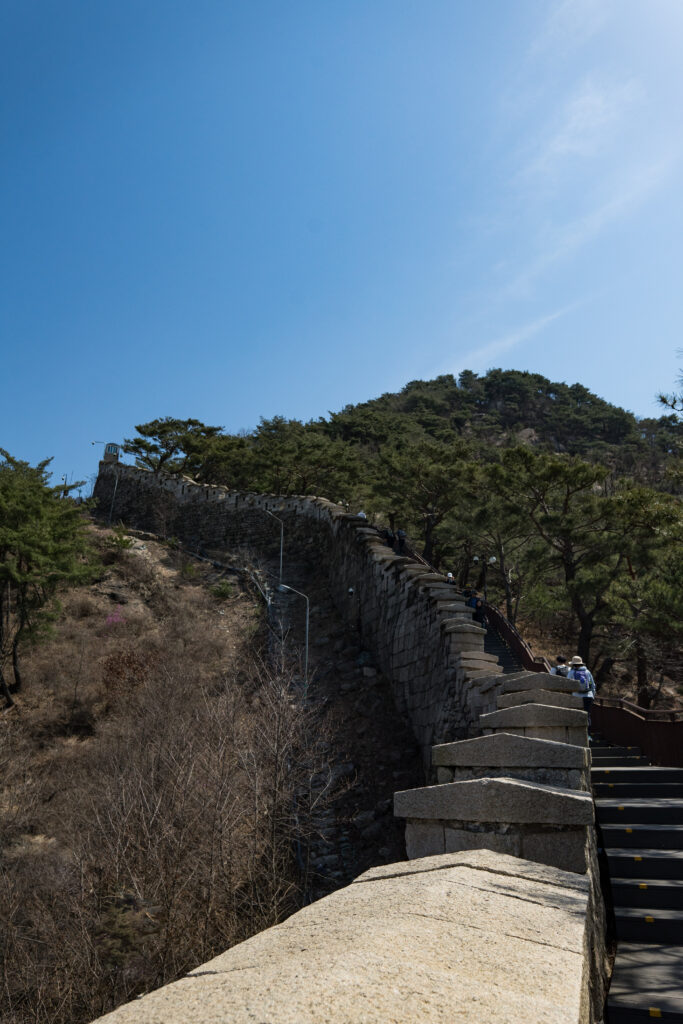
The Seoul City Wall, also known as Hanyangdoseong, is an 18.6 kilometer (11.6 miles) long walking trail that loops around the entire city. Much of the trail goes along Seoul’s old city walls, parts of which date back to 1396, and the views of the city from the trail are amazing.
Along the trail there are four mountains. Yes, mountains! So as you can likely guess, the Seoul City Walk can be challenging. Walking the entire route would easily take a full day (6 to 8 hours).
Given this, we opted to hike just a portion of the Seoul City Wall: Changuimun Gate to Hyehwamun Gate. This portion of the walk follows The Baegak Trail, and it includes going up and over Bugaksan mountain (342 meters tall). Going up the mountain is tiring, but it’s worth it for the views!

From Bukchon Hanok Village, you will take a direct bus to Changuimun Gate, the start of your hike. The best bus to take is #7022. The trip from Bukchon Hanok Village to the gate takes 25 to 30 minutes.
When you get off the bus, spend a few minutes admiring Changuimun Gate before starting the walk. The trail is well marked and easy to follow. As you hike, be cognizant of signage warning you where you cannot take photos. There are some military operations going on in the area, and so there are some spots along the trail where it’s prohibited to take pictures.
When you reach Hyehwamun Gate, you can continue on if you’d like. Most of the Seoul City Wall Walk has access to public transport, so if you carry on, you can simply stop when you’re ready.
If you do choose to end at Hyehwamun Gate, you will take a trail back down from the wall to Samcheong Park, where you can catch a bus. Simply follow the signage from the gate for Samcheong Park.
While on the city wall walk, and enjoying any nature in Korea, be sure to practice sustainable travel. Pack in and pack out, stay on the designated trails, and don’t disrupt wildlife.
After your city wall walk, you’ll likely be ready for a rest! Head back to your hotel for a shower and lie-down before heading out for dinner.
Day 3: Namsan Park, N Seoul Tower, and Gwangjang Market
On day 3 in Seoul, you’ll have breakfast in your hotel before heading out to enjoy a nature walk, city views from an observation tower, and a market.
Namsan Park
You’ll start the morning in Namsan Park, also known as Namsan Mountain. It’s a large park in the Jung-gu neighborhood that has a 270 meter high peak, walking trails, picnic areas, and beautiful views of Seoul’s skyline and mountains.
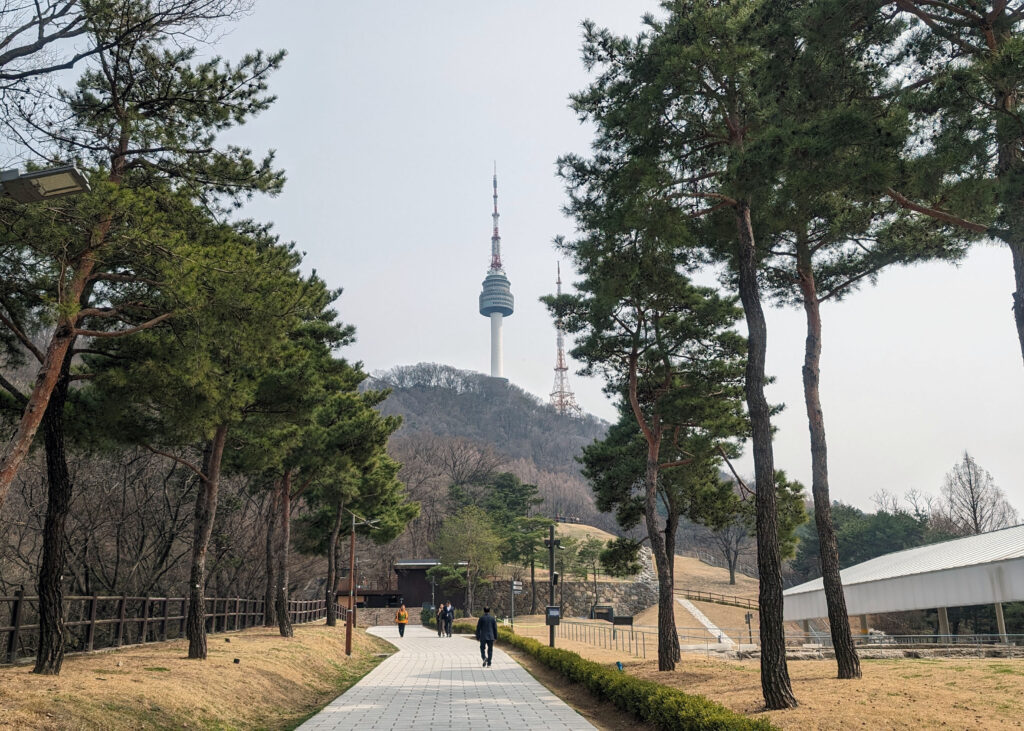
Namsan Park is also where you’ll find the Namsan Cable Car, and the N Seoul Tower. On day 3, you’ll enjoy an easy walk that brings you to the top of Namsan Mountain, where you’ll go up the N Seoul Tower.
To start your walk, you’ll take the subway to either Seoul Station or Hoehyeon Station. From the station, walk to the starting point, which is Baekbeom Park. From the park, you will follow the Namsan Dulle-gil Trail up Namsan Mountain.
This is the easiest trail to follow up to N Seoul Tower, because you are walking on a pedestrian path alongside the road used only by authorized vehicles. And, if you happen to visit Korea in spring, note that this route is particularly beautiful for cherry blossom viewing.
The route up is steep, but well worth the walk. As you climb, the views of the city become more and more impressive! The walk takes 30 to 50 minutes, depending on your pace and how many times you stop.
Note – If you aren’t feeling up to the walk, you have the option to take the Namsan Cable Car. The cable car is accessible by walking from Myeongdong or Hoehyeon Station. It’s just a 3 minute ride up, with beautiful 360-degree views.
N Seoul Tower
After your hike up Namsan Mountain, you’ll arrive at the top, where you’ll find outdoor viewing decks and the N Seoul Tower (also known as Namsan Tower or Seoul Tower).
The N Seoul Tower is a communication and observation tower. At 236 meters tall, the tower is the second highest point in Seoul. As a result, the views from the tower are amazing!
When you arrive at the top of Namsan Mountain, be sure to wander around the area to enjoy the outdoor viewing decks before heading into the tower. There are many spots to sit and rest, which you will be grateful for after your climb up the mountain.
When you’re ready, head into the tower. If you’ve purchased a Go City Seoul Pass, the N Seoul Tower entrance is included. Otherwise, you can buy your N Seoul Tower tickets in advance, here.
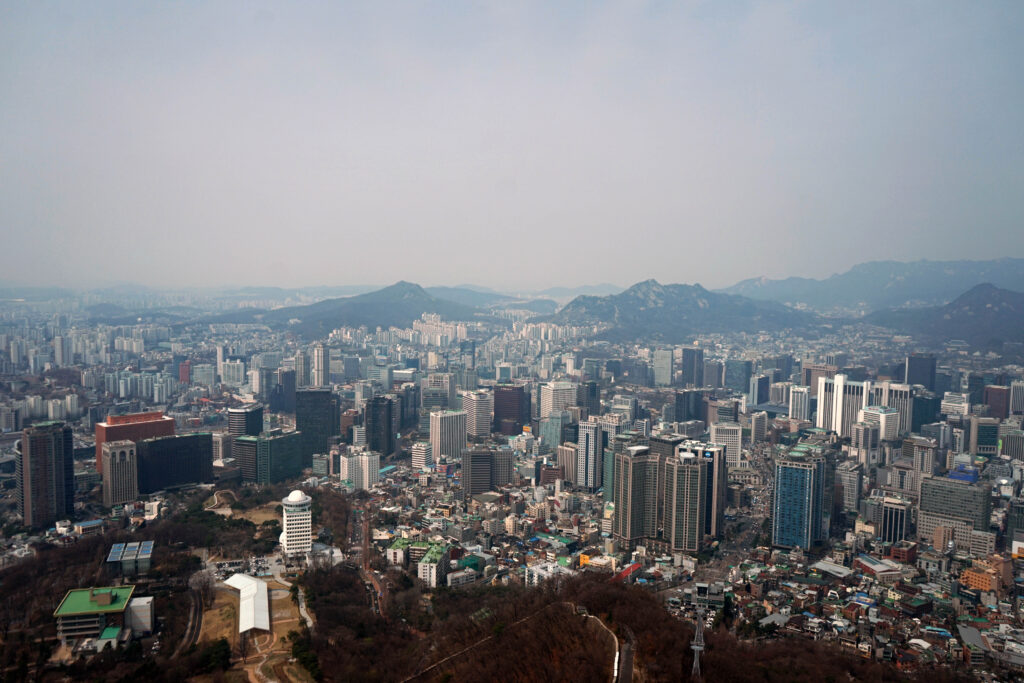
The visit to the N Seoul Tower takes about an hour, once you factor in the waiting time to take the elevator up to the viewing deck, and back and down.
If you’re starting to feel hungry, you’re in the right place! The tower has several dining options to choose from, as well as cafes. But remember, next you are headed to Gwangjang Market, which will have tons of great dining options.
After visiting N Seoul Tower, feel free to continue walking through Namsan Park. There are several trails to choose from which will bring you through beautiful forest, back down the mountain. When you reach the bottom, take public transport to your next activity, Gwangjang Market.
If you’d like to head to the market from N Seoul Tower, take Namsan Sunhwan Shuttle Bus No. 01 back down the mountain, and then switch at Seoul Shinmun to bus number 150, which you will ride 5 stops, getting off at Gwangjang Market.

Gwangjang Market
Gwangjang Market is a traditional street market in Jongno District of Seoul. It is one of the oldest and largest traditional markets in South Korea, with more than 5000 shops!
Gwangjang Market is most famous for selling made-on-the-spot Korean food, but you can also shop for souvenirs, fabrics (you can have a hanbok made!), and other wares.
The entire market is open from 8:30am-6:00pm daily, and the food sections of the market stay open until 11:00pm. I’ve planned Gwangjang Market as a late afternoon activity in this Seoul itinerary, because I found from 3:00pm to 6:00pm was the most interesting time to visit.
In the late afternoon the market comes alive with tourists and locals alike, and you’re able to see the full market (after 6:00pm, only the food stands are still open). The later in the day it gets, the busier Gwangjang Market becomes. It gradually becomes more and more crowded, which can be fun, but also overwhelming.

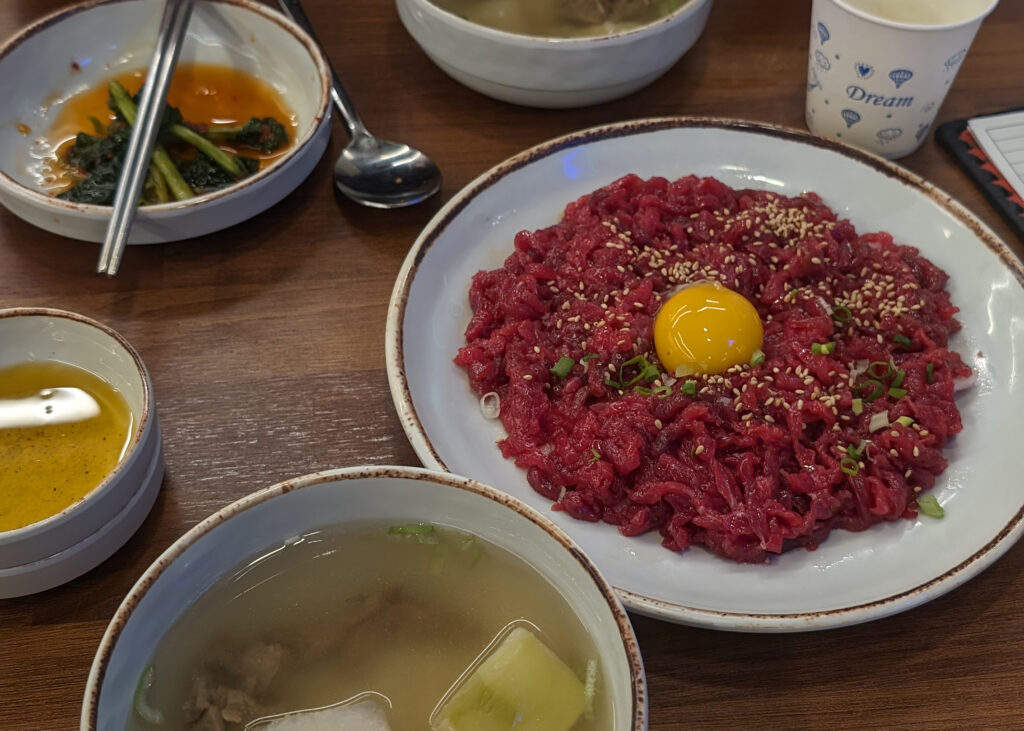
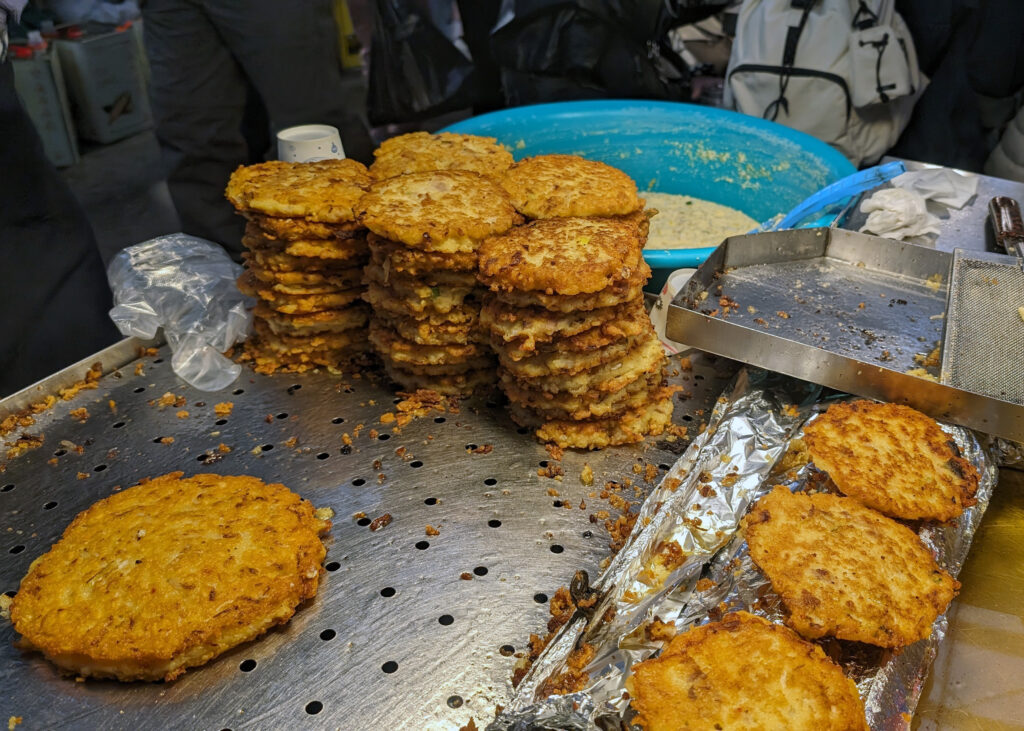
Some must-try foods while in Gwangjang Market include Korean foods such as bindaetteok (mung bean pancakes), bibimbap, kimbap, and tteokbokki, tanghulu, and yukhoe.
Some foods, like tanghulu and mung bean pancakes, you can buy on the spot from a vendor and enjoy while you wander. Others require you to sit down at a small counter, where your meal will be prepared in front of you.
If it’s hot out, I recommend getting mul-naengmyeon at a counter, which is a cold noodle broth soup.
If you want to be adventurous, I also recommend trying yukhoe, which is Korean seasoned raw beef. We tried yukhoe at Hyeongje Yukhoe, but we heard that Buchon Yukhoe is also good. Both are within the market. If you want to be even more adventurous, go for the Yukhoe Tangtangi, which is a combination of beef tartar and live octopus.
But my favorite thing I had in Gwangjang Market was an iced milk tea! In the middle of the market you’ll find ILHO Market, a small coffee shop. We went back twice for their iced milk tea, it blew our minds.
If you’d rather have a coffee, I recommend popping into Onion. They are known as well for their pastries. There’s often a line, but we happened to walk by when there wasn’t one so we went for it. Their coffee did not disappoint!
You will spend at least 1 hour in Gwangjang Market. Take your time to wander, taking in the smells, sounds, and crowds. This is the last official stop for day 3 in Seoul.


Day 4: Shopping and Yeongcheon Market
Day 4 in Seoul is all about shopping districts and markets! There’s no need to rush the morning, so feel free to sleep in and have a late breakfast before heading to Myeongdong, which is one of Seoul’s most famous neighborhoods.
Shopping in Myeongdong
Myeongdong is known for its shopping – particularly makeup and cosmetics. But it’s worth visiting this neighborhood whether or not you plan to shop.
It’s a fun neighborhood to wander, with lots of interesting stores that you’ll want to pop into, even if you aren’t buying. The neighborhood has a large pedestrian-only area, making it perfect for wandering on foot.
If you are into cosmetics, visiting Olive Young is a must. This store is like the Sephora of Korea, selling a wide array of Korean beauty products.
If you’re interested in browsing womenswear and accessories, you’ll find Korean brands like Stylenanda, Top Ten, and 8 Seconds in Myeongdong.

You’ll for sure want to check out HBAF, a popular seasoned almonds snack brand in Korea. You’ll find multiple HBAF stores with fun storefronts in Myeongdong, selling their almond snacks in all sorts of different flavors.
Myeongdong isn’t just a shopping haven, it’s a food haven, too! You’ll want to have lunch before heading to your next stop. For Korean BBQ, head to Wangbijib. It’s such a popular spot there are 3 locations in Myeongdong.
To try famous Dak Galbi (Korean spicy stir-fried chicken), swing by Yoogane. And to try Jjimdak, which is a popular Korean braised chicken dish, head to Andong Jjimdak Restaurant.
After lunch, head to Yeongcheon Market. To get there, you’ll take bus #741 from Seoul Paik Hospital. Ride the bus 7 stops, getting off at Yeongcheon Market. The whole trip will take 25 to 30 minutes.
Yeongcheon Market
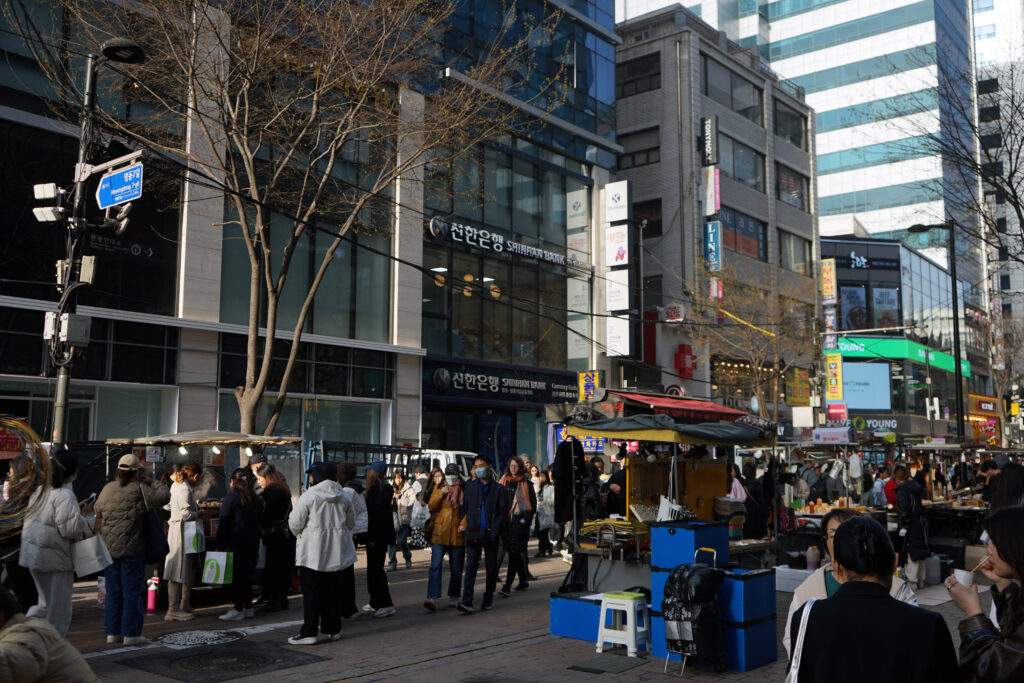
Yeongcheon Market is a small, traditional market that’s located between Seodaemun Station and Dongnimmun Station in Seoul. This market is found down a single, covered alley.
Established in the 1960s, it’s home to about 130 stores and is popular for its street foods, fresh produce, fruits, meats, seafood, toys, shoes, and more. It’s known for being one of the more traditional markets left in the centre of Seoul.
Seoul’s traditional markets are unique spaces, and Yeongcheon is no different. Take some time to browse the different stalls. You’ll see fruits and veggies (including ones you don’t typically have in your home country), as well as clothing for sale.
We stumbled on some freshly baked twisted pretzels here, they were at an outside stall at the back of the market.
To get from Yeongcheon Market to your next stop, Hongdae, you’ll take bus #7737 from Dongnimmun Park to Hongik University Station. The trip takes about 30 minutes, and you’ll ride 8 stops.
Shopping in Hongdae
Hongdae is where you’ll find Hongik University, and so it’s become known for being a haven for students. It’s a lively neighborhood where you’ll find a culture of urban arts, quirky shops, boutiques, karaoke bars, vintage shopping, Korean photo booth studios, and an amazing music scene.
During the day, the streets are busy with shoppers looking for the latest fashion trends and dropping by aesthetic cafes. At night, Hongdae becomes a nightlife spot, where young locals come to visit food stalls, watch buskers and dance groups.
I recommend going to Hongdae late in the day, so you can experience the shopping, have dinner, and stick around for nightlife (if that’s something you’d like to experience!).
Before shopping, visit the Gyeongui Line Forest Park. It’s a peaceful walk that serves as an oasis of greenspace within an urban area.
The full park is about 6 kilometers, but I’d stick with walking the first kilometer or so. This section, the Yeonnam-dong section, is where all the bars and cafes are.
After the park, be sure to stop by the Line Friends Flagship Store. Line Friends characters are cute cartoons that are popular in most parts of Asia. Founded in Hongdae’s L7 building, the Line Friends Hongdae Flagship Store is split over two levels and has a cute BT21 Cafe.
After this famous Line Friends Flagship Store, walk down Hongdae’s shopping street, popping into whatever shops capture your attention. Don’t overlook the side streets that lead away from the main street – we found some fantastic vintage stores on these quieter streets.
You’ll come across clothing stores, accessory stores, shoe stores, cosmetic stores, stationary stores, and more.
When the sun starts to set, walk along the pedestrianized main street of Hongdae to watch buskers and have some Korean street food for dinner.

Day 5: Gangnam, Bongeunsa Temple, and Han River Walk
Seoul is divided by the Han River, which splits the city into two halves, with Gangbuk in the north, and Gangnam south of the river. While Gangbuk is more of an old city including the center of Seoul, Gangnam is home to the city’s modern attractions.
On day 5, after breakfast in your hotel, you’ll head to Gangnam. Take the metro to Bongeunsa Station, which is the perfect starting point for your day in Gangnam.
Gangnam
There are a few points of interest you’ll want to see in Gangnam. Start by walking through Starfield COEX Mall. This mall is a center for culture and trends, with all the most popular Korean and foreign brands. If you’d like to do some shopping, this mall is the place for it!
Located in the centre of COEX Mall, the Starfield Library is an open public space designed as much for lingering as it is for reading. Inside, you’ll find towering floor-to-ceiling bookshelves filled with books and magazines in Korean and English, seasonal displays, and quiet seating areas where people stop to read or rest.

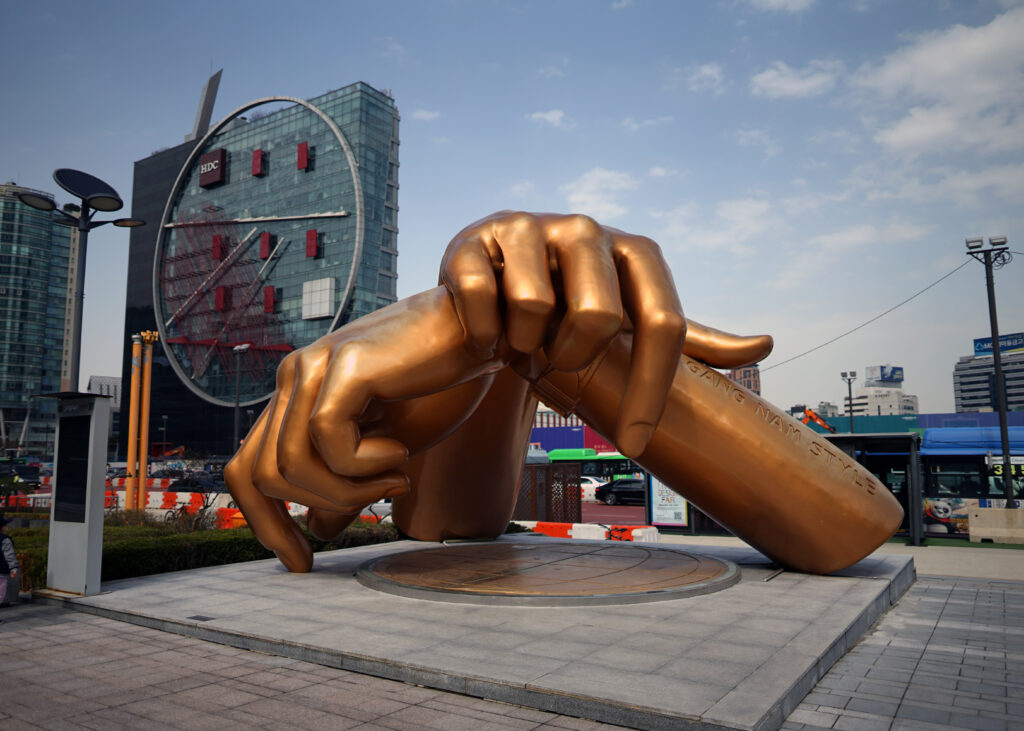
Just outside COEX Mall, you’ll find the iconic Statue of Gangnam Style. If you remember the K-pop song “Gangnam Style” that was literally everywhere in 2012, then you’ll get a kick out of visiting this statue. If you’re lucky, you might spot some people doing the iconic Gangnam style dance.
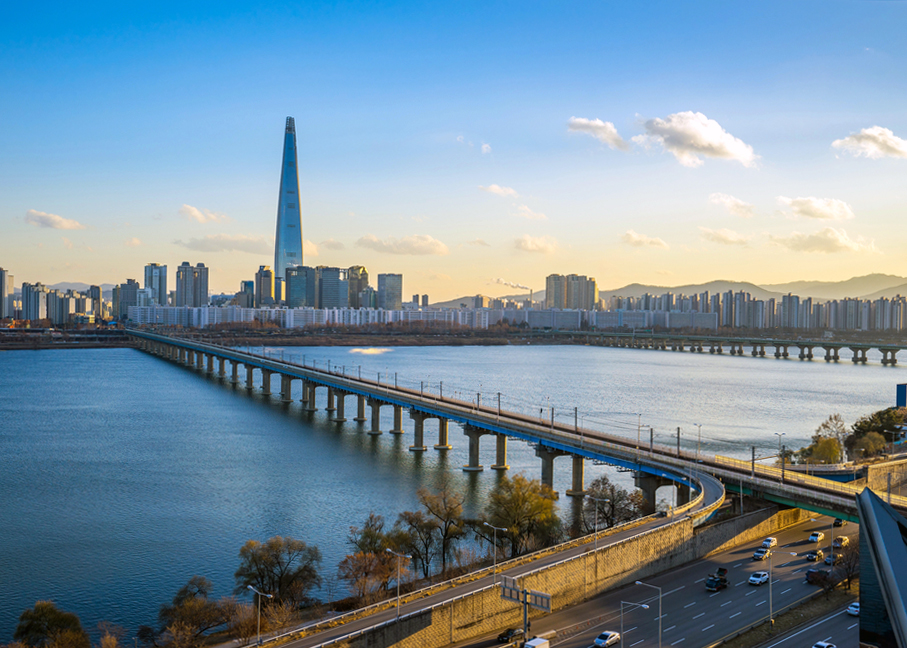
Another popular sight to see in Gangnam is the Lotte World Tower, which is the tallest building in South Korea and the fifth tallest building in the world. You can go up to a viewing deck in the Lotte World Tower for views of Seoul.
We didn’t visit the tower while in Gangnam since we’d already visited the N Seoul Tower, but if you’re interested, you can book your tickets to go up the Lotte World Tower, right here.
You might be starting to get hungry. While in Gangnam, head to Yang Good to eat Korean barbecue. They offer halal, kosher, and gluten free options, and service is fast. Be sure to get the lamb skewers.
Bongeunsa Temple
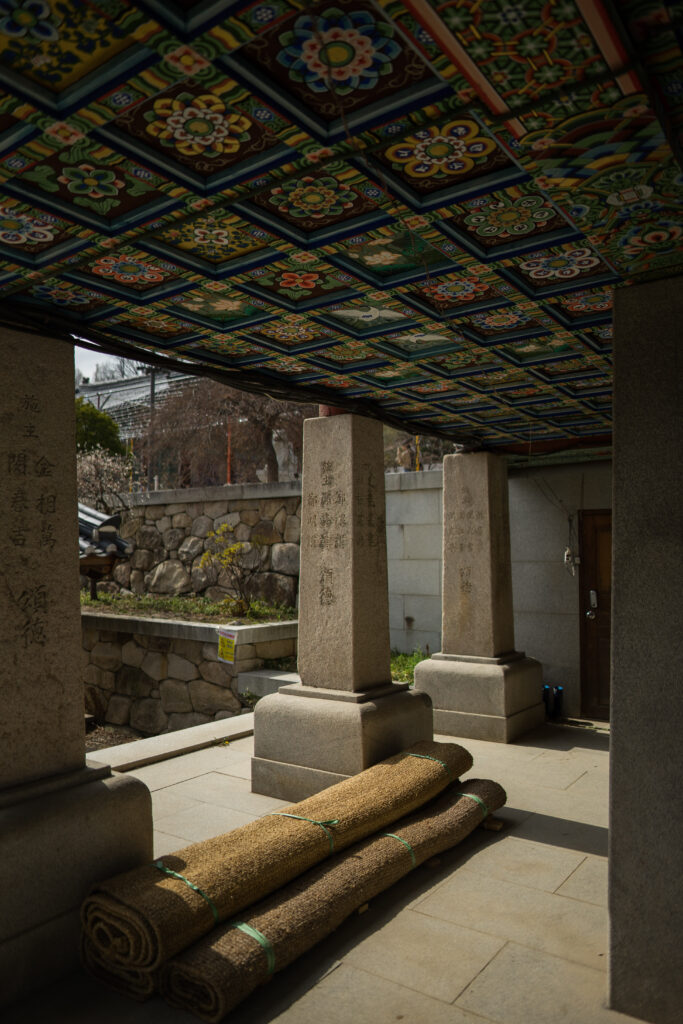
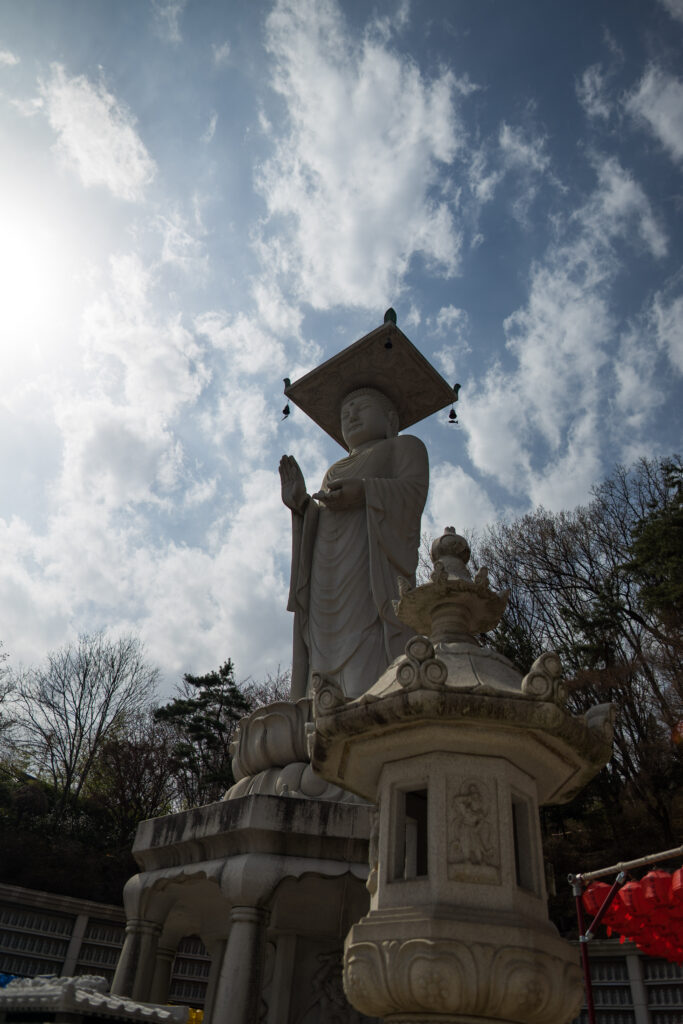
Bongeunsa is a Korean Buddhist temple that dates back to 794. This temple complex is known for its 23 meter tall Maitreya Buddha statue.
Bongeunsa is a 15 minute walk from COEX Mall, free to visit, and it’s a really nice reprieve from the city. Despite being in busy Gangnam, the temple complex is quiet and calm. You can easily spend an hour walking through the complex, admiring the different temple buildings and gardens.
Han River Walk
At 514 kilometers long, the Han River is the longest river in the Korean Peninsula, and it’s the river that separates the north of Seoul from the south of Seoul. There are 11 parks along the Han River, which are lovely spaces to relax and take in views of the river and the city.
After a day of exploring Gangnam, hop on a bus or metro to go to Jamwon Han River Park, where you can enjoy part of the Han River Walk. There are several ways to get there, so check in your map app which mode is fastest.
Located between Youngdong Bridge and Banpo Bridge, this park is perfect to visit because it’s very accessible from popular places in the city, including Gangnam.
Jamwon Han River Park has a grassy field, walking path, tennis courts, and a nature learning center. If it’s the right time of year, you might spot butterflies in the park! And of course, enjoy the views of the Han River, and Seoul.
After you’ve enjoyed Jamwon Han River Park, head back to your hotel to rest before dinner, or grab dinner nearby.
Day 6: Demilitarized Zone Tour and Dongdaemun Night Market
Your 6th day in Seoul is a big one, because you’re going on a day tour to the Demilitarized Zone (DMZ) between North and South Korea.
You’ll need to have an early breakfast (either in your hotel, or grab something from a convenience store) because most DMZ tours start at 7:00 AM or earlier.
Demilitarized Zone Tour
The Korean Demilitarized Zone (DMZ) is a heavily militarized strip of land running across the Korean Peninsula near the 38th parallel, forming the border between North and South Korea.
While what you physically see on a DMZ tour isn’t especially dramatic, it’s one of the most important experiences you can have while visiting Seoul. The tour provides essential context about the Korean War, the armistice that ended active fighting, and the ongoing tensions that still shape daily life and politics in South Korea.
That history of division and unresolved conflict has had a lasting impact on South Korea, and understanding it adds depth to everything else you experience in the country, from military service to media, borders, and even infrastructure.
On a typical DMZ tour, you’ll visit several controlled sites within the DMZ, including the Third Infiltration Tunnel, one of the tunnels secretly dug by North Korea in preparation for a potential invasion.

You’ll walk down a steep tunnel entrance wearing a helmet, pass through narrow underground passages, and learn how and when the tunnel was discovered.
The tour also includes a stop at Dora Observatory, where you can look across the border through binoculars into North Korea, including a so-called “propaganda village.”
DMZ tours are quite long because the DMZ is highly controlled. Most tours last all day, leaving around 7:00 AM and returning to Seoul around 4:00 PM. Although tours don’t include lunch, there are several stops on the tour where you’re able to purchase food.
If you’ve got a Go City Seoul Pass, the DMZ tour is included with your pass. Otherwise, you can book this highly-rated DMZ Tour From Seoul, which includes an extra – a stop at a suspension bridge to take in some beautiful nature.

Dongdaemun Night Market
Dongdaemun Night Market isn’t just one market, it’s a whole collection of markets spread across separate buildings. It’s an interesting experience to walk around the market, which is open all through the night.
Enjoy a wander through the market to see everything that’s sold, like wholesale textiles. You’ll also find electronics, souvenirs, and shoes.
After a long day learning about the DMZ, you’ll be hungry! Head to Dongdaemun Food Street in the market, which is a pedestrian street filled with food tents.
Day 7: Noryangjin Fish Market and Jjimjilbang Spa
On your last day in Seoul, you’re taking it easy! Allow yourself a slow morning. After breakfast in your hotel, take public transit to Noryangjin Fish Market, where you’ll experience a traditional seafood market and enjoy a delicious lunch.
Noryangjin Fish Market
Noryangjin Fish Market is the oldest and largest seafood market in all of South Korea. The building is home to 700 vendors, dealing 250 to 300 tons of seafood every day.
Despite being a local market that does trading, Noryangjin Fish Market is worth visiting for the experience of seeing how the market operates, and to buy some seafood, which you can then have prepared for you in a restaurant within the same building!

What makes this seafood market special is that everything is super fresh, because most of the seafood sold is being sold alive. At any time of the day you will be able to buy high quality seafood.
Noryangjin Market sells a wide range of seafood including king crabs, lobsters, abalone, different types of shellfish, different types of fish, and salted and dried fish items. Simply wander the market’s different floors to see all that there is to buy.
If you’d like to buy seafood in the market, prepare yourself. Know that the seafood sold here is generally expensive because it’s high-quality. Make sure to visit the market’s website for baseline prices, and be ready to barter with the vendor. You may be quoted a high price at first – it’s okay to barter a lower price, or walk away.
After buying your seafood, you’ll want to go to the restaurants upstairs to get it cooked and prepared. The vendors usually have partner restaurants upstairs, so after you purchase your fresh seafood, a representative from the shop will then lead you to their partner restaurant.
Once you get to the restaurant, they’ll ask you how you want the seafood to be cooked (for example, steamed, grilled, or raw). Sometimes, they have a recommended way of cooking it. Be ready for this part of the process.
Have a translation explaining how you’d like your seafood prepared (I use the Google translate app). There may be miscommunications, so be flexible. There’s always a chance your seafood will arrive differently than you expected. But one thing is certain – it will be good!!
If you aren’t into buying seafood from a vendor to eat, head upstairs to O Gun Shrimp. This is a small fast-food counter where you can buy all sorts of delicious, fried seafood – including shrimp, of course. It’s all fresh seafood and absolutely delicious!
You’ll want to spend an hour or so wandering Noryangjin Fish Market, just to take it all in. Expect to then spend about an hour enjoying your seafood lunch.

Jjimjilbang Spa
After wandering Noryangjin Market and enjoying a fresh seafood lunch, it’s time to relax!
You simply cannot visit South Korea without going to a jjimjilbang, which is a Korean spa. Spas in Korea are similar to what you might experience at home in Canada or the USA, but they do have some unique aspects.
Most spas in Korea are co-ed, with bathing areas that are segregated by gender. When you enter, you’re given a set of shorts and a shirt to wear in the all-gender areas. The all-gender areas include saunas, hot rooms, cold rooms, communal napping rooms, and dining areas.
The bathing areas are where you go to soak in different pools, and if you’re brave, you can have a full-body scrub. Scrubs are done by women called ajumma. Typically they aren’t included in the entry fee for the spa, you’ll pay a small extra fee for this service.
After soaking for 30 minutes in the pools, you are brought to a separate area where you lie down on a stone bed to be aggressively scrubbed down, completely naked. I love getting scrubbed (it’s the ultimate exfoliation experience), but it definitely isn’t for everyone. You need to be comfortable being completely naked in front of others, and the scrub may make your skin feel a bit raw.
Regardless of if you get scrubbed, visiting a jjimjilbang is a great experience! Entry fees are typically valid for 12-24 hours, so you can easily use up most of your day relaxing in the spa’s various areas. It’s the perfect way to wrap up a busy week in Seoul!
In Seoul, I recommend going to Aquafield in Starfield Goyang. It’s one of the city’s newer spas, and is a pretty luxurious experience (for a good price!). Alternatively, Supsok Hanbang Land is a good option.
The Go City Pass For Seoul, Korea
While in Seoul, my husband and I used a Go City Seoul Pass to save over $200 between the two of us. The Go City Seoul Pass is an easy and cost efficient way to save money when you’re visiting multiple attractions in Seoul.
With the Go City Seoul Pass, you pay a flat fee for your pass, which then gives you access to around 30 Seoul activities, tours, and modes of transport. For example, we used our pass to visit the N Seoul Tower, and to go on a DMZ Day Tour.
Once you’ve purchased your pass, you simply download the Go City app on your phone where your passes (and QR code) will be available. When you visit your first attraction the QR code is scanned on your phone and your Go City pass is active.
There are two types of Go City Passes available for Seoul.
Go City Explorer Passes allow you to decide on the number of attractions you want to visit in your chosen city over a 60 day period. You can choose between 3 to 7 attractions – the more attractions you pick, the more you pay (but the combined package should save you more money).
Go City All Inclusive Passes are better for if you are limited on time and want to see and do a lot in a short space of time. These passes are usually valid for 1 to 5 days and you can visit as many attractions on the pass as you want.
We felt that the Go City Seoul Pass was well worth it during our time in Seoul. You can read details about the passes and purchase your own, here.


Seeing Seoul Beyond the Highlights
What really amazed me about Seoul is how diverse the city is. Within an hour of walking, you can pass a mega-mall, a quiet neighbourhood temple, and a bustling market selling everything from food to textiles. This constant overlap of modern life and centuries-old history is part of everyday life in Seoul, and it’s what makes the city so interesting to visit.
Because Seoul is such a large and layered city, it’s worth spending as much time there as you can. The longer you spend, the more time you have time to experience various aspects and neighbourhoods of the city, allowing you to get to know it in more depth. So if you’re able to stay in Seoul for 7 days, do it! You won’t regret it!
If you enjoyed this blog, you’ll love my newsletter, as well as my Facebook group. You’re welcome to join these communities – I would love to see you there!
More From Pina Travels on South Korea:
- 4 Days in Seoul Itinerary: What To Do, See, and Eat
- What Not To Do in South Korea: 18 Important Tips To Know
- How to Spend 3 Days in Busan: A Perfect Itinerary
- Gyeongju Itinerary: How To Spend 2 Days in Gyeongju, South Korea
Like this post? Pin it below.


