
Last Updated on July 29, 2025
Wondering if you should visit Algarve in spring? Here are 10 reasons why spring is the perfect time to travel to this region of Portugal in March, April, or May.
Traveling the Algarve in spring means you’ll encounter fewer crowds, have an easier time booking tours, accommodations, and restaurants, and you’ll be able to have more of a positive impact on the local tourism industry.
During spring, the Algarve has plenty of beautifully sunny days, and the temperatures are quite warm. The ocean will be chilly, but you can still take a dip and enjoy Algarve beaches without the crowds.
Read on to learn details about what spring in the Algarve is like, and 10 reasons why you should visit Algarve in spring.
- Algarve in Spring: The Basics
- 10 Reasons to Travel to the Algarve in Spring
- 1. The weather is pleasant during Algarve’s spring.
- 2. There are less tourists and crowds.
- 3. More accommodation availability.
- 4. Tours and activities are a bit cheaper in spring.
- 4. Shoulder season means fewer lineups for attractions.
- 5. Spring is the perfect time to visit Benagil Cave.
- 6. See Algarve towns without the crowds
- 7. Enjoy lounging on Algarve beaches.
- 8. Visit Ponta da Piedade without the crowds.
- 9. Celebrate Easter in the Algarve.
- 10. Visiting Portugal in spring benefits tourism and communities.
- Spring in the Algarve is the Time to Go
Disclosure: This article includes affiliate links. This means that if you make a purchase through one of those links, I earn a small commission. Affiliate links cost you nothing to use, and keep Pina Travels reader-supported. To learn more, read my Privacy Policy, Terms & Conditions, & Disclaimers.

Algarve in Spring: The Basics
The Algarve is the southernmost region of Portugal, with over 100 kilometers of coastline that meets the Atlantic Ocean. It’s known for having a warm climate, many beaches, seafood, surfing and more. And it’s only a 3 hour drive from Lisbon!
What is the weather like in the Algarve in spring?
Algarve’s spring weather is warm, but not too hot. Temperatures average between 15°C to 20°C (59°F – 68°F) in March, and get up to 20°C to 25°C (68°F – 77°F) by June. In early spring, there could be rain, but the Algarve is known for being the sunniest region of Europe and so the likelihood of rain is low.
Is it worth going to Algarve in the spring?
Yes, it’s worth going to the Algarve in spring. Portugal has a mild climate all year round, and during the spring, it’s very sunny and warm. During spring, you can enjoy Algarve’s historic cities, gorgeous beaches, and charming towns without the crowds.
10 Reasons to Travel to the Algarve in Spring
During spring in Algarve the sun is shining, patios are opening up, there’s far less crowds, and you’ll have Algarve beaches all to yourself!
There’s tons to do in the Algarve in spring. To make the most of your trip, I recommend renting a car. You can make a central Algarve city or town, like Lagos, your home base. From there, use your car for day trips to other areas of the region.
Need a car rental for your Algarve adventures? Discover Cars compares the prices for a vehicle from a variety of suppliers to ensure you get the cheapest rate, and you can reserve your car rental in advance. Reserve a car rental here!
Let’s dive into 10 specific reasons why you should travel to the Algarve during spring, and some of the best things to do during the spring season.

1. The weather is pleasant during Algarve’s spring.
The best part about Algarve in spring? The weather is beautiful! This region of Europe is known for having 300 days of sun per year, which means from late March to the end of Mau it’s quite warm.
In the summer, which begins in June, Portugal becomes quite hot. This makes the spring months perfect for enjoying Portugal’s outdoors comfortably. It’s warm, but not too hot.
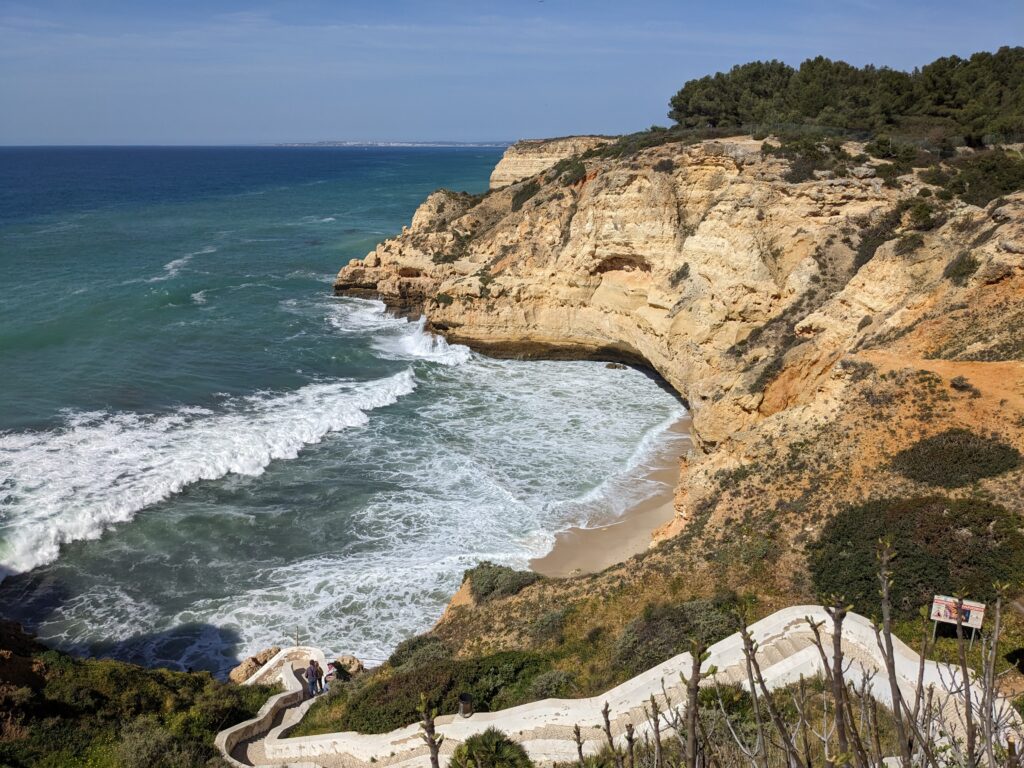
Spring is the perfect time to hike thanks to the pleasant weather. For gorgeous coastal views, hike a portion of the Rota Vicentina.
The Rota Vicentina is a network of hiking trails that spans 750 kilometers of Portugal, bringing hikers through villages, past limestone formations, up along coastal cliffs, and past sea coves.
The Fisherman’s Trail is one of the more popular routes on the Rota Vicentina because it runs along the Algarve coast.
I wanted to walk just a small portion of the trail, and so I took the trail from Praia da Ingrina to Praia dos Rebolinhos (a beach just outside Sagres). This is an easy day hike that takes 3-4 hours.
2. There are less tourists and crowds.
There are both pros and cons of tourism. One of the cons? When there’s too much of it, it can lead to problems caused by overtourism.
Overtourism creates issues for people local to a community, but it can also impact the experiences of tourists.
When there are so many people visiting a city, a site, a beach, or another location, it becomes harder to take in the moment. Crowds make it more difficult to see the site you’re visiting, and it can also mean longer wait times and lines to get into attractions.
Portugal is not immune to overtourism. Back in 2018, there was already talk of how overtourism was impacting local residents in Lisbon. These same effects have happened in the Algarve during peak tourism months.
The rise in tourism in Portugal has slowed since then, but it’s still important to be cognizant of overtourism – for the sake of the community you visit, as well as your experience there.
One of the best ways to avoid mass tourism when traveling is to visit destinations in their shoulder season or off-season. Algarve in spring is the shoulder season, making it the best time to travel there with minimal crowds.
3. More accommodation availability.
Less tourists in the Algarve means more availability for accommodation! During spring, the Algarve tends to have way more hotel, bnb, and short-term rental availability.
In the shoulder season, you’ll find not only that there is more availability, but it is slightly less expensive, and can be booked more last-minute.
You’re able to travel with more flexibility because your accommodations don’t necessarily have to be booked far in advance.

4. Tours and activities are a bit cheaper in spring.
Since spring in the Algarve is the shoulder season for tourism, there’s lower demand for tours, restaurants, and other tourism related things.
As a result, prices drop a bit. You’ll find that the rates for booking your hotels will be of better value, and the prices for tours will be slightly lower during the winter.
Booking in advance will also contribute an extra discount, so it’s well worth planning your travel a few months ahead if you can.
Depending on where you are flying from, you’ll find that airlines drop prices for flights to Portugal in the off and shoulder season. Because there is less demand for these flights, the prices are made more accessible.
When you combine all the costs for a spring trip to the Algarve versus a summer trip, a shoulder season trip will amount to significantly less.
4. Shoulder season means fewer lineups for attractions.
Peak season across Portugal is busy, especially in popular regions like the Algarve coast. This often means lineups for everything from museums, to historical sites, restaurants, and finding a spot on a beach.
Visiting the Algarve in spring is the best way to avoid waiting in line to see the famous castle of Silves, and you’ll have no trouble booking a tour to Benagil Cave. You’ll also have an easier time getting into popular restaurants.

5. Spring is the perfect time to visit Benagil Cave.
Benagil Cave (Algar de Benagil in Portuguese) is a large sea cave on the Algarve coast. While the coast in this region has many sea caves, Benagil is particularly famous because it looks like a grotto.
The cave is partly known for the big hole in its ceiling, which is called the eye of the cave. When you’re standing inside Benagil Cave, you’ll see the blue sky through the hole, and light streams down through it.
Spring is the perfect time to visit Benagil Cave. During summer, the cave becomes super busy with tours. The volume of people inside the cave can take away from your experience. But during Algarve in spring, there are far fewer tourists around, which means less people inside Benagil Cave.
Benagil is just around the corner from a small beach called Praia de Benagil, but it’s only accessible by boat.
There are a couple ways to reach the cave. If you’d like to self-guide, you can rent a kayak or SUP from one of the rental shops on Praia de Benagil. But, I recommend visiting Benagil cave by boat tour.
You can book a tour that takes you by kayak, SUP board, or motorized boat. When I visited the cave, I opted to go by kayak. The kayak tour included a guide, who brought my group all along the coast, telling us about its geological features, and pointing out fossils.
We also got to kayak inside a few smaller caves before going into Benagil! This is the tour I went on:
Sunrise or Sunset Benagil Cave Kayak Tour
-
RATING: 4.9 out of 5 stars
-
TOUR LENGTH: 1.5 hours
The Sunrise or Sunset Benagil Cave Kayak Tour brings you to the cave either early in the morning, or later in the evening. This tour starts with an introduction to the basics of kayaking from your expert guide. Then your adventure begins! You’ll hop into your kayak and make your way towards the Benagil Cave.
By visiting the cave either early in the morning, or late in the afternoon, you’ll have tons of time to take photos of the stunning cave, and relax on the small beach inside the cave. On this tour, you spend about 30 minutes inside the cave. You also get to kayak to two other smaller caves on the Algarve coast.

6. See Algarve towns without the crowds
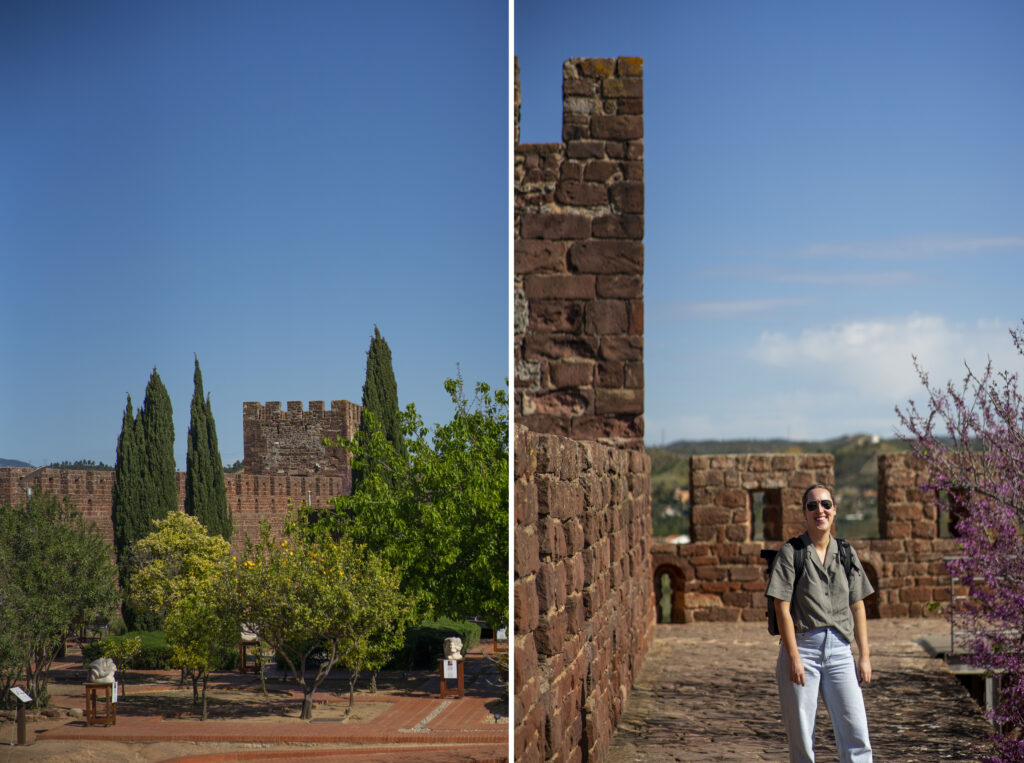
One of my favourite things to do in the Algarve is roadtrip to the region’s towns! Algarve in spring is the perfect time to day trip to Algarve towns like Silves and Ferragudo. During peak season (summer) these towns can be very busy with visitors. But during spring, it’s much quieter.
Silves, Algarve
Silves is a historic Algarve town known for its medieval castle, old city gate, beautiful cathedral, and quaint, winding streets.
The Algarve is known for its ocean-side fishing towns, coastal views, and beaches. Silves, though, is inland. I think this is what makes visiting this town so special – it’s a chance to see another perspective of life in the Algarve.
Ferragudo, Algarve
Ferragudo started out as a fishing village, but over the years, it’s become a popular day trip for tourists. The town today has a traditional feel, with whitewashed homes, winding streets lined with flowers, a historic castle, and even a beach.
Although tourism has grown in Ferragudo, fishing continues to be a key industry in the town. In the mornings, you’ll see fishermen along the river pulling up their nets full of fish. And of course, Ferragudo is the perfect spot to try fresh Portuguese sardines.
7. Enjoy lounging on Algarve beaches.
The Algarve’s beaches are really lovely during spring! Although the ocean is cold at this time of year, the warm sun and lack of crowds makes up for it.
Here are two of my favorite beaches to visit in the Algarve during spring.
Just a short drive (or enjoyable walk) from Lagos, Praia do Camilo is one of Portugal’s most recognizable beaches.
When you arrive at the top of the beach, you’re treated to dramatic views of the small beach, surrounded by steep cliffs, and rock formations that stretch out into the ocean.
If you visit Praia do Camilo, be sure to walk through a tunnel in the cliff on the left side of the beach to access a second, small beach. The small beach tends to get more shade. I found this to be my favourite beach area because even in spring, the sun in the Algarve is strong!
Praia da Cordoama is a large, isolated beach that is on the western coast of the Algarve, about a 15 minute drive from Sagres. The beach is a few kilometers long, and it’s sheltered by tall, dark cliffs.
Because this beach faces west, it experiences intense winds and tides, which has eroded the cliffs and the rocks on the beach into interesting formations. This beach is less for lounging, and more for a scenic walk.

8. Visit Ponta da Piedade without the crowds.
Ponta da Piedade is a cluster of rock formations that rise up to 20 meters above the Atlantic Ocean on the southern coast of Portugal. The rock formations create natural arches, caves, and towers that make for beautiful coastal views.
This spot is an absolute must-see while visiting the Algarve in spring. During the summer, it gets very busy – which is why visiting in spring is ideal. Less crowds!
When you arrive at Ponta da Piedade you can walk along the top of the cliffs and rock formations, following well-worn paths. There aren’t any protective fences, so be careful of slipping!
From the top, you have incredible views of the rock formations, grottos, and ocean. On a clear day, you can see as far west as Sagres.
There is also a set of around 200 stairs that take you down to the water for a different perspective. From the platform at the bottom, you can see further into the grottos, and observe the power of the ocean waves.

9. Celebrate Easter in the Algarve.
A symbol of Christian tradition, Easter is one of the most important religious holidays in Portugal.
Celebrated once a year, it is on the first Sunday after the first full moon, and it celebrates the resurrection of Jesus Christ.
In the Algarve, several towns and villages maintain religious ceremonies, with masses, processions and parades during Holy Week, which precedes Easter Sunday. In 2024, Easter will be observed on Sunday, March 31.
If you celebrate Easter, Tavira is a good place to go in the Algarve for religious festivities. Since 1879, Holy Thursday has been celebrated in Tavira with a procession that recreates the Via Crucis, the path Jesus took up to his crucifixion.
On Good Friday there is the procession of the Burial of the Lord and the commemorations of the Passion of Christ. For Holy Saturday, you can attend the Easter Vigil in Santa Maria Church.
If you would like to celebrate Easter in the Algarve but aren’t religious, Olhão is the place to go. It’s the home of the famous Algarvian Easter Bread (Folar de Olhão), which is a traditional cake made with cinnamon, sugar and butter.
During Holy Week, Lagos organizes the Folar and Handicraft Fair, where regional sweets, loaves of bread, honey and local liqueurs can be sampled. Often, there’s live music, too!
10. Visiting Portugal in spring benefits tourism and communities.
During the shoulder season in any tourist region, locals working in tourism earn less income.
This is the case in Portugal, which sees a big surge in tourism during the summer months, but a drop-off during the late fall, winter, and early spring months.
When you visit the Algarve in the spring, you’re able to spend your tourist dollars at a time of year when they’re more needed. This benefits the local Portuguese communities that you travel to, from the restaurants you eat in, to the hotels you book, and the tour guides you hire.
Spring in the Algarve is the Time to Go
What not to do in Portugal? Assume that spring is a bad time to visit! I’ve visited the Algarve several times, and have found that my favourite times to go are during spring, and Algarve during fall.
Visiting the Algarve in spring will give you the freedom to avoid crowds and lines, and travel with flexibility. It’s the perfect time to visit the Algarve’s beautiful towns, see Algarve beaches, and get outdoors onto the hiking trails, too.
Ready to plan your visit to Portugal in spring? Here’s more from Pina Travels:
- Train From Porto to Sintra: Everything You Need to Know
- 24 Hours in Sintra: Your Comprehensive Guide
- What is Porto Known For? 14 Reasons to Visit
- Weekend in Porto: 16 Things to Do

